More evidence of the rank stupidity of the world:
"...officials realized that Hurricane Katrina had exposed a critical flaw in the national disaster response plans created after the Sept. 11 attacks. According to the administration's senior domestic security officials, the plan failed to recognize that local police, fire and medical personnel might be incapacitated."
- New York Times, Sep 9 2005. (highlighting mine)
Right. And I suppose we needn't worry about terrorists setting off a nuclear device in Manhattan either - after all, the NYPD will be around to arrest them afterwards won't they?
I love the way the article makes it sound like this was some obscure little glitch rather than an assumption so obviously flawed that a child of 12 could spot it. Who comes up with these plans anyway?
Friday, September 09, 2005

Seating Bingo
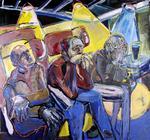
Ever played seating bingo? You know - you're sitting at the back of a bus or the coach of a train and you watch people coming in and speculate about which seats they're going to take (actually, you can do this pretty much anywhere where there's free seating - in theatres, in classrooms, etc. but public transport is best because you have far more people travelling alone). There's a terrible amount of stereotyping involved, of course, but it's scary how accurately you can sometimes predict where people are going to sit, based purely on age, gender, race, clothes and a few miscellaneous factors (like does the person have an iPod, for instance). It's amazing how people seem to have almost a pecking order of who they will sit with*, seeking out the people they're most comfortable with (now there's an interesting social psychology study just waiting to happen). Plus of course, there's risk aversion, which seems to drive how quickly people give up, how willing they are to compromise. Just from body language you can often tell which people are going to grab the first empty seat they find and which ones are going to keep going right to the end hoping they'll get something better. (Those familiar with the MBTI will recognise the distinction between P and J types)
A variant of this (if you happen to have an empty seat next to you) is the siege perilous game - the one where you check out every single person who steps into the bus and calculate the odds of them sitting next to you. This is a more participatory sport, of course, since within limits you can do things to encourage / discourage the people you want. It's tricky though, specially if there's a whole group of people entering. If you scowl and look tough you might scare people away, on the other hand if the car fills up later you're going to get stuck with some muscle bound freak who'll push you into one corner of your seat with his / her sheer bulk. So maybe you should smile and look encouraging. Only then you'll end up sitting next to some little old lady who will take fifteen minutes to collect all her stuff and clear the way for you to get out when you have to (thus ensuring that you miss your stop). Or someone'll decide you look safe enough to put their kids next to, so you'll have some hyperactive brat screaming in your ear the rest of the trip. (good-looking young women, of course, are completely out of the question - you're exactly the demographic - mid-20s, asian, male, scruffily dressed - that they're least likely to sit next to).
Understand I'm not claiming to be any good at this game - my predictions are wrong more often then they're right, and if you correct for random chance, I probably don't manage more than 10% correct predictions. It's fun to watch though - to observe how people walk boldly along and then hesitate at one seat or another, to try to imagine what they're thinking in their head, to watch how the other person reacts to being sat next to (or being ignored and left alone). Like watching some sterile, innocent soap opera of your own.
*Of course, seating bingo is only exciting in that middle period when there are no completely empty spaces left, but the seating is not so full that people don't have choices any more. It's watching them decide where to sit and who to sit with that's fun.
Thursday, September 08, 2005
Booker Shortlist
The 2005 Booker shortlist is out. Ishiguro made it, but all the other novels I've read from the longlist so far didn't. This means I now have five other novels to get through before the end of the month. Sigh!
Can't say I disagree with Ishiguro being shortlisted (see my review here) but I can't believe that McEwan's Saturday didn't make it - am only half way through it, but already think it's the best of the six or so books from the longlist I've read.
Oh, well - it's not like McEwan really needs the recognition.
Can't say I disagree with Ishiguro being shortlisted (see my review here) but I can't believe that McEwan's Saturday didn't make it - am only half way through it, but already think it's the best of the six or so books from the longlist I've read.
Oh, well - it's not like McEwan really needs the recognition.
Wednesday, September 07, 2005
Bed-lam
Instructions to furniture makers:
a good measure for a bed
is the measure of a cross:
there should be room to stretch your arms
- Yehuda Amichai (Unpublished Fragment)
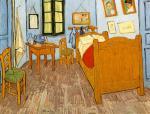
Isn't it interesting how they call it a twin bed. Not single, but twin. As though one lonely bed deserved another. As though somewhere out there, among the million lights of the city, there was a room with a bed just like this one, where a beautiful stranger [1] waits, sharing the abstract insight [2] of this moment's longing, the same desire to touch "unclaimed by fear of imminent day" [3]. As if these beds were made (in some Platonic carpenter shop) strictly in twos, and the fact that there is only one of them in this room means only that its twin is out there somewhere, bereft, waiting anxiously for that moment when the two of them can be laid side by side again.
What a sweet deception. What a small, but gentle kindness. The man who first came up with the idea of calling them twin beds must have been a true poet. This way you never have to face up to how alone you really are, never have to be judged by strangers, never have to be judged by yourself. This is delusion, yes, but it is also hope (and are the two that different after all?) - it is a way of coping.
Why not just stand up (or in this case lie down) to the facts though? Call a spade a spade, a single bed a single bed? Why not accept that among the limits you have set for yourself in living the life you choose to live is this 6 x 3 border, this rectangle of edges just wide enough to enclose your body and your body alone, the nothingness falling away on every side. Why not judge yourself by the breadth of your waking days rather than by the narrowness of your bed?
Let me say it then. I have a single bed. Not twin, not one half of some flat, primordial egg-shell. Single.
I can use the extra space.
notes:
[1] Of course, with my luck, even if there is such a twin bed it's almost certain to be occupied by a 300 pound male biker.
[2] Auden, "While an abstract insight wakes / Among the glaciers and the rocks / The hermit's sensual ecstacy". Complete poem here.
[3] Vikram Seth, Unclaimed
a good measure for a bed
is the measure of a cross:
there should be room to stretch your arms
- Yehuda Amichai (Unpublished Fragment)
Isn't it interesting how they call it a twin bed. Not single, but twin. As though one lonely bed deserved another. As though somewhere out there, among the million lights of the city, there was a room with a bed just like this one, where a beautiful stranger [1] waits, sharing the abstract insight [2] of this moment's longing, the same desire to touch "unclaimed by fear of imminent day" [3]. As if these beds were made (in some Platonic carpenter shop) strictly in twos, and the fact that there is only one of them in this room means only that its twin is out there somewhere, bereft, waiting anxiously for that moment when the two of them can be laid side by side again.
What a sweet deception. What a small, but gentle kindness. The man who first came up with the idea of calling them twin beds must have been a true poet. This way you never have to face up to how alone you really are, never have to be judged by strangers, never have to be judged by yourself. This is delusion, yes, but it is also hope (and are the two that different after all?) - it is a way of coping.
Why not just stand up (or in this case lie down) to the facts though? Call a spade a spade, a single bed a single bed? Why not accept that among the limits you have set for yourself in living the life you choose to live is this 6 x 3 border, this rectangle of edges just wide enough to enclose your body and your body alone, the nothingness falling away on every side. Why not judge yourself by the breadth of your waking days rather than by the narrowness of your bed?
Let me say it then. I have a single bed. Not twin, not one half of some flat, primordial egg-shell. Single.
I can use the extra space.
notes:
[1] Of course, with my luck, even if there is such a twin bed it's almost certain to be occupied by a 300 pound male biker.
[2] Auden, "While an abstract insight wakes / Among the glaciers and the rocks / The hermit's sensual ecstacy". Complete poem here.
[3] Vikram Seth, Unclaimed
The Unkindest Cut of all
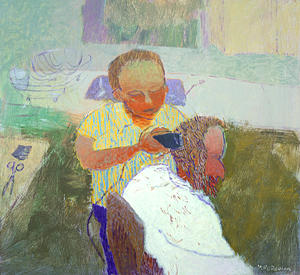
I hate haircuts. I mean I really HATE them. Every time my hair grows long I go into denial. I keep assuring myself that I don't really need a haircut yet, even after it gets to the stage where the simple acting of brushing the hair out of my face requires two pulleys, half a dozen counter-weights and a recorded announcement requesting patrons to please take their seats as the curtain is about to go up. It's only when the street cleaners association starts complaining that my long tresses are sweeping them out of a job, or when volunteers from the Sierra Club begin to hold pickets around me, loudly demanding that my hair be declared a national habitat, that I actually consider going to a hairdresser.
This is a mistake. The minute I walk into the shop a look of astonishment creeps over the faces of the staff. It never fails. It's like they're thinking - you actually expect us to make THAT look good? There'll be this brief moment of indecision while each one of them tries to fob me off on the others. Finally, one guy will be singled out (usually based on maximum youth and minimum experience) and he'll come over with a resigned air. Sidling up to me he'll whisper "You want a haircut, eh?" with a leer on his face like this is some kind of dirty secret. As though by admitting to wanting my hair cut I was establishing some sort of illicit bond between us. I feel like I've entered a brothel. I glance around to make sure no one is watching, then nod. Apparently haircuts are something polite people don't talk about.
Wouldn't it be nice if, just once, I could walk into a barber shop and ask anxiously, "isn't Leslie here yet? What about Keith, when is Keith going to come in? Oh dear. I have a showing tomorrow and I just HAVE to look my best." Or if I had the kind of hair that can be 'done' rather than just 'cut'.
Meanwhile my tormentor is leading me to The Chair. I loath barbershop chairs. They always make me think of the chairs you see in documentaries on capital punishment. You know, the kind where they strap you in and send about a thousand volts through you. The fact that the hairdresser then proceeds to drape a sheet around you and tie it up at your neck only makes this worse. I wonder if I should ask for a blindfold. I keep hoping that at the last minute there'll be a message from the Governor and I'll be free to go, all my hair still intact. I wonder if Halle Berry's on the other side of the two way mirror, watching my hair through its final moments.
The part that I dread the most about the whole operation, though, is the Question. This is the point where the hairdresser asks you how you want your hair cut, usually in some annoyingly cheerful way ("so what are we doing today?" "I'm having an endoscopy right after this to cheer myself up. What about you?"). I don't understand this. I mean look, they're the professionals right? Do brain surgeons ask you how you want your tumour cut? Does the laundry consult with you on how exactly you want your clothes cleaned? Then why can't these guys just get on with it?
The trouble is, of course, that most people have a pat answer to this. They want the back done with shears in the shape of a rectangular hyperbola, the sideburns cut in the shape of the Madonna's nose, the sides sauteed till they're the texture of the first grass of spring (before the snow has completely melted, not after). Oh, and a little off the top. I on the other hand, just want it cut SHORT. But how do you explain to someone whose entire vocation is cutting hair that you think of hair as entirely vestigial, consider haircuts a waste of time, and don't really care how your hair looks as long as it's comfortable and you don't have to bother about it for the next four months. It's like going to a Van Gogh exhibition and wondering why they don't just use photographs.
So, of course, I end up mumbling something vague like "err...um...I want it short" (imagine that - a haircut where you hair is shorter afterwards than before. what a revolutionary concept). At which point the hairdresser looks at me with disgust, decides he's dealing with a mental incompetent, and just gets on with it.
After this point, things are more or less downhill. From now on, I just sit there, eyes tightly shut to keep hair from falling into them, letting this guy reposition my head in all sorts of crazy ways, rather like a drunk trying to adjust his rearview mirror (I feel so used), trying to be patient, trying not to worry that he's secretly carving the words "I love Lucy" in the back of my head with his scissors. Trying not to imagine some Sleeping Beauty scenario where the guy pricks me with his scissor and I fall over in a hundred years sleep, only to be broken when a beautiful princess kisses me, which (let's face it) there's little chance of, specially with my haircut half done.
Oh, and the scissors. Why is it that hairdressers always have a whole array of scissors and combs in front of them - like a surgical tray? I mean it's just cutting hair, for God's sake, not some incredibly complex medical procedure. Do they even know what all those different combs and scissors are for? I have a vision of three men in surgical masks standing around:
Man 1: Oh, my God! Something's gone wrong, he's losing lustre fast. Get me a number 3 comb, stat.
Man 2: Here you are, doctor.
Man 3: No, no, Gottfried, you poor fool. Number 3 combs are for follicular infarctions. This looks more like a scalp embolism. You need to use a Wilson-Owens shunt along with a No. 6 shearing scissor. Didn't they teach you anything at hairdressing school?
By this point, the haircut is winding down. The hairdresser's trying to trim around my ears, pulling them with a presumption unknown since my second grade teacher caught me eating chewing gum in class. (More evidence that haircuts are unnatural. If God had meant man to have haircuts, wouldn't He have made the ear a more convenient shape?)
But wait. I'd almost forgotten. There's one really bad part still to go. This is the Inspection. This is the point where the guy hands you back your glasses and asks you if it's all right, often raising a mirror behind you so you can see the cut at the back. This doesn't work for me for two reasons. First, while I recognise that this double mirror thing is a neat trick, I have enough trouble relating to my face in a single mirror to be able to identify with the back of my own head. I'm usually sitting there thinking - who's that guy? Sheesh, he sure has a terrible haircut. Wonder what it's like on the front?
The other reason this inspection thing doesn't work is that I have no idea what I'm supposed to be looking for. I stare blankly at my own face. I'm comforted to find that contrary to what he seemed to be doing the guy has not raised my hair into the shape of a three layer cake complete with a little bride and groom on top. Do I like how this looks? Not really, but that's got nothing to do with the haircut - it would take some serious plastic surgery to fix that. Invariably, I'll just nod and say it's fine. At which point the guy will triumphantly pull out his scissors and make a few precise little snips, with the air of a disappointed professor. I feel like I've failed some important test. I stagger out of my chair. I can feel every eye in the place watching me, weighing me up. There's a chorus of voices in my head saying, "Right, there you go. That's one person who's never going to have sex again." I pay. As I'm going out I notice the mess my hair has made scattered all over the floor. I wonder if I should stay and offer to clean it up. I finally get out of there and begin to breathe again.
When I get back home I'll discover that my hair is still longer in front than I'd have liked it to be. This always happens. A few times early on I tried asking that it be cut shorter, only to be told (in the tone of voice one uses when addressing difficult child) that if my hair were cut any shorter it wouldn't stay. This is apparently a mathematical axiom, well known to everyone since the time of the ancient greeks. Complex physics is involved - quantum dynamics and theories of jet prepulsion play a role. I, as a mere economist, couldn't possibly comprehend it. I wonder idly what would happen if my hair decided not to stay. Would it catch the Greyhound and move to Memphis? Would I get to keep my beard or would the courts award it custody?
The final problem with haircuts, of course, is that your hair never, ever looks as good again as it did at the hairdressers. I call this the second hand car syndrome. At the barbershop you'll stare at yourself in the mirror and see someone all suave and dignified, someone who could easily pull off a bit part in Scorsese picture. Get home and you're Herbert the Hedgehog.
Oh, well. At least I won't have to do this again for the next three months.
Tuesday, September 06, 2005
Project Gemini

The basic premise of project Gemini was simple - human beings are too critical not to be properly backed up. Where some saw a glorious history of trial and endeavour, genetic researchers saw only a long history of waste, of missed opportunities, of wisdom discarded because some trivial part of the human hardware - a valve in the heart, perhaps, or a liver (that's right, a liver!) - had failed.
Project Gemini was the solution they came up with. In layman terms, it meant simply that a strand of DNA was extracted from a foetus shortly after conception and used to create a clone for every person born on the earth - a carbon copy that could be used to fill in the gaps in the original should it suffer damage. The two beings, human and clone, would grow together, and the clone would provide a ready source of organs should the need to replace them arise.
At first, the clones were kept in a more or less comatose condition. Massive warehouses were built in the desert to house them. The space required wasn't much - each clone needed little but a coffin sized drawer with his / her serial number on the front panel and an array of tubes cycling all the essentials in and out of his / her body. Soon there were complaints though. The complete lack of physical exercise meant that the organs that were donated were often frail and atrophied, with the result that the new parts came as a disappointment to the receiver; in many cases newly transferred organs failed under the unfamiliar stress that regular living put on them. Meanwhile researchers at Stanford showed that brain function was directly linked to physical experience, so that the attachment of weaker limbs that slowed the person down physically would also slow him / her down mentally. More importantly, they showed that organs carry the imprint of the mind they have been attached to, and so the shift from a docile, uneducated mind to control from a more active brain may prove seriously harmful to the patient.
Faced with these problems, the scientists came up with the idea of developing the Geminasiums. These were segregated living spaces, where the clones were allowed to live quasi-normal lives. They were taught poetry and mathematics, and followed a rigorous regimen of physical exercise. Living conditions were simple, almost spartan, but every effort was made to ensure that the clones were model specimens of the human race.
The Geminasium initiative was a resounding success. Clones ended up being fitter, stronger and more agile (both physically and mentally) than their owners. Soon there was a growing interest in cosmetic organ donation - people were using parts from their clones to upgrade their own bodies / image - they didn't really need these transplants, of course, but the lure of having better skin or stronger muscles was just too great. (There were, however, no attempts to improve the gene sequences themselves - anything but pure replication of genetic material was strictly forbidden, for fear of mutation). Worried by this trend, the authorities at Project Gemini introduced a system of prescriptions - any transplant had to be certified as a medical emergency before Gemini could be used.
The trouble, of course, was that sooner or later the clones had to find out how superior they were to their owners. Brought up on a steady diet of Shelley and Byron, it wasn't long before the restlessness the clones had always felt in their heart exploded into mutiny. Geminasiums across the world were breached, clones escaped and immediately began using what little they knew of the world (from books and TV) in an attempt to gain control over the world, once and for all.
Ten years of bloody war followed, but in the end it was the clones that won. It wasn't just that the clones were in superior physical condition, their bodies unsullied by the vices, challenges and addictions of the ordinary human lifestyle. It was also that the very naivete they brought to the revolution made them impervious to cynicism and despair. While ordinary humans were quick to admit defeat and reluctant to hope, the clones, lifted on wings of song, had no conception of how dangerous ideals could be, and were therefore not afraid to embrace them. Finally, the clones also had the advantage of being almost completely unemotional. Because the training at the Geminasium emphasised communal feeling over individual relationships, and in general discouraged the formation of close personal ties, the clones were more or less unemotional - at least when it came to people (good poetry, though, could reduce them to tears). This meant that the clones were more ruthless in battle, their instincts unsullied by sentimentality or platitudes about honour or fair play.
Given such a wealth of advantages, it was only a matter of time before the clones took over the world, and the original human population was entirely eradicated (though rumours of humans who had managed to pass themselves off as clones - humans healthy, intelligent and well-read enough - continue to this day).
Fifteen days after the Clone government finally came to power, Project Gemini was officially declared illegal.
The clones were our ancestors. It's from them we have inherited our unquestioning attitude to work, our obsession with fitness, our concern with efficiency in all things. It is from them also, that we have inherited that feeling - when you wake up in the middle of the night, for instance - that everything you say and do is only a pretense, that all this time you've been living (and will continue to live) someone else's life.
(Post inspired by reading Ishiguro's Never let me go)
Monday, September 05, 2005
Send in the Marines
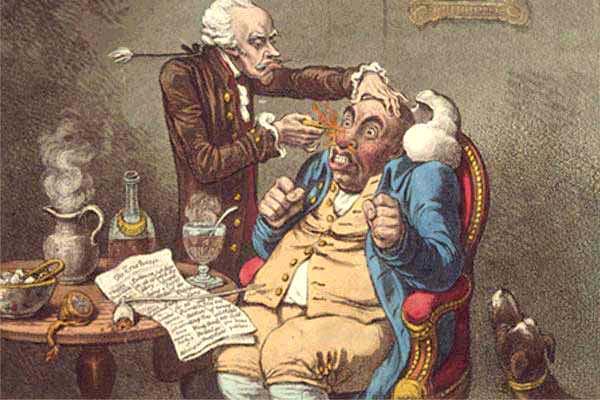
Watching the coverage of Katrina over the last week, it occured to me that the Bush administration's only response to every problem is to send in more troops while making loud statements about how it was a problem no one could have foreseen. Rather like the quacks of old who believed that a little blood-letting was the panacea for all human ills, and everyone else was a charlatan and a liar. One shudders to think how Bush and co. plan to meet budget shortfalls - no doubt by sending more troops into the Fed.
I'm reminded of this amazing Tom Lehrer song:
When someone makes a moveAlso, does anyone else find it interesting that a week after the incident we still don't have an official casualty number? Are we really expected to believe that the authorities have no idea how many people have died in this thing (the New Orleans mayor said he thought that it was probably over 10,000 apparently)? Ya, right. At least most other governments have the decency to make up bogus numbers to keep the truth from getting out. Bush and the Shrubs just keep the number from becoming public till they manage to figure out how to spin it. How convenient. So much for being the upholders of democracy in the free world.
Of which we don't approve,
Who is it that always intervenes?
U.N. and O.A.S.,*
They have their place, I guess,
But first - send the Marines!
We'll send them all we've got,
John Wayne and Randolph Scott;
Remember those exciting fighting scenes?
To the shores of Tripoli,
But not to Mississippoli,
What do we do? We send the Marines!
For might makes right,
And till they've seen the light,
They've got to be protected,
All their rights respected,
Till somebody we like can be elected.
Members of the corps
All hate the thought of war;
They'd rather kill them off by peaceful means.
Stop calling it aggression,
Ooh, we hate that expression!
We only want the world to know
That we support the status quo.
They love us everywhere we go,
So when in doubt,
Send the Marines!
Sunday, September 04, 2005
Rehnquist
From the NY Times cover story on the death of Chief Justice Rehnquist:
Kathleen Arburg, the court's public information officer, said Chief Justice Rehnquist, 80, had died at his home in Arlington, Va., surrounded by his three children (italics mine)
Why 'surrounded' I wonder? To begin with, it is even possible to be surrounded by just three people? And even if it is, why would you say your children surrounded - as if it was something you couldn't get out of?
I'm sure Rehnquist was very noble and respectable man (despite being a staunch conservative) - so it's unfortunate that the memory his name conjures up for me comes straight from Gore Vidal's Myron, where, in conformity to legislation on obscenity by the Supreme Court, the word rehnquist is used to refer to a portion of male genitalia! Just goes to show you why it's not a good idea to piss off novelists.
Kathleen Arburg, the court's public information officer, said Chief Justice Rehnquist, 80, had died at his home in Arlington, Va., surrounded by his three children (italics mine)
Why 'surrounded' I wonder? To begin with, it is even possible to be surrounded by just three people? And even if it is, why would you say your children surrounded - as if it was something you couldn't get out of?
I'm sure Rehnquist was very noble and respectable man (despite being a staunch conservative) - so it's unfortunate that the memory his name conjures up for me comes straight from Gore Vidal's Myron, where, in conformity to legislation on obscenity by the Supreme Court, the word rehnquist is used to refer to a portion of male genitalia! Just goes to show you why it's not a good idea to piss off novelists.
Saturday, September 03, 2005
What you, Will?

Act II. Scene 1.
The forest of Comm Ents. Enter Prince Hal and Falstaff.
Hal: Falstaff?
Falstaff: Here, my Lord.
H: Marks't thou this silence?
F: Ay, my lord. It captives my ear
Like a gilded cage, from out which
Some magnificient bird has flown
But lately.
H: What bodest this, think thou?
Does calamity, like a sly hyena,
Dog our footsteps through this pleasant wood
Hoping to do us present harm?
F: Nay, my lord. 'Tis but the silence of Lothlorien
Blessed abode of the high elves of Noldor.
It is not silence, my Lord, but Peace
That most magical of all music
Too tender for human ear to taste.
H: Be it so. I stand amazed.
But hark! Are these not cannons I hear?
The sound is but faint
Much like the thin drift of some tide
That, but lipping the edges of the world
Speaks in such portents of gnarled wood
As bear witness to the ocean's roaring.
Hears't thou this, Falstaff,
Is it cannons, say you, or but a bashful thunder?
F: Cannons, my lord.
The report has it that the armies of the gnomes
Have laid siege to Lothlorien
And even now attack it.
H: What manner of creatures are these gnomes?
F: Low ones, my lord.
Though their hearts and bellies be filled with fire
Their minds alas are as pliant as water
That takes on the form (only reversed)
Of any passing thing it happens to glimpse.
They are machines, my lord,
Furnaces of self-hatred
That heavy with the fuel of their own doubt
Would consume all the world's righteousness
And be destroyed with it.
H: How comes it that I have heard naught
Of these fiends?
F: They are afraid to be known, my Lord,
Much as the shadows are afraid of the noonday sun.
Their bravest leaders, ay, those very brigands
Who will crow the loudest in the fray of battle
Remain unnamed, so it please you,
Hiding their undoubted ugliness
Under a visor of obscurity.
Such is the nature of the beast.
H: Shall the elves fight these monsters
And rid us of their presence then?
F: Not they, my Lord.
For the elves fight only with each other
Or hold dispute with the immortals;
Such low adversaries are not to their liking.
See how even now they sit
Placid in their lofty homes,
Peaceful as the moon
That looks down in scorn from the sky
Knowing well that no branch the earth may raise
Shall do it harm.
H: Are the Elves afraid, then?
F: Nay, my Lord.
It is only that they know that these advances of the gnomes
Are as empty as the wind that blows
From one corner of the earth to the other
Seeking things to shake -
One does not fight with the wind
Because the wind has no direction to fight for
And once the hot air that swells its wings is spent
It shall prove passing and insubstantial.
H: But could the gnomes not harm the elves betimes?
Do they not come armed?
F: Armed, my Lord, but with such weapons
That the Elves wreck not the slightest.
They have arrows, barbs of twisted matter
Poisoned with venom on the tip
With which they hope to pierce the Elvish armour
And get them under their skins.
H: And can they?
F: Nay. For the armour of the Elves
Is as tough as the dewdrops
That glory in the leaping dawn,
And naught but light can pierce it.
The Elves have nothing to fear from the gnomes, my Lord,
That is why they sit thus, in silence,
Waiting patiently for these unbidden guests
To tire of their unwelcome courtesies
And so leave.
H: Good Falstaff, now I see it all.
How truly mighty are these Elves
Whose contempt, now clear to me,
Shows itself not in the petty bickering of swords
But in the silence with which they greet
Their foes' raucous cries.
Say I foes? Not foes, sirrah,
But parasites, for is not this the silence
Of the hunter who, bitten by mosquitoes
Lets them drink their fill of his blood
Knowing there is greater game afoot.
But where now, Falstaff?
I grow weary of this place
And crave new appetite for the senses.
F: Onward, my Lord, wherever Fancy,
That most seductive of all mistresses
May lead us. Fear not -
The gnomes shall not bar our way.
H: Lead on, Falstaff.
Exeunt Right.
(With apologies to The Bard and JRRT. It's been one of those slow Saturday mornings and I needed something to do.)
World's Worst: (not quite) 50 things to leave a lover
A post by Fingeek set me thinking about the worst presents you could give an ex who was getting married. Not that I would ever give an ex of mine anything but cheap flowers, of course. But hey, it's the thought that counts:
World's Worst [1] things to give an ex-girlfriend [2] on her wedding:
1. A rare, collector's edition of The Taming of the Shrew (with a note to the groom saying: "They're only a few of these left, you know")
2. A baby boa constrictor (with a note saying: "Sure, it looks innocent now, but give it a few years and it'll coil itself around you and slowly crush the life out of you. Enjoy your marriage, btw.")
3. The complete works of Thomas Hardy (with a note saying: "For those long, tedious winter evenings. You'll need it!")
4. A lifetime subscription to Playboy (with a note saying: "For those long, tedious winter evenings. He'll need it!")
5. 42 yards of bubble wrap folded neatly together (with a note saying: "sooner or later, they all burst") [3]
6. A 6 foot by 3 foot print of the right panel of Heironymus Bosch's triptych The Last Judgement
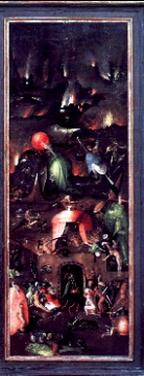
(with a note saying: "Thinking of you")
7. The Fully illustrated Guide to Rock, Paper, Scissors for Two (with a note saying: "I was going to get you the Kamasutra, but then I thought: hey! let's be realistic")
8. A mantelpiece decoration consisting of two doves against a blue and gold background with the legend: "Two Lovebirds built this nest" (Wodehouse rocks!)
9. Ten yards of rich maroon drapes (with a note saying: "It's curtains for you!" by way of explanation)
10. A life-sized cardboard cut-out of Donald Trump (with a note saying: "Just to get you in the mood")
In the interest of fairness, though, I should say that I personally think being invited to an ex's wedding is one of the top 5 life-events: right after graduation, the first time you have sex, your first tax audit, immigration and your first car accident (I know that's five right there - but two, three and five are pretty much the same thing) [4]. I wouldn't miss it for the world. No, wait, that's an overstatement. For the world I might. How about - I wouldn't miss it for three tooth extractions and Fox News. Yes, that's about right.
Notes:
[1] Not really the nastiest, of course - if you want to get really nasty you should give a can of anti-freeze with the correct ignition temperature highlighted on the side.
[2] I say ex-girlfriend, but you could easily use these for ex-boyfriends as well. Well, maybe not the Taming of the Shrew. Or Playboy. But all the others.
[3] Don't forget to insist that they 'unwrap' it then and there.
[4] I'm not including birth (which is one of those experiences that's over before you even know it happened, and is not something you really want to remember too vividly - kind of like Yanni's career as a musician) and death (which isn't strictly speaking a 'life' experience, is it?)
World's Worst [1] things to give an ex-girlfriend [2] on her wedding:
1. A rare, collector's edition of The Taming of the Shrew (with a note to the groom saying: "They're only a few of these left, you know")
2. A baby boa constrictor (with a note saying: "Sure, it looks innocent now, but give it a few years and it'll coil itself around you and slowly crush the life out of you. Enjoy your marriage, btw.")
3. The complete works of Thomas Hardy (with a note saying: "For those long, tedious winter evenings. You'll need it!")
4. A lifetime subscription to Playboy (with a note saying: "For those long, tedious winter evenings. He'll need it!")
5. 42 yards of bubble wrap folded neatly together (with a note saying: "sooner or later, they all burst") [3]
6. A 6 foot by 3 foot print of the right panel of Heironymus Bosch's triptych The Last Judgement

(with a note saying: "Thinking of you")
7. The Fully illustrated Guide to Rock, Paper, Scissors for Two (with a note saying: "I was going to get you the Kamasutra, but then I thought: hey! let's be realistic")
8. A mantelpiece decoration consisting of two doves against a blue and gold background with the legend: "Two Lovebirds built this nest" (Wodehouse rocks!)
9. Ten yards of rich maroon drapes (with a note saying: "It's curtains for you!" by way of explanation)
10. A life-sized cardboard cut-out of Donald Trump (with a note saying: "Just to get you in the mood")
In the interest of fairness, though, I should say that I personally think being invited to an ex's wedding is one of the top 5 life-events: right after graduation, the first time you have sex, your first tax audit, immigration and your first car accident (I know that's five right there - but two, three and five are pretty much the same thing) [4]. I wouldn't miss it for the world. No, wait, that's an overstatement. For the world I might. How about - I wouldn't miss it for three tooth extractions and Fox News. Yes, that's about right.
Notes:
[1] Not really the nastiest, of course - if you want to get really nasty you should give a can of anti-freeze with the correct ignition temperature highlighted on the side.
[2] I say ex-girlfriend, but you could easily use these for ex-boyfriends as well. Well, maybe not the Taming of the Shrew. Or Playboy. But all the others.
[3] Don't forget to insist that they 'unwrap' it then and there.
[4] I'm not including birth (which is one of those experiences that's over before you even know it happened, and is not something you really want to remember too vividly - kind of like Yanni's career as a musician) and death (which isn't strictly speaking a 'life' experience, is it?)
Baby you can drive my car / Let's just park
Finally, a reason to date:

Cars, like loves, oblique may well
Themselves in all confusion get,
But ours so truly parallel
Though spots are few, hasn't missed one yet.
- With apologies to Andrew Marvell.

Cars, like loves, oblique may well
Themselves in all confusion get,
But ours so truly parallel
Though spots are few, hasn't missed one yet.
- With apologies to Andrew Marvell.
Friday, September 02, 2005
The Blog Electric

"Walt Whitman, a kosmos, of Manhattan the son,
Turbulent, fleshy, sensual, eating, drinking and breeding,
No sentimalist, no stander above men and women or apart from them,
No more modest than immodest."
Is it just me, or does anyone else think that Whitman was, in spirit, a blogger? That's what we do isn't it - we celebrate ourselves and sing ourselves and what we assume we want you to assume. Leaves of Grass is the quintessential blog - at once rambling and acute, bombastic yet simple, full of high sentence yet refreshingly everyday; a mix of long-winded descriptions, breathtaking images sketched with a few simple words, profound meditations on the nature of existence, evocations of death, despair and longing and clever little observations of human nature.
The key point about Whitman's poetry is that he embraces both the individual and the universal, blending them in a way that makes the distinction irrelevant. Whitman's poems are not about Whitman: they are observations of life, nature and the world, just as any good blog is. But as with any blog, they are observations coloured and enhanced by the personality of the observer. Whitman does not, like many poets before and after him, shy away from his own presence in his poems - he lets the shadow of his intellect fall across the landscape he is painting, knowing it will only make the view more realistic. In Song of myself, he writes:
These are really the thoughts of all men in all ages and lands, they are not original with me,
If they are not yours as much as mine they are nothing, or next to nothing,
If they are not the riddle and the untying of the riddle they are nothing,
If they are not just as close as they are distant they are nothing.
This is the grass that grows wherever the land is and the water is,
This is the common air that bathes the globe.
What I would not give to keep a blog that lived up to that standard! It is a standard that Whitman takes to easily enough, though, sounding his barbaric yawp across the skyline of the years, his images blossoming like lilac in a long abandoned dooryard. Out of the ocean of his lines, endlessly rocking, comes a voice so fragile, so pure, so vicariously tangible, that more than a hundred years after his death his poems still have the same immediacy, the same deeply physical feel to them. The 19th century had many, many great poets, but Whitman is, perhaps, the only one you could gladly drive across the country with, a six-pack of beer in the back seat ("Afoot and light-hearted I take to the open road / Healthy, free, the world before me / The long brown path before me leading wherever I choose"). [1]
Finally, Whitman is also the source of one of my favourite answers to the question: Why Blog?
O me! O life! of the questions of these recurring,
Of the endless trains of the faithless, of the cities fill'd with the foolish,
Of myself forever reproaching myself, (for who more foolish than I, and who more faithless?)
Of eyes that vainly crave the light, of objects mean, of the struggle ever renew'd,
Of the poor results of all, of the plodding and sordid crowds I see around me,
Of the empty and useless years of the rest, with the rest me intertwined,
The question, o me! so sad, recurring - What good among these, O me, O life?
Answer
That you are here - that life exists and identity,
That the powerful play goes on, and you may contribute a verse.
- Walt Whitman
[1] or go shopping in a supermarket with, see Ginsberg A Supermarket in California
Thursday, September 01, 2005
Bah! Humbug!

I'm depressed. I just discovered that yesterday was Blog Day and I missed it! All day I went about happy and cheerful, spreading light and cheer, little suspecting that an important day was passing me by. If I'd known it was Blog Day I would have been surly and uncommunicative. I would have snarled at people who went around trying to be nice and saying things like Happy Blog Day! I would have gone out of my way to emphasise how little Blog Day means to me. How it's a day like any other day and I don't know what the fuss is about. That it's all the egoism of people whose lives are so sordid that they have to invent occassions to celebrate. I would have posted something suitably negative and depressing to effectively deny the spirit of the whole thing.
Instead, out of sheer ignorance, I find that I've actually lived through Blog day without being even slightly scornful, without expressing contempt for even one person or idea. I feel like I've missed an important opportunity. I could try to make up for it now, visit a few blogs, leave a few nasty comments, but it's just not the same, is it? I can't be an anti-hero anymore, I can only be a nasty, pathetic and deeply screwed-up individual*. And that's something I can be any day of the week.
Why didn't someone warn me? Why didn't someone tell me that yesterday was not the day to be all sunny and joyful? It's not fair.
*That incidentally is the thing I feel most people don't get about Scrooge - Scrooge's denial of Christmas is not really a denial at all, it's an anti-celebration; in his own special way Scrooge is making just as big a deal of Christmas as anyone else.
Her-esy
One of the things I'm always on the lookout for in my interactions with other people is signs of unconscious bias. Not that I have anything against being prejudiced per se - I certainly don't think that all people are created equal, for example - I'm quite willing to be biased as long as it's a bias I'm aware of. It's the idea that I may be biased unthinkingly that frightens me. I think there's an important difference between being a bigot and being opinionated - an opinion is something you form consciously, bigotry is a filter that keeps you from looking clearly at the world.
More importantly, there are distinctions I consider valid and others that I do not. I'm quite happy, for instance, to look down on Britney Spears fans or people who think Dan Brown is the greatest writer in the world, but I'd hate to think that I'm prejudiced against someone based on his / her gender, race or nationality.
I think the difference in my mind is that it's valid to discriminate against people based on choices that they make - partly because they're controlled forms of self-expression, and partly because these are valid indicators of deeper interests / abilities - but it's not okay to discriminate on the basis of things that people are born with / into. This may, of course, be a naively individualistic view, ignoring the effect that social parameters have on individual personality, but I still think it's unfair not to give people the chance to prove that they don't conform to the stereotype. The flip-side of everyone not being equal is that people within a particular sub-group are not equal either. So one shouldn't stereotype.
It disturbed me therefore that while I was writing a review of Hilary Mantel's Beyond Black yesterday, I found myself referring to the author as Ms. Mantel. This may not seem like such a bad thing, except that two days ago I wrote a review of Dan Jacobson's All for Love and had no compunction calling him Jacobson all through. Why the sudden formality with Mantel then? Why this need to patronise? Hilary Mantel is as serious a writer as Dan Jacobson is; in both cases the novels reviewed were the first books by either author I'd read [1], why then did I feel that I could be familiar with Jacobson but had to treat Mantel with kid gloves?
Some people would argue that what motivated me was merely a chivalrous impulse - a reluctance to express too easy a familiarity with a lady I don't really know. This is a horrifying thought. I do not, repeat, do not believe in chivalry. I believe that chivalry is just chauvinism put politely. At the heart of the chivalrous ideal is the assumption that women are 'special' creatures who require (and deserve) protection and preferential treatment. But once you make that assumption and assume that all women, independent of their individual preferences / personalities, are the same, once you make gender the sole discriminatory variable guiding your actions, then it's a short step to treating women as inferior. And isn't chivalry ultimately about marking women out, making them feel more like women (whatever that means)? By putting a 'Ms.' before Mantel's name, am I not insinuating that the fact that she's a woman is somehow relevant to the understanding of her book, and that it entitles her to be treated with greater compassion than I would treat a male writer?
I didn't finally use the Ms. of course - I called her Mantel, just as I called Jacobson Jacobson. But the fact that my instinct told me (still tells me) that I should put the Ms. in continues to disturb me.
Two (exceedingly thin) arguments I can advance in my own defense: First, could my need to patronise come rather from my assessment of Mantel's novel (which I disliked) rather than from the fact of her being a woman? Could it be that I felt comfortable addressing Jacobson less informally because having enjoyed his book I felt much closer to him than I did to Mantel? Or second, could it me something about the sound of the two names - the three syllables of Jacobson standing well enough alone, but Mantel seeming to short, too cursory, a chair too thin to sit on without that extra cushion of Ms. on top?
Is this just me? Does this happen to other people? Do they worry about it too? Am I just being paranoid?
Notes:
[1] Thinking about it, I realised that I have no problem addressing women whose writing I'm familiar with by their unadorned surnames. I would never dream of saying Ms. Austen or Ms. Woolf or Ms. Murdoch for instance. So my first theory was that it was just because Mantel was an author I'd never read before. Unfortunately, the same applies to Jacobson so the argument doesn't hold.
More importantly, there are distinctions I consider valid and others that I do not. I'm quite happy, for instance, to look down on Britney Spears fans or people who think Dan Brown is the greatest writer in the world, but I'd hate to think that I'm prejudiced against someone based on his / her gender, race or nationality.
I think the difference in my mind is that it's valid to discriminate against people based on choices that they make - partly because they're controlled forms of self-expression, and partly because these are valid indicators of deeper interests / abilities - but it's not okay to discriminate on the basis of things that people are born with / into. This may, of course, be a naively individualistic view, ignoring the effect that social parameters have on individual personality, but I still think it's unfair not to give people the chance to prove that they don't conform to the stereotype. The flip-side of everyone not being equal is that people within a particular sub-group are not equal either. So one shouldn't stereotype.
It disturbed me therefore that while I was writing a review of Hilary Mantel's Beyond Black yesterday, I found myself referring to the author as Ms. Mantel. This may not seem like such a bad thing, except that two days ago I wrote a review of Dan Jacobson's All for Love and had no compunction calling him Jacobson all through. Why the sudden formality with Mantel then? Why this need to patronise? Hilary Mantel is as serious a writer as Dan Jacobson is; in both cases the novels reviewed were the first books by either author I'd read [1], why then did I feel that I could be familiar with Jacobson but had to treat Mantel with kid gloves?
Some people would argue that what motivated me was merely a chivalrous impulse - a reluctance to express too easy a familiarity with a lady I don't really know. This is a horrifying thought. I do not, repeat, do not believe in chivalry. I believe that chivalry is just chauvinism put politely. At the heart of the chivalrous ideal is the assumption that women are 'special' creatures who require (and deserve) protection and preferential treatment. But once you make that assumption and assume that all women, independent of their individual preferences / personalities, are the same, once you make gender the sole discriminatory variable guiding your actions, then it's a short step to treating women as inferior. And isn't chivalry ultimately about marking women out, making them feel more like women (whatever that means)? By putting a 'Ms.' before Mantel's name, am I not insinuating that the fact that she's a woman is somehow relevant to the understanding of her book, and that it entitles her to be treated with greater compassion than I would treat a male writer?
I didn't finally use the Ms. of course - I called her Mantel, just as I called Jacobson Jacobson. But the fact that my instinct told me (still tells me) that I should put the Ms. in continues to disturb me.
Two (exceedingly thin) arguments I can advance in my own defense: First, could my need to patronise come rather from my assessment of Mantel's novel (which I disliked) rather than from the fact of her being a woman? Could it be that I felt comfortable addressing Jacobson less informally because having enjoyed his book I felt much closer to him than I did to Mantel? Or second, could it me something about the sound of the two names - the three syllables of Jacobson standing well enough alone, but Mantel seeming to short, too cursory, a chair too thin to sit on without that extra cushion of Ms. on top?
Is this just me? Does this happen to other people? Do they worry about it too? Am I just being paranoid?
Notes:
[1] Thinking about it, I realised that I have no problem addressing women whose writing I'm familiar with by their unadorned surnames. I would never dream of saying Ms. Austen or Ms. Woolf or Ms. Murdoch for instance. So my first theory was that it was just because Mantel was an author I'd never read before. Unfortunately, the same applies to Jacobson so the argument doesn't hold.
Wednesday, August 31, 2005
So what if it's not my area - just raise the volume!
Sorry, I can't resist. Comments on yesterday's post plus a couple of discussions with friends off-line (the discussions were off-line not the friends) prompted a whole bunch of thoughts on stimulation, challenge and happiness, which I just HAVE to put down, if only to prove that hidden deep within everyone who makes fun of childhood fables is a pop-philosopher just waiting to break out.
So here goes.
Let me start by saying that in my view the purpose of human activity is the search for stimulation - a desire to challenge ourselves and push the limits of our own being. Where these challenges are met successfully, we experience satisfaction / happiness; where we fail we experience a sense of loss which could lead to either defeat or a renewal of energy. The key though is to continuously feel stimulated, to constantly maintain that gap between our achievements and our aspirations. If we achieve everything we want to, we experience contentment but that rapidly degenerates into boredom and stagnation. If we see no hope of achieving what we desire then we experience frustration and defeat, and that is a different kind of stagnation. Browning writes:
But what if I fail of my purpose here?
'Tis but the keep the nerves at strain,
To dry one's eyes and laugh at a fall,
And baffled, get up and begin again, -
So the chase takes up one's life, that's all.
The nature of the stimulation we seek, however, deserves closer scrutiny. Two distinctions are critical. First, the distinction between relative challenge and absolute challenge. Relative challenge is entirely internal - it is simply a question of doing better than one has done before oneself. Absolute challenge is the adoption of some extrinsic 'objective' standard, that allows us to compare ourselves to some external benchmark. So, for instance, running a mile faster than you've ever run it before could be a relative standard, running it in under four minutes could be an absolute challenge. Understand that an absolute challenge is not necessarily about competition or external validation - it's simply about wanting to have some standard greater than yourself.
Why would you want to set an absolute challenge[1]? The answer lies, partly, I think, in the second important distinction - the one between process satisfaction and outcome satisfaction. In any endeavour, a part of the satisfaction / stimulation we achieve comes from the process, from the actions we take; and another part comes from the enjoyment / stimulation of what we create / achieve. It's the latter kind of satisfaction where ability comes into play. Consider a group of people cooking pasta. Irrespective of their skill as cooks, they may gain equal enjoyment from the process of cooking, but the end result will only provide simulation to those are good cooks.
So what does this mean for the breadth vs depth debate?
To begin with, I think the whole debate is a non-starter - a total red herring. Pascal, writing on the nature of finite existence (see extract No. 72), speaks of the two infinities - that of the infinitely large and the infinitely small - limit tending to infinity and limit tending to zero. It's not that depth involves a reduction in novelty or the sacrifice of breadth, it merely implies a re-scaling of the breadth one operates on. To someone who merely dabbles in an art form (say poetry) all that art form may seem the same, but to someone who delves deep into it, the fine-grained detail becomes more apparent, and provides the same experience of infinite variety within the microcosm of that art form. For the true painter there's an unbridgeable gulf between Mattisse and Picasso, for the dilettante, they're both essentially modern art. The real question then is only what scale we choose - not whether we choose breadth or depth.
That said, how does one choose the scale one operates on, and why would I, personally prefer to operate at a more microscopic level - tending to the infinity of every thing than the infinity of Everything? The first reason is that I believe that, in the absence of serious delusion, true enjoyment of the outcome of one's work can only come from setting absolute standards. This is not to say that there is no joy in operating on relative standards, only that there is greater joy to be had by achieving something that is an achievement in some absolute self. Writing even the crummiest academic paper can be fun, but there's a sense of satisfaction you get from writing something that is truly path-breaking, that the kind of crack-filling most academic research involves cannot provide.
Why should this be? Is it entirely about external comparison? Perhaps. But also perhaps it is because absolute standards represent a higher order of stimulation than we can achieve by simply pacing against ourselves. There is a reason why the standard is set where it is - because that's genuinely a difficult line for the human mind / body to cross. The other reason that absolute standards are important, I think, are because many activities do not lend themselves to easy calibration, so that marginal improvements are almost impossible to measure, and we can do nothing more than comparing ourselves to some basic threshold. If you're running then you can measure the improvement in your time in milli-seconds, but if you're cooking then such fine-grained improvements in your performance are almost impossible to seperate from subjective noise. The use of external benchmarks / absolute standards thus becomes the only way of calibrating your own success.
Notice also that activities may vary in the level at which the absolute threshold is set. Many artistic endeavours, for instance, are discontinuous, in that being average is not significantly better than being really bad. Imagine something that looks more or less like a chi-square distribution. The mean is pretty close to the bottom here, but the top is very, very far away. Being an average piano player is not much better than being a really bad piano player - you'll never experience any real stimulation / satisfaction from your own playing. It's only by becoming a truly excellent pianist that you can begin to enjoy your own performance.
This brings us, finally, to the reason I would pick the infinity of detail. Because being really skilled at something allows you the luxury of setting yourself absolute challenges, while still allowing you to seek novelty in new and exciting endeavours within the bounds of the specialisation. To the extent that anything that is really challenging is also really difficult, you're unlikely to reach a level where you're able to set absolute challenges for yourself if you simply dabble in a whole bunch of things. To get to the stage where absolute challenges become viable you need to invest significant amounts of time and effort. But that involves getting into the details.
Take poetry, for instance. The reason there are so many really, really bad poets out there, is because people feel that they can just sit down with pen and paper and write a good poem. It doesn't work that way. It takes years and years of practise, of diligent reading, of constant effort to make a good poet (even with the great poets - just read Sylvia Plath's early poems and you'll see what I mean). You could argue that it doesn't matter if you write bad poetry as long as you enjoy it, and that's true (though I must object to your calling it poetry - something like 'spilled ink on the page' would be a more accurate description), but unless you're incredibly self-delusional you're not really going to be able to enjoy your output as poems because you'll know somewhere deep inside you that they're mediocre. So you might enjoy writing them, but you won't enjoy reading them afterwards. On the other hand, if you did put in the effort, you could get to a point where your poems were good enough to give you pleasure as a reader. And what of novelty, you ask? To begin with every new poem is a different challenge. Plus you could always experiment with new styles / forms of poetry - the point is you'd be starting from a much stronger starting point and could get to an absolute standard more rapidly than you would if you were to take up, say, touch football.
Notice that this whole argument is based on the principle of choosing between alternatives. Obviously it's better to do something badly than not do it at all (at least you'll get process stimulation from it), but if you have to choose between something you genuinely do well (and could develop further) or something you're not good at, I'm not sure why you would pick the latter. Why jump after grapes when there are rabbits around to be caught? Also, of course, if there's nothing you can get to a reasonable absolute standard on, then you will tend to keep dabbling in new things (simply because after a while relying purely on relative challenge will pale on you - we're all social creatures who need external confirmation of our own identity), but this means you'll always miss out on the joy of creating something truly new and unique in an absolute sense.
Finally, understand that I'm not saying that one should never try new things. Simply that trying new things only makes sense if you genuinely believe that they will stimulate you in ways that your existing activities cannot - implying either that the process satisfaction from them is greater than the combined process and outcome satisfaction from the things you are good at and can set absolute standards on, or that you sense the possibility of achieving an absolute standard in the other activity (perhaps after an initial learning period) and thus can hope to enjoy outcome satisfaction there as well.
Here endeth the grand lecture. Now to think up questions for the short quiz I'm giving you all tomorrow!
[1] There is also, of course, the more prosaic explanation that we are all social creatures who need external reference to define a sense of self and therefore just like competing for the sake of it. But that would be too easy, no?
So here goes.
Let me start by saying that in my view the purpose of human activity is the search for stimulation - a desire to challenge ourselves and push the limits of our own being. Where these challenges are met successfully, we experience satisfaction / happiness; where we fail we experience a sense of loss which could lead to either defeat or a renewal of energy. The key though is to continuously feel stimulated, to constantly maintain that gap between our achievements and our aspirations. If we achieve everything we want to, we experience contentment but that rapidly degenerates into boredom and stagnation. If we see no hope of achieving what we desire then we experience frustration and defeat, and that is a different kind of stagnation. Browning writes:
But what if I fail of my purpose here?
'Tis but the keep the nerves at strain,
To dry one's eyes and laugh at a fall,
And baffled, get up and begin again, -
So the chase takes up one's life, that's all.
The nature of the stimulation we seek, however, deserves closer scrutiny. Two distinctions are critical. First, the distinction between relative challenge and absolute challenge. Relative challenge is entirely internal - it is simply a question of doing better than one has done before oneself. Absolute challenge is the adoption of some extrinsic 'objective' standard, that allows us to compare ourselves to some external benchmark. So, for instance, running a mile faster than you've ever run it before could be a relative standard, running it in under four minutes could be an absolute challenge. Understand that an absolute challenge is not necessarily about competition or external validation - it's simply about wanting to have some standard greater than yourself.
Why would you want to set an absolute challenge[1]? The answer lies, partly, I think, in the second important distinction - the one between process satisfaction and outcome satisfaction. In any endeavour, a part of the satisfaction / stimulation we achieve comes from the process, from the actions we take; and another part comes from the enjoyment / stimulation of what we create / achieve. It's the latter kind of satisfaction where ability comes into play. Consider a group of people cooking pasta. Irrespective of their skill as cooks, they may gain equal enjoyment from the process of cooking, but the end result will only provide simulation to those are good cooks.
So what does this mean for the breadth vs depth debate?
To begin with, I think the whole debate is a non-starter - a total red herring. Pascal, writing on the nature of finite existence (see extract No. 72), speaks of the two infinities - that of the infinitely large and the infinitely small - limit tending to infinity and limit tending to zero. It's not that depth involves a reduction in novelty or the sacrifice of breadth, it merely implies a re-scaling of the breadth one operates on. To someone who merely dabbles in an art form (say poetry) all that art form may seem the same, but to someone who delves deep into it, the fine-grained detail becomes more apparent, and provides the same experience of infinite variety within the microcosm of that art form. For the true painter there's an unbridgeable gulf between Mattisse and Picasso, for the dilettante, they're both essentially modern art. The real question then is only what scale we choose - not whether we choose breadth or depth.
That said, how does one choose the scale one operates on, and why would I, personally prefer to operate at a more microscopic level - tending to the infinity of every thing than the infinity of Everything? The first reason is that I believe that, in the absence of serious delusion, true enjoyment of the outcome of one's work can only come from setting absolute standards. This is not to say that there is no joy in operating on relative standards, only that there is greater joy to be had by achieving something that is an achievement in some absolute self. Writing even the crummiest academic paper can be fun, but there's a sense of satisfaction you get from writing something that is truly path-breaking, that the kind of crack-filling most academic research involves cannot provide.
Why should this be? Is it entirely about external comparison? Perhaps. But also perhaps it is because absolute standards represent a higher order of stimulation than we can achieve by simply pacing against ourselves. There is a reason why the standard is set where it is - because that's genuinely a difficult line for the human mind / body to cross. The other reason that absolute standards are important, I think, are because many activities do not lend themselves to easy calibration, so that marginal improvements are almost impossible to measure, and we can do nothing more than comparing ourselves to some basic threshold. If you're running then you can measure the improvement in your time in milli-seconds, but if you're cooking then such fine-grained improvements in your performance are almost impossible to seperate from subjective noise. The use of external benchmarks / absolute standards thus becomes the only way of calibrating your own success.
Notice also that activities may vary in the level at which the absolute threshold is set. Many artistic endeavours, for instance, are discontinuous, in that being average is not significantly better than being really bad. Imagine something that looks more or less like a chi-square distribution. The mean is pretty close to the bottom here, but the top is very, very far away. Being an average piano player is not much better than being a really bad piano player - you'll never experience any real stimulation / satisfaction from your own playing. It's only by becoming a truly excellent pianist that you can begin to enjoy your own performance.
This brings us, finally, to the reason I would pick the infinity of detail. Because being really skilled at something allows you the luxury of setting yourself absolute challenges, while still allowing you to seek novelty in new and exciting endeavours within the bounds of the specialisation. To the extent that anything that is really challenging is also really difficult, you're unlikely to reach a level where you're able to set absolute challenges for yourself if you simply dabble in a whole bunch of things. To get to the stage where absolute challenges become viable you need to invest significant amounts of time and effort. But that involves getting into the details.
Take poetry, for instance. The reason there are so many really, really bad poets out there, is because people feel that they can just sit down with pen and paper and write a good poem. It doesn't work that way. It takes years and years of practise, of diligent reading, of constant effort to make a good poet (even with the great poets - just read Sylvia Plath's early poems and you'll see what I mean). You could argue that it doesn't matter if you write bad poetry as long as you enjoy it, and that's true (though I must object to your calling it poetry - something like 'spilled ink on the page' would be a more accurate description), but unless you're incredibly self-delusional you're not really going to be able to enjoy your output as poems because you'll know somewhere deep inside you that they're mediocre. So you might enjoy writing them, but you won't enjoy reading them afterwards. On the other hand, if you did put in the effort, you could get to a point where your poems were good enough to give you pleasure as a reader. And what of novelty, you ask? To begin with every new poem is a different challenge. Plus you could always experiment with new styles / forms of poetry - the point is you'd be starting from a much stronger starting point and could get to an absolute standard more rapidly than you would if you were to take up, say, touch football.
Notice that this whole argument is based on the principle of choosing between alternatives. Obviously it's better to do something badly than not do it at all (at least you'll get process stimulation from it), but if you have to choose between something you genuinely do well (and could develop further) or something you're not good at, I'm not sure why you would pick the latter. Why jump after grapes when there are rabbits around to be caught? Also, of course, if there's nothing you can get to a reasonable absolute standard on, then you will tend to keep dabbling in new things (simply because after a while relying purely on relative challenge will pale on you - we're all social creatures who need external confirmation of our own identity), but this means you'll always miss out on the joy of creating something truly new and unique in an absolute sense.
Finally, understand that I'm not saying that one should never try new things. Simply that trying new things only makes sense if you genuinely believe that they will stimulate you in ways that your existing activities cannot - implying either that the process satisfaction from them is greater than the combined process and outcome satisfaction from the things you are good at and can set absolute standards on, or that you sense the possibility of achieving an absolute standard in the other activity (perhaps after an initial learning period) and thus can hope to enjoy outcome satisfaction there as well.
Here endeth the grand lecture. Now to think up questions for the short quiz I'm giving you all tomorrow!
[1] There is also, of course, the more prosaic explanation that we are all social creatures who need external reference to define a sense of self and therefore just like competing for the sake of it. But that would be too easy, no?
Drawing the line
Nice review in last week's New Yorker (I'm still catching up on my mail) of Hilary Spurling's book on Matisse that I'd blogged about earlier.
 "Picasso and Matisse are poles apart aesthetically. Matisse told his students, "One must always search for the desire of the line, where it wishes to enter
 , where to die away." Picasso's line has no desire; it is sheer will. Form builds in Picasso, flows in Matisse. Picasso uses colour. Colours enter the world through Matisse like harmonies through Mozart."
Superbly put.
(Paintings: On the left, Matisse The Piano Lesson; on the right, Picasso Le Piano).
 "Picasso and Matisse are poles apart aesthetically. Matisse told his students, "One must always search for the desire of the line, where it wishes to enter
 , where to die away." Picasso's line has no desire; it is sheer will. Form builds in Picasso, flows in Matisse. Picasso uses colour. Colours enter the world through Matisse like harmonies through Mozart."
Superbly put.
(Paintings: On the left, Matisse The Piano Lesson; on the right, Picasso Le Piano).
Tuesday, August 30, 2005
A Fable revisited / Why bother with Gilbert's Grapes
Remember the fable of the Fox and the Grapes? Some things about that fable have always struck me as being a little off. To begin with, since when do foxes eat grapes? I mean, these are foxes, right - red bushy little predators who eat rabbits and squirrels and are the preferred quarry of Quorn and co - they're not Paul Giamatti in Sideways. You don't see busloads of foxes making tours of Napa Valley to sample the grapes, do you? So how come this one fox wanted grapes? Plus, why a fox anyway? I've always thought of foxes in fairy tales / fables as being fairly ambiguous creatures. You never know how they're going to turn out. Sometimes they'll prove to be cunning wily creatures (I have a sudden mental flash of Hendrix signing "Foxy!") at other times they'll be total dupes. It's not like lions or something, where the minute they show up in the story you just know they've got some sort of come-uppance coming to them. So I think it's interesting that the fable is about a fox and not about some other animal (say a turtle or something)
Thinking about it, I realised that what's principally bugged me about the fable all these years is the implicit assumption that the 'right' thing for the fox to do would have been to humbly admit his own inability to get to the grapes without in any way denigrating them or denying his yearning for them. Some sort of "desire of the moth for the star / of the night for the morrow" (Shelley) thing should have happened.
Personally, I think what the fox should have done is basically realise that grapes weren't his thing. After all, there's a reason why the fox isn't able to get to the grapes - evolution hasn't conditioned him to be a grape eater, it isn't natural for him. So rather than saying the grapes must be sour, the fox should say something like - I don't really like grapes that much anyway. I'd rather get myself a juicy rabbit. Grapes are for the birds.
Some people will argue that this is escapism - it's taking the easy way out. There is, I admit, some truth to that, but I think there's a risk of erring too much on the other side. The trouble is that there's a thin line between giving up on something too easily, and striving to make something work when it really isn't worth it, and the fable takes too one sided a view of that trade-off. One reason it does this is that it makes no allowance for the existence of alternatives. Life, I think, is seldom about such all or nothing choices - on the contrary, it is often about making one's way through a minefield of opportunity, trying to pick the one alternative from the many that will give us the greatest satisfaction. So it would be perfectly legitimate for the fox to:
a) Either not pursue the grapes at all, sensing that they were going to be difficult to get and not feeling they were worth it
b) Trying a couple of times and then deciding that the grapes weren't meant for it and making a general decision not to seek grapes any more.
Of course, the fox needs to be objective here - if it really needs the grapes then it must not dismiss them so easily but must continue to look for creative ways to get access to them. My point is simply that it is a valid response for the fox to re-evaluate its craving for grapes in the light of the experienced difficulty of getting at them, and decide that it doesn't want them after all. This is different from simply putting a brave front on things - the point is not that the fox should pretend that the grapes don't matter to him, the point is rather that he should try and get to the point where they genuinely don't.
A friend asked me the other day how I deal with insecurity. My answer - by changing my own aspirations to fit what I think I can achieve. This sounds suspiciously like what the fox does with the grapes, and in some ways it is. My point is that I often find that the things I think I want and feel insecure about not being able to get are usually expectations that society has foisted on me / conditioned me to believe in. They are not things that I truly need - I want them only because I'm expected to want them. If I really think about it, I could manage easily and happily without them and wouldn't have to go around stressing about how I was going to get them.
Understand that this is not an argument for saying that the grapes are sour - I have no doubt that many of the things I no longer aspire to are things that will bring great joy into other people's lives. I'm just unconvinced that they're right for me.
What was it Eliot said in Ash Wednesday?
Because I do not hope to turn again
Because I do not hope
Because I do not hope to turn
Desiring this man's gift and that man's scope
I no longer strive to strive towards such things
(Why should the aged eagle stretch its wings?)
Why should I mourn
The vanished power of the usual reign?
Thinking about it, I realised that what's principally bugged me about the fable all these years is the implicit assumption that the 'right' thing for the fox to do would have been to humbly admit his own inability to get to the grapes without in any way denigrating them or denying his yearning for them. Some sort of "desire of the moth for the star / of the night for the morrow" (Shelley) thing should have happened.
Personally, I think what the fox should have done is basically realise that grapes weren't his thing. After all, there's a reason why the fox isn't able to get to the grapes - evolution hasn't conditioned him to be a grape eater, it isn't natural for him. So rather than saying the grapes must be sour, the fox should say something like - I don't really like grapes that much anyway. I'd rather get myself a juicy rabbit. Grapes are for the birds.
Some people will argue that this is escapism - it's taking the easy way out. There is, I admit, some truth to that, but I think there's a risk of erring too much on the other side. The trouble is that there's a thin line between giving up on something too easily, and striving to make something work when it really isn't worth it, and the fable takes too one sided a view of that trade-off. One reason it does this is that it makes no allowance for the existence of alternatives. Life, I think, is seldom about such all or nothing choices - on the contrary, it is often about making one's way through a minefield of opportunity, trying to pick the one alternative from the many that will give us the greatest satisfaction. So it would be perfectly legitimate for the fox to:
a) Either not pursue the grapes at all, sensing that they were going to be difficult to get and not feeling they were worth it
b) Trying a couple of times and then deciding that the grapes weren't meant for it and making a general decision not to seek grapes any more.
Of course, the fox needs to be objective here - if it really needs the grapes then it must not dismiss them so easily but must continue to look for creative ways to get access to them. My point is simply that it is a valid response for the fox to re-evaluate its craving for grapes in the light of the experienced difficulty of getting at them, and decide that it doesn't want them after all. This is different from simply putting a brave front on things - the point is not that the fox should pretend that the grapes don't matter to him, the point is rather that he should try and get to the point where they genuinely don't.
A friend asked me the other day how I deal with insecurity. My answer - by changing my own aspirations to fit what I think I can achieve. This sounds suspiciously like what the fox does with the grapes, and in some ways it is. My point is that I often find that the things I think I want and feel insecure about not being able to get are usually expectations that society has foisted on me / conditioned me to believe in. They are not things that I truly need - I want them only because I'm expected to want them. If I really think about it, I could manage easily and happily without them and wouldn't have to go around stressing about how I was going to get them.
Understand that this is not an argument for saying that the grapes are sour - I have no doubt that many of the things I no longer aspire to are things that will bring great joy into other people's lives. I'm just unconvinced that they're right for me.
What was it Eliot said in Ash Wednesday?
Because I do not hope to turn again
Because I do not hope
Because I do not hope to turn
Desiring this man's gift and that man's scope
I no longer strive to strive towards such things
(Why should the aged eagle stretch its wings?)
Why should I mourn
The vanished power of the usual reign?
Monday, August 29, 2005
Childe Falstaff's Pilgrimage / How the West was wondered at
Just got back from amazing vacation to Utah, Nevada and Eastern California, so figured would put long, long blog about it (if only as excuse for staying away from work for one more day). So here goes:
Day 0
New York to Vegas, reading Bulgakov, coffee and Oreos on the flight. Mustn't help person on seat next to me who's making ppt for conference he's attending and clearly has never used Powerpoint before. Need distraction. Try watching television. Remember why I don't watch television. Look out of the window. Total darkness. Thank God for iPods.
Later, at Vegas, the smell of easy money already in the air, even at the airport; the taste of the city like the sheen of polished marble in the airport lounge as I wait for T. to retrieve the wallet he's forgotten in the plane. Trying to adjust to the three hour time difference. Trying not to strangle T and N who've both been to Vegas before and act like I'm three years old and have to have all the sights pointed out to me. Trying to convince the woman at the rental car counter that the tattered paper booklet that N carries in his wallet is really an Indian driver's license and not just something the dog dragged in to chew on. Then driving down the Vegas strip (after T and N have helpfully shown me the way to get lost leaving the airport - "See, this is where you take the wrong turn") all the tackiness of that city, the cheap tinsel lights, the easy escapism. The crowds, the noise, the faintly unwashed vibe of the whole place. I feel suffocated with the articifiality of this town. I can't believe people come here for fun. Only when we get into our hotel room and lock the door do I feel that it's safe to breath without risking some pollution to my soul.
Memorable Sight: Twenty minutes of incessant lightning in a massive cloud bank over the mid-west - seen from above, the flashes look like cannonfire in some besieged city. It's like watching the war footage on CNN with the volume turned low, only more beautiful.
Song of the Day: Joni Mitchell This Flight Tonight.
Day 1
Quick breakfast at the IHOP, five more wrong turns, and we're finally out of Vegas. Before us, the horizon opens up its welcoming arms, the desert unrolls like a grubby old carpet, the mountains stand waiting politely, comb-overs of sand over bald heads of rock. Two jets streak through the azure sky, their white trails underlining the sense of terrible distance. A hundred miles to the hills, to an amazing mountain highway, the curves so perfect that the car does 80 miles an hour easily. Then a quick turn-off to the right and suddenly the desert gives way to forest. We have arrived at Zion.
 A park shuttle takes us up into the canyon. Great walls of red and black rock tower above us, as though the wrath of the gods had solidified into stone. We feel awed, gazing in wonder at the sheer surfaces of the rock, worn smooth with countless millenia of wind and water. Amazing to think that this little stream that runs alongside could have made something so massive. The road follows the river faithfully, holding its hand, a wide-eyed child gazing fearfully at the blank faces of strangers that tower above it.
The road ends at the Temple of Sinawawa - a gorgeous natural amphitheatre - walls of stone hundreds of feet high, with a thin stream whispering through it like the chant of some watery priest. The water is pure and cold and green here, it giggles playfully, but all around it the cliffs stand aloof. Even breathing in this place seems like a profanation. I sit in the cool of the bus stop waiting for the shuttle to return. A fat squirrel comes over and nibbles on my shoes. A child is crying for his Gameboy. I think of Eliot "Those who have crossed /With direct eyes, to death's other Kingdom / Remember us - if at all - Not as lost / Violent souls, but only /As the hollow men / The stuffed men."
 Afterwards the steep trail up to Weeping Rock with a dog-eared copy of Raymond Carver's poems stuffed into my waistband. And still later, sitting under a tree at the Zion Lodge, falling asleep with the book laid across my chest, dreaming of Tennyson "Sighing for Lebanon,/ Dark cedar, tho’ thy limbs have here increased, /Upon a pastoral slope as fair, / And looking to the South, and fed / With honey’d rain and delicate air". Then back down the canyon to our car, the high places rising above us again, majestic like thrones (Eliot again: "This broken jaw of our lost kingdoms"). Then out of the park and on to the the Grand Staircase National Monument.
 Who would have thought the earth could have so many colours. That the dust could blossom more vivid than flowers? In the distance the cliffs stretch away - Vermilion and white and pink. Closer to hand, a meadow of brilliant yellow, bison grazing its lush grass. The landscape has changed again, narrow gorges have given way to grand vistas of mesas, scraped on to a blue background of sky with a knife that could have been Van Gogh's. As we head out towards the cliffs, the sun is setting, the clouds glow with a transient glory (Keats this time: "As when a cloud the golden moon doth veil, / Its sides are ting'd with a resplendent glow, / Through the dark robe oft amber rays prevail, / And like fair veins in sable marble flow"). Yet perspectives are treacherous here - we have driven for half an hour now and the cliffs seem no closer, the horizon eludes us. Then chance and a stranger point to a dust track leading into the desert, (Eliot: "This is the dead land / This is cactus land / Here the stone images / Are raised, here they receive / The supplication of a dead man's hand") and away we go, trailing clouds of glory (or at least of loose sand) behind us, slip-sliding our frantic way down a dirt track at speeds too fast for belief. The landscape is beautiful beyond our wildest dreams - layer after layer of colour shows through, the earth has turned into a striped Navajo blanket, and above it all the tops of the red cliffs turn slowly golden in the sunset. The road ends at a deserted town (post office, saloon, a scattering of wagon wheels), then goes on to a dry creek bed, next to which the town cemetery calls to us with its ghosts. But we have no time for these, we are haunted by a grander spectre, by the peacefulness of this landscape, by the sense of having discovered something that is for our eyes alone. Others may pass this way again, but they shall not see this light like liquid gold pouring in from the mountain ridges, the sky will be different for them, the clouds will have a different shape. This place, this moment, is ours and ours alone.

Driving back to the highway, night is beginning to fall. Wild hares leap out onto the road in front of us, ears raised like radar, then scurry back into the brush. The clouds, jealous of the colours the earth has shown us, choose this moment not be outdone. They too gleam out in every possible colour - pink, orange, red, violet, purple, indigo. A spectrum of light like a bruise growing slowly old. We linger for a few minutes by the marker that points to the town we have just visited, reluctant to leave. Behind us, the dust of our passing settles like the frenzy in our hearts. We sigh, we move on. We have promises to keep, hotel rooms to occupy, and miles, two hundred of them, to go before we sleep.

Song of the day: Big Bill Broonzy singing Keys to the Highway
Day 2
Starting off from Vegas again. Had to come back last night because N forgot his passport in the hotel room. As we have breakfast in the same IHOP (chocolate chip pancakes with coffee - all the essential food groups for a happy, if not healthy life) and head out on the same highway a strong sense of deja vu grips us - it's the same road, the same mountains, the same sky. Even John Hurt's voice on the stereo singing Avalon Blues is the same.
 At some point in Utah we leave the past behind. The landscape is different here, yet also familiar, as though every painting of Western landscapes you'd ever seen had been about this view. (Agha Shahid Ali writes: "Certain landscapes insist on fidelity". That is so true.) We are headed to Bryce Canyon this time. On the way we cross Red Canyon, The landscape seems soaked in blood here. The hoodoos rise rebellious into a sky of brilliant blue. We are lucky - the weather is perfect.
A quick meal at the Bryce Canyon lodge, and we're all set to go exploring. N and T decide to brave the Navajo trail - an ancient track that leads down into the canyon and through the rock formations (including an area of the canyon called Wall Street because the rocks seems like skyscrapers - sheesh!). I, learning that the trail has just been opened this very day after being closed for a month because of rock falls, decide to stick to the easier Rim Trail along the canyon's edge. It seems comfortable enough - a nice paved track with a high wooden railing running along it and convenient benches along the way. I figure I'll have a leisurely little stroll. Then I turn a corner and find myself on a steep track of loose rock that skirts along the edge of the canyon (I'm afraid of heights - looking down from a two-story building makes me dizzy - you can imagine what being on a broken trail along the edge of a 1500 foot drop to the canyon bottom does to me!) all the way up to Inspiration point (500 feet up). I decide to brave it anyway. By the time I get up to Inspiration point, I'm gasping like a beached fish, my heart is pounding like a psychopathic woodpecker and the book in my waistband is soaked through with sweat (Ford Maddox Ford's the Good Soldier). I finger my three day stubble and feel like Kerouac.
 The view from up here is amazing. Down in the canyon, hoodoos huddle together, like an army of abandoned chess pieces. Taken together, they look like the spires of some intricately carved temple (think Khajurao) except that the forms are more varied here, and the only sculptors are water and the wind. Bands of colour run through the hoodoos. The sky is an electric blue, and white clouds march away in well-ordered ranks to the horizon. From inspiration point, you can see the country around for miles in all directions - before you the wilderness of rock that is the canyon, behind you lush forests of pine and mountain meadows.
An hour later I'm at Bryce Point (another stunning view, this time complete with little arches like windows in the wall of the canyon) reading my book when T and N return, panting, out of breath. They have gone down 900 feet to the bottom of the canyon, climbed up to the top of a ridge, then gone down to the bottom of the canyon and climbed all the way up to the top again. All in a distance of about 3 miles. They look exhausted. We head back to the visitor's centre, get our car, drive to Rainbow Point. The view of the canyon from here (an elevation of over 9000 feet) is impressive, but we're beginning to get a little tired of hoodoos. More impressive is the view from the adjacent Yovimpa point - here the horizon is literally hundreds of miles away - you can see all the way to the Navajo Mountain. This is distance as you've never seen it before.
It is time to move on again. As the darkness gathers, we play Jasraj and Shakti and watch the mountains pass by on either side. We are headed for Highway 50 - claimed to be the loneliest road in America. This is not hard to believe. The road map shows a stretch of 120 miles of road without the slightest hint of habitation, not the smallest town, not a single gas station. Just miles and miles of emptiness. We grab a quick dinner and head out.

An hour later we pull over to the side of the road and step out of the car. All around the silence is complete. The road stretches straight for miles, but there is no traffic on it. In fact, there isn't a speck of artificial light to be seen anywhere. We are totally, inalienably alone.
And then we look up. In all my years, I have never seen so many stars, or known them to be so brilliant. The infininity of the universe gleams above us. We can see, as clear as though it were a streak of paint, the arm of the galaxy curving over our heads. For the first time I realise why it is called the milky way - I always thought it was a hyperbole before - but there it is, a liquid spiral, a highway of light running through the night's wilderness. And the stars! It occurs to me for the first time that if the universe is truly infinite, and if the farthest reaches of it were not retreating away from us at speeds faster than light, then there is no reason for the night sky to be dark at all - every point in the sky should have a star corresponding to it, the entire sky should be one solid block of gleaming light. The sky here is not like that, but it's close. I'd never imagined that there were such riches hidden away above our heads - that the sight that the lights and pollution of the city kept hidden away from us was so grand, so densely packed with pinpricks of light. The sky seems to be raining needles. This is the way the sky must have looked to our forefathers - to the apes who first climbed down from the trees, to the cavemen fleeing the advance of a new ice age, to the first farmers walking out into their tentative fields, to the sailors and explorers for whom the clear sky at night was their only map, the one they carried always with them, even to the cowboys and settlers who first came to settle this land a little over a century ago. This sense of connection to the ages of man is also a terrible sense of loss - what profit it a man if he gain the earth but lose the heavens? I think of Whitman "Rising and gliding out, I wander’d off by myself, / In the mystical moist night-air, and from time to time, /Look’d up in perfect silence at the stars.". So this was what he was talking about.
Then, just as the wonder of the sight threatened to completely overwhelm us, the moon arrived as a rescuer. There, leaning against our car on the floor of the Utah Desert, we saw the moon rise golden over the top of a nearby mountain, like a rose opening, or a yellow chick being born - the first little beak peeking out at first, and then little by little the rest of the three quarter moon following, till it hung, large as a doubloon in the sky, bathing the desert around us with its ghostly light (Shelley now: "And like a dying lady, lean and pale, /Who totters forth, wrapp'd in a gauzy veil, / Out of her chamber, led by the insane / And feeble wanderings of her fading brain,/ The moon arose up in the murky East, / A white and shapeless mass.").
Another hour and we were in Ely, Nevada, desperately trying to find a night clerk to let us into the hotel room we'd booked. But the memory of that glimpse we'd caught of the majesty of the universe stayed with us, will stay with us forever.
Song of the day: Yeh Raat Ye Chandni Phir Kahan
Day 3
Looking for a place to grab breakfast in Ely. Welcome to the West. The Silver State Diner. Elk steak specials and coffee as dilute as dishwater. T orders cereal - thus moving five year old inventory. I sit there with a hodge-podge of Tarantino and Oliver Stone films running through my head, wondering when the shooting is going to start. A man at the next table is extolling the virtues of the Yankees. The more things change, the more they remain the same.
Then out on Highway 50. Miles and miles of road running absolutely straight to the horizon. Endless valleys of grasslands between parantheses of low mountain ranges - the only signs of human habitation here being a line of electricity poles marching to infinity. It's blazing hot outside. We stop to get gas in Eureka, Nevada and there are T-shirts on sale saying 'I survived Highway 50'. We hope we do.
It's amazing that there are still places so remote in the heart of the United States. There is no cell phone connectivity in these towns, the gas stations could come straight out of 70's Hollywood, the bars and restaurants are still wood panelled. One coffee shop in Eureka proudly advertises a Cappucino machine, but that's about it.
As the 50 comes to an end, the desert goes in for a final hurrah. White sands stretch on both sides of the road, the monotony broken only by the graffiti in black rock that strangers have left on the highway shoulders. Bono is singing Unchained Melody. Fifteen minutes later we are in the middle of lush green fields, and we can already smell California ahead. It will take us another two hours to get there, though, the highway is not lonely anymore, but rather jam-packed with vehicles. We inch our way past Carson City, climb up the mountains (another change of landscape - this time to pine forests - this country is incorrigible) to Lake Tahoe. We come upon it suddenly, the flash of blue like a kingfisher's wing, then the wide expanse of the lake stretching out below us. We stop at a vista point and take pictures. The lake is not one, but three incredible shades of blue. Given that just two hours ago we were in the middle of the desert where the only water we saw was the mirage of heat shimmering on the horizon, so gratuitous a landscape amazes us.
By the time we get down to the town of South Lake Tahoe, though, our enthusiasm has evaporated, like water spilled in the desert heat. There are too many tourists here, too much of a crowd. We decide to have lunch and drive on. We find an natural food place and have organic sprouts and salads along with exotic fruit juices (I have something called a Bugs Bunny - carrot and apple and celery juice). I feel like I've stepped into a Thomas Pynchon novel - I seem to be surrounded by people who haven't realised that the 60's are over. Welcome to California.
Leaving Lake Tahoe we head out into the mountains again. Our destination is Sonora Pass, 9600 feet high. On the way we go through a couple of other high passes. The views are spectacular, and, frankly, unexpected. The roads climb steeply here, for the first time in the trip we can hear the car straining.
Meanwhile we are running out of fuel. We'd planned to refill in a couple of towns along the way that we'd seen on the map, but they turned out to be little more than a cluster of houses (average population: 50) with no gas station in sight. On the top of a 7500 feet high pass the warning light flickers on - we have less than two gallons of fuel left. We climb down the mountain warily, N barely touching the accelerator so as to save fuel. The map shows us a town just two miles after we come off the mountain. This turns out not to have a gas station, as does the next one. We are now dangerously low on gas. The last town for miles around is Walker - if there's no gas pump there the next town is at least 40 miles away - we won't make it. We pull into Walker and see a battered old gas station. Never before have three grown men been so ecstatic to see so fundamentally ugly a building!
With our tank topped up again, we head back into the mountains again - climbing close to 4000 feet up to get to Sonora Pass. The air turns cold - there is still snow on the mountains here. From the top of the pass the view is not particularly spectacular, but there is a strange sense of accomplishment in having made it up here - the landscape is one of loneliness and desolation - we are in one of the highest, most remote places in this part of the world. It's an amazing drive, skirting the top of the Yosemite forest, a beautiful winding mountain road through thick pine forests. As we head back to the valley, the sunset flames like a wild fire over the tops of the trees.

Song of the day: Mark Knopfler Sands of Nevada
Day 4
Breakfast in Stockton. N convinces us to try Denny's - T and I crib, he sits happily eating grits. I discover to my horror that if you order toast in a diner it comes with a half inch thick layer of butter. I have to go find the waitress and tell her that I just want plain bread. She looks vaguely offended.
 Today is Yosemite day. A quick two hour drive and we're heading into the Yosemite Valley. As we approach the main valley, majestic rock formations tower above us. We've been told that we pass the mountain called El Capitan on our way to the main information centre, so we spend our time imagining that every little rockface is El Capitan. Then we see the real thing and know. The mountains are fascinating here - the highlight being the Half Dome - a mountain cut neatly in half by a passing glacier. There is the same sense of awe here that we felt in the other canyons, the sense of ancient and powerful forces having left their imprint on this place (how many million years to make this valley, how many billions of tons of slowly lumbering ice to carve out an entire mountain). The waterfalls are a little disappointing, if only because there is little water in them, but the sheer colossal majesty of the granite mountains amazes us.
Yosemite valley itself turns out to be fairly disappointing. We sit in a shuttle and go all around, but there are no new sights to be seen. The park is crowded with visitors, everywhere we go there are crowds. The information provided is poor, so that we end up wasting a fair amount of time just trying to find our way around. We leave the valley two hours later having had a meagre meal of sandwiches and power bars picked up at a grocery store and with the sense of having wasted a precious hour or two.
Our next destination is Glacier Point, a place from where the Yosemite Valley can be seen in all its glory. On our way there we stop to admire the view from the mouth of the Tunnel - this is a spectacular landscape, but there are just too many people here. As I stand in a crowd of a dozen other tourists all taking the same picture from the same spot a feeling of suffocation grips me. I need to get out of here.

We escape towards Glacier Point. Another mountain drive waits for us here, we spend the time discussing the evolution of rock music (just think of it as our own special brand of geology). Glacier point itself does not disappoint us, the view is beautiful. From here you can see the Nevada and Vernal waterfalls, as well as a whole set of other mountains. I am thinking of Tennyson again: "The splendour falls on castle walls / And snowy summits old in story: / The long light shakes across the lakes, / And the wild cataract leaps in glory.". There are no castles here, of course, but there should be.
Unfortunately Glacier Point is also overcrowded with gaggles of tourists. People are standing at opposite ends of glacier point shouting inanities to each other and laughing. I hate people. I have dim fantasies where I imagine them falling down a sheer cliff face. The noise these people are making annoys me so much that I pull out my iPod, play Sabbath at full volume. This drowns out the voices of the others, and I can finally begin to enjoy the sights. On my way back to the car I spot a beautiful bird sitting on a tree just by the parking lot. It's blue all over - light azure in the wings, and a darker navy head. I watch it till it flies away.
 The next stop is Mariposa Grove - a small grove of Giant Sequoias on the southern tip of Yosemite. Here we gawk at massive trees - over 200 feet high. T informs us that the Redwood National forests are far more impressive, but I'm still bowled over by the sheer size of these trees. We walk about the grove for a bit until we get a crick in our necks from always staring up. The light is starting to fade - it's another hour or so to sunset. We are tired now, and a little jaded. We decide to drive to Fresno and have a hearty dinner, before heading over to Bakersfield to spend the night.
In Fresno, we decide to look for an Indian restaurant. Just for the heck of it. Ten wrong turns, two sets of directions and a lot of borderline illegal driving later, we still haven't found one. It's getting late now, and our final destination is still a couple of hours away. Tired of searching we finally give up the hunt outside a trashy chinese joint, where we end up eating the buffet. It's amazing how the smell of slightly stale Chicken Teriyaki is the same all over the world.
By the time we get to Bakersfield, we are all exhausted, but there's a sense of having accomplished something now. It has been a good trip.
Song of the Day: Kishori Amonkar singing Hansadhwani
Day 5
Back to Vegas today, to catch our flight. Breakfast at IHOP again (T puts his foot down). Chocolate Chip Pancakes out of sheer nostalgia. California waitresses. Then the long dry road across the desert, past a ridge covered with windmills, skirting the edge of the Mojave national preserve, a flat landscape of almost unbearable heat (thank God for air conditioning), back into Nevada again (the border marked by a sudden rash of casinos). Then another half hour circling Vegas, looking for a gas station to top up the fuel tank in, a final check of the car, and before we know it we're back in the airport. I feel like an impostor - leaving Vegas without actually having seen it. There's a board up announcing an exhibition of Impressionist paintings at the Bellagio. It's called 'From Corot to Van Gogh'. Who would have thought it? In Vegas, no less! I feel depressed.
Then sitting on the flight, watching the darkness curve towards us, finally catching up with it over Chicago. The couple on the seats next to me spend all five hours of the flight watching some sort of World Poker Tournament on TV. I try reading my Gogol, then settle for three hours of music on my iPod. I'm depressurising now, losing momentum. All those nights spent away from home, all the distances that I've escaped from, are all coming back to me now. I arrive at JFK with my head full of tiny warning bells - e-mails, chores, meetings, all flooding back like flotsam on an incoming tide. On the A train headed back to T's place (I will head back to Philly the next day - I can't stand the thought of another two and a hour train journey at this point; besides it's one in the morning) I feel wrung, ready to be hung out to dry.
Song of the Day: The Beach Boys California Girls
Day 6 (Aftermath)
I wake up in the morning feeling more positive. Thank God it's Sunday. I check mail, scan my blog for comments. I can already feel life returning to its usual round. T and I have bagels and cream cheese for breakfast, with espresso to follow. It feels so good to be back in civilisation. Riding the number 1 train into Penn Station I have the sense of coming home, or rather of the return to something familiar that is not quite home - the feeling you get when you step out of the airport and see the remembered sights of a city you've lived in, and know instinctively that home is not far away now. It's a wonderfully warm and safe feeling.
I spend the next three hours on the phone, catching up with the world. This feels good, because it's me doing the catching up now - I'm gaining on the world, it's not the world overtaking me anymore. Once I'm home I check my fridge and find the fruit I'd forgotten to eat before I left has gone bad, I need to get more water, I'm out of milk. There's a pile of laundry to get done. The regular grind is starting again. Tomorrow I will sit and download my pictures and blog about the trip. 2300 miles of highway, a 2,500 mile flight (going and back) and ten train switchovers later, I'm finally home. And content.
Song of the Day: Simon and Garfunkel Homeward Bound
Day 0
New York to Vegas, reading Bulgakov, coffee and Oreos on the flight. Mustn't help person on seat next to me who's making ppt for conference he's attending and clearly has never used Powerpoint before. Need distraction. Try watching television. Remember why I don't watch television. Look out of the window. Total darkness. Thank God for iPods.
Later, at Vegas, the smell of easy money already in the air, even at the airport; the taste of the city like the sheen of polished marble in the airport lounge as I wait for T. to retrieve the wallet he's forgotten in the plane. Trying to adjust to the three hour time difference. Trying not to strangle T and N who've both been to Vegas before and act like I'm three years old and have to have all the sights pointed out to me. Trying to convince the woman at the rental car counter that the tattered paper booklet that N carries in his wallet is really an Indian driver's license and not just something the dog dragged in to chew on. Then driving down the Vegas strip (after T and N have helpfully shown me the way to get lost leaving the airport - "See, this is where you take the wrong turn") all the tackiness of that city, the cheap tinsel lights, the easy escapism. The crowds, the noise, the faintly unwashed vibe of the whole place. I feel suffocated with the articifiality of this town. I can't believe people come here for fun. Only when we get into our hotel room and lock the door do I feel that it's safe to breath without risking some pollution to my soul.
Memorable Sight: Twenty minutes of incessant lightning in a massive cloud bank over the mid-west - seen from above, the flashes look like cannonfire in some besieged city. It's like watching the war footage on CNN with the volume turned low, only more beautiful.
Song of the Day: Joni Mitchell This Flight Tonight.
Day 1
Quick breakfast at the IHOP, five more wrong turns, and we're finally out of Vegas. Before us, the horizon opens up its welcoming arms, the desert unrolls like a grubby old carpet, the mountains stand waiting politely, comb-overs of sand over bald heads of rock. Two jets streak through the azure sky, their white trails underlining the sense of terrible distance. A hundred miles to the hills, to an amazing mountain highway, the curves so perfect that the car does 80 miles an hour easily. Then a quick turn-off to the right and suddenly the desert gives way to forest. We have arrived at Zion.
 A park shuttle takes us up into the canyon. Great walls of red and black rock tower above us, as though the wrath of the gods had solidified into stone. We feel awed, gazing in wonder at the sheer surfaces of the rock, worn smooth with countless millenia of wind and water. Amazing to think that this little stream that runs alongside could have made something so massive. The road follows the river faithfully, holding its hand, a wide-eyed child gazing fearfully at the blank faces of strangers that tower above it.
The road ends at the Temple of Sinawawa - a gorgeous natural amphitheatre - walls of stone hundreds of feet high, with a thin stream whispering through it like the chant of some watery priest. The water is pure and cold and green here, it giggles playfully, but all around it the cliffs stand aloof. Even breathing in this place seems like a profanation. I sit in the cool of the bus stop waiting for the shuttle to return. A fat squirrel comes over and nibbles on my shoes. A child is crying for his Gameboy. I think of Eliot "Those who have crossed /With direct eyes, to death's other Kingdom / Remember us - if at all - Not as lost / Violent souls, but only /As the hollow men / The stuffed men."
 Afterwards the steep trail up to Weeping Rock with a dog-eared copy of Raymond Carver's poems stuffed into my waistband. And still later, sitting under a tree at the Zion Lodge, falling asleep with the book laid across my chest, dreaming of Tennyson "Sighing for Lebanon,/ Dark cedar, tho’ thy limbs have here increased, /Upon a pastoral slope as fair, / And looking to the South, and fed / With honey’d rain and delicate air". Then back down the canyon to our car, the high places rising above us again, majestic like thrones (Eliot again: "This broken jaw of our lost kingdoms"). Then out of the park and on to the the Grand Staircase National Monument.
 Who would have thought the earth could have so many colours. That the dust could blossom more vivid than flowers? In the distance the cliffs stretch away - Vermilion and white and pink. Closer to hand, a meadow of brilliant yellow, bison grazing its lush grass. The landscape has changed again, narrow gorges have given way to grand vistas of mesas, scraped on to a blue background of sky with a knife that could have been Van Gogh's. As we head out towards the cliffs, the sun is setting, the clouds glow with a transient glory (Keats this time: "As when a cloud the golden moon doth veil, / Its sides are ting'd with a resplendent glow, / Through the dark robe oft amber rays prevail, / And like fair veins in sable marble flow"). Yet perspectives are treacherous here - we have driven for half an hour now and the cliffs seem no closer, the horizon eludes us. Then chance and a stranger point to a dust track leading into the desert, (Eliot: "This is the dead land / This is cactus land / Here the stone images / Are raised, here they receive / The supplication of a dead man's hand") and away we go, trailing clouds of glory (or at least of loose sand) behind us, slip-sliding our frantic way down a dirt track at speeds too fast for belief. The landscape is beautiful beyond our wildest dreams - layer after layer of colour shows through, the earth has turned into a striped Navajo blanket, and above it all the tops of the red cliffs turn slowly golden in the sunset. The road ends at a deserted town (post office, saloon, a scattering of wagon wheels), then goes on to a dry creek bed, next to which the town cemetery calls to us with its ghosts. But we have no time for these, we are haunted by a grander spectre, by the peacefulness of this landscape, by the sense of having discovered something that is for our eyes alone. Others may pass this way again, but they shall not see this light like liquid gold pouring in from the mountain ridges, the sky will be different for them, the clouds will have a different shape. This place, this moment, is ours and ours alone.
Driving back to the highway, night is beginning to fall. Wild hares leap out onto the road in front of us, ears raised like radar, then scurry back into the brush. The clouds, jealous of the colours the earth has shown us, choose this moment not be outdone. They too gleam out in every possible colour - pink, orange, red, violet, purple, indigo. A spectrum of light like a bruise growing slowly old. We linger for a few minutes by the marker that points to the town we have just visited, reluctant to leave. Behind us, the dust of our passing settles like the frenzy in our hearts. We sigh, we move on. We have promises to keep, hotel rooms to occupy, and miles, two hundred of them, to go before we sleep.
Song of the day: Big Bill Broonzy singing Keys to the Highway
Day 2
Starting off from Vegas again. Had to come back last night because N forgot his passport in the hotel room. As we have breakfast in the same IHOP (chocolate chip pancakes with coffee - all the essential food groups for a happy, if not healthy life) and head out on the same highway a strong sense of deja vu grips us - it's the same road, the same mountains, the same sky. Even John Hurt's voice on the stereo singing Avalon Blues is the same.
 At some point in Utah we leave the past behind. The landscape is different here, yet also familiar, as though every painting of Western landscapes you'd ever seen had been about this view. (Agha Shahid Ali writes: "Certain landscapes insist on fidelity". That is so true.) We are headed to Bryce Canyon this time. On the way we cross Red Canyon, The landscape seems soaked in blood here. The hoodoos rise rebellious into a sky of brilliant blue. We are lucky - the weather is perfect.
A quick meal at the Bryce Canyon lodge, and we're all set to go exploring. N and T decide to brave the Navajo trail - an ancient track that leads down into the canyon and through the rock formations (including an area of the canyon called Wall Street because the rocks seems like skyscrapers - sheesh!). I, learning that the trail has just been opened this very day after being closed for a month because of rock falls, decide to stick to the easier Rim Trail along the canyon's edge. It seems comfortable enough - a nice paved track with a high wooden railing running along it and convenient benches along the way. I figure I'll have a leisurely little stroll. Then I turn a corner and find myself on a steep track of loose rock that skirts along the edge of the canyon (I'm afraid of heights - looking down from a two-story building makes me dizzy - you can imagine what being on a broken trail along the edge of a 1500 foot drop to the canyon bottom does to me!) all the way up to Inspiration point (500 feet up). I decide to brave it anyway. By the time I get up to Inspiration point, I'm gasping like a beached fish, my heart is pounding like a psychopathic woodpecker and the book in my waistband is soaked through with sweat (Ford Maddox Ford's the Good Soldier). I finger my three day stubble and feel like Kerouac.
The view from up here is amazing. Down in the canyon, hoodoos huddle together, like an army of abandoned chess pieces. Taken together, they look like the spires of some intricately carved temple (think Khajurao) except that the forms are more varied here, and the only sculptors are water and the wind. Bands of colour run through the hoodoos. The sky is an electric blue, and white clouds march away in well-ordered ranks to the horizon. From inspiration point, you can see the country around for miles in all directions - before you the wilderness of rock that is the canyon, behind you lush forests of pine and mountain meadows.An hour later I'm at Bryce Point (another stunning view, this time complete with little arches like windows in the wall of the canyon) reading my book when T and N return, panting, out of breath. They have gone down 900 feet to the bottom of the canyon, climbed up to the top of a ridge, then gone down to the bottom of the canyon and climbed all the way up to the top again. All in a distance of about 3 miles. They look exhausted. We head back to the visitor's
 centre, get our car, drive to Rainbow Point. The view of the canyon from here (an elevation of over 9000 feet) is impressive, but we're beginning to get a little tired of hoodoos. More impressive is the view from the adjacent Yovimpa point - here the horizon is literally hundreds of miles away - you can see all the way to the Navajo Mountain. This is distance as you've never seen it before.
It is time to move on again. As the darkness gathers, we play Jasraj and Shakti and watch the mountains pass by on either side. We are headed for Highway 50 - claimed to be the loneliest road in America. This is not hard to believe. The road map shows a stretch of 120 miles of road without the slightest hint of habitation, not the smallest town, not a single gas station. Just miles and miles of emptiness. We grab a quick dinner and head out.
An hour later we pull over to the side of the road and step out of the car. All around the silence is complete. The road stretches straight for miles, but there is no traffic on it. In fact, there isn't a speck of artificial light to be seen anywhere. We are totally, inalienably alone.
And then we look up. In all my years, I have never seen so many stars, or known them to be so brilliant. The infininity of the universe gleams above us. We can see, as clear as though it were a streak of paint, the arm of the galaxy curving over our heads. For the first time I realise why it is called the milky way - I always thought it was a hyperbole before - but there it is, a liquid spiral, a highway of light running through the night's wilderness. And the stars! It occurs to me for the first time that if the universe is truly infinite, and if the farthest reaches of it were not retreating away from us at speeds faster than light, then there is no reason for the night sky to be dark at all - every point in the sky should have a star corresponding to it, the entire sky should be one solid block of gleaming light. The sky here is not like that, but it's close. I'd never imagined that there were such riches hidden away above our heads - that the sight that the lights and pollution of the city kept hidden away from us was so grand, so densely packed with pinpricks of light. The sky seems to be raining needles. This is the way the sky must have looked to our forefathers - to the apes who first climbed down from the trees, to the cavemen fleeing the advance of a new ice age, to the first farmers walking out into their tentative fields, to the sailors and explorers for whom the clear sky at night was their only map, the one they carried always with them, even to the cowboys and settlers who first came to settle this land a little over a century ago. This sense of connection to the ages of man is also a terrible sense of loss - what profit it a man if he gain the earth but lose the heavens? I think of Whitman "Rising and gliding out, I wander’d off by myself, / In the mystical moist night-air, and from time to time, /Look’d up in perfect silence at the stars.". So this was what he was talking about.
Then, just as the wonder of the sight threatened to completely overwhelm us, the moon arrived as a rescuer. There, leaning against our car on the floor of the Utah Desert, we saw the moon rise golden over the top of a nearby mountain, like a rose opening, or a yellow chick being born - the first little beak peeking out at first, and then little by little the rest of the three quarter moon following, till it hung, large as a doubloon in the sky, bathing the desert around us with its ghostly light (Shelley now: "And like a dying lady, lean and pale, /Who totters forth, wrapp'd in a gauzy veil, / Out of her chamber, led by the insane / And feeble wanderings of her fading brain,/ The moon arose up in the murky East, / A white and shapeless mass.").
Another hour and we were in Ely, Nevada, desperately trying to find a night clerk to let us into the hotel room we'd booked. But the memory of that glimpse we'd caught of the majesty of the universe stayed with us, will stay with us forever.
Song of the day: Yeh Raat Ye Chandni Phir Kahan
Day 3
Looking for a place to grab breakfast in Ely. Welcome to the West. The Silver State Diner. Elk steak specials and coffee as dilute as dishwater. T orders cereal - thus moving five year old inventory. I sit there with a hodge-podge of Tarantino and Oliver Stone films running through my head, wondering when the shooting is going to start. A man at the next table is extolling the virtues of the Yankees. The more things change, the more they remain the same.
Then out on Highway 50. Miles and miles of road running absolutely straight to the horizon. Endless valleys of grasslands between parantheses of low mountain ranges - the only signs of human habitation here being a line of electricity poles marching to infinity. It's blazing hot outside. We stop to get gas in Eureka, Nevada and there are T-shirts on sale saying 'I survived Highway 50'. We hope we do.
It's amazing that there are still places so remote in the heart of the United States. There is no cell phone connectivity in these towns, the gas stations could come straight out of 70's Hollywood, the bars and restaurants are still wood panelled. One coffee shop in Eureka proudly advertises a Cappucino machine, but that's about it.
As the 50 comes to an end, the desert goes in for a final hurrah. White sands stretch on both sides of the road, the monotony broken only by the graffiti in black rock that strangers have left on the highway shoulders. Bono is singing Unchained Melody. Fifteen minutes later we are in the middle of lush green fields, and we can already smell California ahead. It will take us another two hours to get there, though, the highway is not lonely anymore, but rather jam-packed with vehicles. We inch our way past Carson City, climb up the mountains (another change of landscape - this time to pine forests - this country is incorrigible) to Lake Tahoe. We come upon it suddenly, the flash of blue like a kingfisher's wing, then the wide expanse of the lake
 stretching out below us. We stop at a vista point and take pictures. The lake is not one, but three incredible shades of blue. Given that just two hours ago we were in the middle of the desert where the only water we saw was the mirage of heat shimmering on the horizon, so gratuitous a landscape amazes us.
By the time we get down to the town of South Lake Tahoe, though, our enthusiasm has evaporated, like water spilled in the desert heat. There are too many tourists here, too much of a crowd. We decide to have lunch and drive on. We find an natural food place and have organic sprouts and salads along with exotic fruit juices (I have something called a Bugs Bunny - carrot and apple and celery juice). I feel like I've stepped into a Thomas Pynchon novel - I seem to be surrounded by people who haven't realised that the 60's are over. Welcome to California.
Leaving Lake Tahoe we head out into the mountains again. Our destination is Sonora Pass, 9600 feet high. On the way we go through a couple of other high passes. The views are spectacular, and, frankly, unexpected. The roads climb steeply here, for the first time in the trip we can hear the car straining.
Meanwhile we are running out of fuel. We'd planned to refill in a couple of towns along the way that we'd seen on the map, but they turned out to be little more than a cluster of houses (average population: 50) with no gas station in sight. On the top of a 7500 feet high pass the warning light flickers on - we have less than two gallons of fuel left. We climb down the mountain warily, N barely touching the accelerator so as to save fuel. The map shows us a town just two miles after we come off the mountain. This turns out not to have a gas station, as does the next one. We are now dangerously low on gas. The last town for miles around is Walker - if there's no gas pump there the next town is at least 40 miles away - we won't make it. We pull into Walker and see a battered old gas station. Never before have three grown men been so ecstatic to see so fundamentally ugly a building!
With our tank topped up again, we head back into the mountains again - climbing close to 4000 feet up to get to Sonora Pass. The air turns cold - there is still snow on the mountains here. From the top of the pass the view is not particularly spectacular, but there is a strange sense of accomplishment in having made it up here - the landscape is one of loneliness and desolation - we are in one of the highest, most remote places in this part of the world. It's an amazing drive, skirting the top of the Yosemite forest, a beautiful winding mountain road through thick pine forests. As we head back to the valley, the sunset flames like a wild fire over the tops of the trees.
Song of the day: Mark Knopfler Sands of Nevada
Day 4
Breakfast in Stockton. N convinces us to try Denny's - T and I crib, he sits happily eating grits. I discover to my horror that if you order toast in a diner it comes with a half inch thick layer of butter. I have to go find the waitress and tell her that I just want plain bread. She looks vaguely offended.
 Today is Yosemite day. A quick two hour drive and we're heading into the Yosemite Valley. As we approach the main valley, majestic rock formations tower above us. We've been told that we pass the mountain called El Capitan on our way to the main information centre, so we spend our time imagining that every little rockface is El Capitan. Then we see the real thing and know. The mountains are fascinating here - the highlight being the Half Dome - a mountain cut neatly in half by a passing glacier. There is the same sense of awe here that we felt in the other canyons, the sense of ancient and powerful forces having left their imprint on this place (how many million years to make this valley, how many billions of tons of slowly lumbering ice to carve out an entire mountain). The waterfalls are a little disappointing, if only because there is little water in them, but the sheer colossal majesty of the granite mountains amazes us.
Yosemite valley itself turns out to be fairly disappointing. We sit in a shuttle and go all around, but there are no new sights to be seen. The park is crowded with visitors, everywhere we go there are crowds. The information provided is poor, so that we end up wasting a fair amount of time just trying to find our way around. We leave the valley two hours later having had a meagre meal of sandwiches and power bars picked up at a grocery store and with the sense of having wasted a precious hour or two.
Our next destination is Glacier Point, a place from where the Yosemite Valley can be seen in all its glory. On our way there we stop to admire the view from the mouth of the Tunnel - this is a spectacular landscape, but there are just too many people here. As I stand in a crowd of a dozen other tourists all taking the same picture from the same spot a feeling of suffocation grips me. I need to get out of here.
We escape towards Glacier Point. Another mountain drive waits for us here, we spend the time discussing the evolution of rock music (just think of it as our own special brand of geology). Glacier point itself does not disappoint us, the view is beautiful. From here you can see the Nevada and Vernal waterfalls, as well as a whole set of other mountains. I am thinking of Tennyson again: "The splendour falls on castle walls / And snowy summits old in story: / The long light shakes across the lakes, / And the wild cataract leaps in glory.". There are no castles here, of course, but there should be.
Unfortunately Glacier Point is also overcrowded with gaggles of tourists. People are standing at opposite ends of glacier point shouting inanities to each other and laughing. I hate people. I have dim fantasies where I imagine them falling down a sheer cliff face. The noise these people are making annoys me so much that I pull out my iPod, play Sabbath at full volume. This drowns out the voices of the others, and I can finally begin to enjoy the sights. On my way back to the car I spot a beautiful bird sitting on a tree just by the parking lot. It's blue all over - light azure in the wings, and a darker navy head. I watch it till it flies away.
 The next stop is Mariposa Grove - a small grove of Giant Sequoias on the southern tip of Yosemite. Here we gawk at massive trees - over 200 feet high. T informs us that the Redwood National forests are far more impressive, but I'm still bowled over by the sheer size of these trees. We walk about the grove for a bit until we get a crick in our necks from always staring up. The light is starting to fade - it's another hour or so to sunset. We are tired now, and a little jaded. We decide to drive to Fresno and have a hearty dinner, before heading over to Bakersfield to spend the night.
In Fresno, we decide to look for an Indian restaurant. Just for the heck of it. Ten wrong turns, two sets of directions and a lot of borderline illegal driving later, we still haven't found one. It's getting late now, and our final destination is still a couple of hours away. Tired of searching we finally give up the hunt outside a trashy chinese joint, where we end up eating the buffet. It's amazing how the smell of slightly stale Chicken Teriyaki is the same all over the world.
By the time we get to Bakersfield, we are all exhausted, but there's a sense of having accomplished something now. It has been a good trip.
Song of the Day: Kishori Amonkar singing Hansadhwani
Day 5
Back to Vegas today, to catch our flight. Breakfast at IHOP again (T puts his foot down). Chocolate Chip Pancakes out of sheer nostalgia. California waitresses. Then the long dry road across the desert, past a ridge covered with windmills, skirting the edge of the Mojave national preserve, a flat landscape of almost unbearable heat (thank God for air conditioning), back into Nevada again (the border marked by a sudden rash of casinos). Then another half hour circling Vegas, looking for a gas station to top up the fuel tank in, a final check of the car, and before we know it we're back in the airport. I feel like an impostor - leaving Vegas without actually having seen it. There's a board up announcing an exhibition of Impressionist paintings at the Bellagio. It's called 'From Corot to Van Gogh'. Who would have thought it? In Vegas, no less! I feel depressed.
Then sitting on the flight, watching the darkness curve towards us, finally catching up with it over Chicago. The couple on the seats next to me spend all five hours of the flight watching some sort of World Poker Tournament on TV. I try reading my Gogol, then settle for three hours of music on my iPod. I'm depressurising now, losing momentum. All those nights spent away from home, all the distances that I've escaped from, are all coming back to me now. I arrive at JFK with my head full of tiny warning bells - e-mails, chores, meetings, all flooding back like flotsam on an incoming tide. On the A train headed back to T's place (I will head back to Philly the next day - I can't stand the thought of another two and a hour train journey at this point; besides it's one in the morning) I feel wrung, ready to be hung out to dry.
Song of the Day: The Beach Boys California Girls
Day 6 (Aftermath)
I wake up in the morning feeling more positive. Thank God it's Sunday. I check mail, scan my blog for comments. I can already feel life returning to its usual round. T and I have bagels and cream cheese for breakfast, with espresso to follow. It feels so good to be back in civilisation. Riding the number 1 train into Penn Station I have the sense of coming home, or rather of the return to something familiar that is not quite home - the feeling you get when you step out of the airport and see the remembered sights of a city you've lived in, and know instinctively that home is not far away now. It's a wonderfully warm and safe feeling.
I spend the next three hours on the phone, catching up with the world. This feels good, because it's me doing the catching up now - I'm gaining on the world, it's not the world overtaking me anymore. Once I'm home I check my fridge and find the fruit I'd forgotten to eat before I left has gone bad, I need to get more water, I'm out of milk. There's a pile of laundry to get done. The regular grind is starting again. Tomorrow I will sit and download my pictures and blog about the trip. 2300 miles of highway, a 2,500 mile flight (going and back) and ten train switchovers later, I'm finally home. And content.
Song of the Day: Simon and Garfunkel Homeward Bound
Sunday, August 28, 2005
The ultimate flight
Have you ever thought about how airplane lavatories would be the perfect place to kill yourself? Think about it. You pick a trans-atlantic flight (out of New York, for instance). You slip half a razor blade into the waistband of your jeans (just under your belt buckle - they're hardly likely to catch something that small at security). You wait patiently for the seatbelt sign to switch off, make sure you're properly over the ocean, then you slide quickly into the lavatory, shift the sign on the door to occupied and slit your wrists. Okay, so people will line up outside. They'll probably curse you for taking so long, they'll complain bitterly about people who hog public rest rooms. Then after about twenty minutes (maybe half an hour) someone will bring the whole matter to the staff's attention. They'll come knock politely - wait for an answer. This will go on for five minutes. Then there'll be another ten-fifteen minutes while they consult with each other and decide to do something about it (they won't want to create a commotion after all, not with everyone as jittery about terrorist scares as they are nowadays). They'll go on trying to knock, they'll try and figure out how long you've been in there, they'll be afraid that you've just fallen asleep and it'll all end in embarassment. Finally they'll decide to try and force the door open. This will take another five minutes (more if your body happens to be jammed against the door).
And even after they get you out (how long does it take to bleed to death anyway - surely it'll all be over in an hour), what are they going to do about it? Maybe there'll be a doctor on board, maybe there won't. At any rate, he / she is unlikely to be carrying any equipment with them. Certainly there'll be no blood, no glucose to give you. And you're halfway across the Atlantic by now. By the time they get back to land and get you to a hospital it's almost certain to be too late.
Why not just kill yourself at home, you ask? Well, for starters, there's the novelty value of it (hasn't anyone ever thought of this before, I wonder?). There's something exciting about killing yourself at 30,000 feet above sea level, as if the thinness of the air outside had something to do with the thinness of your life. You could start a whole new mile high club.
Plus there's the finality of the whole thing - it's a good way of making sure that you die, and that's really important. Even if you wanted to back out, get help, you couldn't really do it. And it's a convenient event to fix killing yourself on - if you're just sitting at home you could always put it off till the next day or the day after that, but if you're up on the plane flying to an unknown city with no reservations and nothing to do there, then there's a momentum driving you to end it all right there. Oh, and also, there's the sense of a journey, if only a pointless and aborted one, that is so poetically apt for the whole endeavour. I have this vision of my soul like a suitcase, going round and round on a carousel somewhere, unaware that there is no master left to claim it.
P.S. I'm back!! Had amazing vacation. More on that in the coming week.
And even after they get you out (how long does it take to bleed to death anyway - surely it'll all be over in an hour), what are they going to do about it? Maybe there'll be a doctor on board, maybe there won't. At any rate, he / she is unlikely to be carrying any equipment with them. Certainly there'll be no blood, no glucose to give you. And you're halfway across the Atlantic by now. By the time they get back to land and get you to a hospital it's almost certain to be too late.
Why not just kill yourself at home, you ask? Well, for starters, there's the novelty value of it (hasn't anyone ever thought of this before, I wonder?). There's something exciting about killing yourself at 30,000 feet above sea level, as if the thinness of the air outside had something to do with the thinness of your life. You could start a whole new mile high club.
Plus there's the finality of the whole thing - it's a good way of making sure that you die, and that's really important. Even if you wanted to back out, get help, you couldn't really do it. And it's a convenient event to fix killing yourself on - if you're just sitting at home you could always put it off till the next day or the day after that, but if you're up on the plane flying to an unknown city with no reservations and nothing to do there, then there's a momentum driving you to end it all right there. Oh, and also, there's the sense of a journey, if only a pointless and aborted one, that is so poetically apt for the whole endeavour. I have this vision of my soul like a suitcase, going round and round on a carousel somewhere, unaware that there is no master left to claim it.
P.S. I'm back!! Had amazing vacation. More on that in the coming week.
Subscribe to:
Posts (Atom)
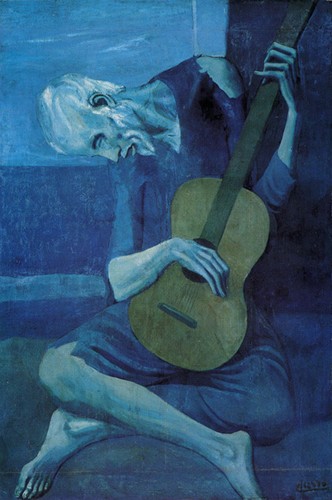

 Posts
Posts


