"Then in his mind he saw a chariot,
mounted it, rode off,
lashing with an imaginary whip.
The servants were caught between laughter and panic -
glancing at one another -
"Is the master playing or has he gone mad?"
Up and down the rooms he ranged
and though he had come to the city of Nisos,
though he was in fact in the midst of his own house.
He lay on the floor and imagined he was feasting.
This went on awhile, then he claimed he was
approaching the Isthmos.
There he stripped himself naked
and engaged in a wrestling match with no one,
proclaiming himself victor over no one,
bowing to an audience of no one.
The roaring out curses at Eurystheus
he declared he'd come to Mykenai.
His father touched his hand and said,
"O child what's happening to you? What is this strangeness?"
Has the blood of your killings made you mad?"
But taking him for the father of Eurystheus
Herakles thrust him off
and got out his bow to use against the children -
thought they were Eurystheus' children -
darting in terror this way and that,
one to his mother's robes, one to the shade of a pillar,
on hunched under the altar like a little bird.
The mother screamed, "You are their father!
Do you kill your own sons?"
Then the old man screamed. The servants screamed.
But he circled the pillar to get at this son
and with a dreadful pivoting move
shot him right through the liver.
The child fell back
and stained the stones red.
Herakles let out a war cry:
"That's the first one dead of Eurystheus' litter -
to repay me for his father's abuse!"
- Euripides (translated by Anne Carson)
It's Euripides day here in Falstaff-land, as I read my way through not one but two new (well, relatively new) books of the man's work by two poets whose work I like - Medea by Robin Robertson and Grief Lessons (including Herakles, Hekuba, Hippolytos and Alkestis) by Anne Carson - the latter particularly valuable for the short essays that accompany the plays in which Carson, in her inimitable style, muses on Tragedy, war, Euripides and theater.
I particularly love this scene from Herakles - it's so vivid, so haunting, so perfectly balanced between laughter and horror, such a perfect microcosm of classical tragedy but also such a strikingly modern act of the imagination.
***
And speaking of translations, easily the most stunning translation I've read this year is A.E. Stallings' version of Lucretius' De Rerum Natura. To render a classic text in fluent translation is an achievement in itself, to do it all in heptameter is astonishing, but to put it in rhyming couplets and still make it sound natural is just plain unbelievable.
***
And finally, speaking of discoveries, I stumbled upon this thing called bigthink today - a sort of YouTube for ideas. I have my doubts about the whole thing (I don't get why you would want to take a group of people whose key expertise is expressing ideas and arguments in writing, and put up videos of them), but while it's up there you can go see Billy Collins talking about inspiration and how the great teachers of poetry are not in the classrooms but in the library.
Wednesday, June 25, 2008

Tuesday, June 24, 2008
M
Q: What's common to this blog and Mt. Rushmore?
A: Four figures.
That's right, folks, today (which just happens to be 2x3x7's third blog birthday as well [1]) marks the 1,000th post on this blog.
*Pause while author considers his wasted life*
Sigh.
[1] I lie. It doesn't just happen to be - it's all part of a carefully planned Satanic ritual [2] having to do with the numbers 999 and the Trinity.
[2] For the record, I hate Satanic rituals. You spend years jockeying for alone time with a young virgin and when the moment finally comes you have to slaughter her for her blood. Talk about anti-climax.
A: Four figures.
That's right, folks, today (which just happens to be 2x3x7's third blog birthday as well [1]) marks the 1,000th post on this blog.
*Pause while author considers his wasted life*
Sigh.
[1] I lie. It doesn't just happen to be - it's all part of a carefully planned Satanic ritual [2] having to do with the numbers 999 and the Trinity.
[2] For the record, I hate Satanic rituals. You spend years jockeying for alone time with a young virgin and when the moment finally comes you have to slaughter her for her blood. Talk about anti-climax.
Monday, June 23, 2008
Ponytail officially declared Hairpiece
Friend CSM points me to an official recognition by the UGC of what we bloggers have known all along (see no. 8 on the list).
Poor ponytail. With the way oil prices are going he probably won't even be able to go back to selling snake oil.
Poor ponytail. With the way oil prices are going he probably won't even be able to go back to selling snake oil.
Sunday, June 22, 2008
The Beam in His Eye
He was standing in front of the bathroom mirror, trying to get something out of his eye, when he first noticed it. There was no reflection in the image of his eyes in the mirror. He was looking directly at the mirror, so the image of the mirror had to be reflecting in his eyes. But in the eyes of the face in the mirror there was no such reflection - they were blank and completely clear.
At first he thought it was just a trick of the light - an effect of the angle he was at. But no. No matter where he positioned himself, no matter how he tried to move his head, the image in the mirror never contained the reflection of itself. Everything else about his image was perfectly correct - the mirror faithfully copied every move he made, when he moved his eyes from side to side the eyes in the mirror moved to. But unlike his own eyes, where the image of the mirror must, he knew, be clearly inscribed, the eyes in the mirror showed no hint of a reflection, remained a steady, patient brown.
How could that happen? he wondered. Could it be some sort of scientific phenomenon, some detail of physics that he, who had never much cared for the subject, had now forgotten. He spent an hour searching for some mention of it on the Internet but found nothing. Did it only happen to other people? He called a friend, asked her to go look in the mirror and see if she could see the reflection of the mirror in her eyes reflected in the mirror. It took a minute or two to explain this to her, and then she wanted (naturally) to know why, but he gave her some vague explanation and convinced her to go check. Yes, she could see the reflection of the mirror in her mirror eyes. Right.
Was it something to do with him then? First thing next morning he went into the men's room in office stared into his eyes in the mirror there. Yes, there it was, a faint but clearly visible double reflection. For the whole of the next week he repeated the experiment every opportunity he got. In public rest rooms, in friend's houses, in store mirrors and changing rooms - and always the reflection in his eyes was there.
So it was only the mirror in his bathroom then. How could he not have noticed it all these years? And what could it mean? The more he thought about it, the more the whole thing began to strike him as sinister. If the mirror in his bathroom wasn't an ordinary mirror, what was it? What happened to the reflection that should have been in his eyes? Did it get sucked into some kind of alternate darkness, absorbed by the mirror in some way? Was the image in the mirror even really his? Or was it some kind of counterfeit, a mock-reflection made up to look like a real one?
As the days passed the discovery, confirmed every night, came to frighten him more and more. Yet he couldn't decide what to do about it. He considered getting the mirror changed, then decided against it. If there really was some malign force at work against him, it was better not to provoke it. The important thing was not to let the mirror suspect anything. To act in front of it as though everything were entirely normal, as though he hadn't noticed the tiny flaw in an otherwise perfect impersonation. Yes, that's what he had to do. Go on using the mirror, pretend that nothing had happened.
And yet be always on his guard, ensuring that he gave nothing away.
At first he thought it was just a trick of the light - an effect of the angle he was at. But no. No matter where he positioned himself, no matter how he tried to move his head, the image in the mirror never contained the reflection of itself. Everything else about his image was perfectly correct - the mirror faithfully copied every move he made, when he moved his eyes from side to side the eyes in the mirror moved to. But unlike his own eyes, where the image of the mirror must, he knew, be clearly inscribed, the eyes in the mirror showed no hint of a reflection, remained a steady, patient brown.
How could that happen? he wondered. Could it be some sort of scientific phenomenon, some detail of physics that he, who had never much cared for the subject, had now forgotten. He spent an hour searching for some mention of it on the Internet but found nothing. Did it only happen to other people? He called a friend, asked her to go look in the mirror and see if she could see the reflection of the mirror in her eyes reflected in the mirror. It took a minute or two to explain this to her, and then she wanted (naturally) to know why, but he gave her some vague explanation and convinced her to go check. Yes, she could see the reflection of the mirror in her mirror eyes. Right.
Was it something to do with him then? First thing next morning he went into the men's room in office stared into his eyes in the mirror there. Yes, there it was, a faint but clearly visible double reflection. For the whole of the next week he repeated the experiment every opportunity he got. In public rest rooms, in friend's houses, in store mirrors and changing rooms - and always the reflection in his eyes was there.
So it was only the mirror in his bathroom then. How could he not have noticed it all these years? And what could it mean? The more he thought about it, the more the whole thing began to strike him as sinister. If the mirror in his bathroom wasn't an ordinary mirror, what was it? What happened to the reflection that should have been in his eyes? Did it get sucked into some kind of alternate darkness, absorbed by the mirror in some way? Was the image in the mirror even really his? Or was it some kind of counterfeit, a mock-reflection made up to look like a real one?
As the days passed the discovery, confirmed every night, came to frighten him more and more. Yet he couldn't decide what to do about it. He considered getting the mirror changed, then decided against it. If there really was some malign force at work against him, it was better not to provoke it. The important thing was not to let the mirror suspect anything. To act in front of it as though everything were entirely normal, as though he hadn't noticed the tiny flaw in an otherwise perfect impersonation. Yes, that's what he had to do. Go on using the mirror, pretend that nothing had happened.
And yet be always on his guard, ensuring that he gave nothing away.
Saturday, June 21, 2008
Midsummer
It is here at last. The longest evening, light's swan song and the season's, the highest pitch of the singing year.
As the sun goes down, the sky is slick and translucent, like the film of water at the edge of the tide, at the furthest point that the sea reaches, nuzzling the earth with its lips, then retreating in a kowtow of waves.
The long-lived day dies.
The night is revealed, moist and glistening, night of mystery and mistaken loves, Shakespeare's night, who knew that young lovers sleep little and dream shallow, that poetry is spun from cobwebs and moonshine, that the mischief of shadows cannot offend. And that there is always, somewhere, the man who sleeps alone and dreams of beauty, and who will wake in the morning feeling like an ass.
As the sun goes down, the sky is slick and translucent, like the film of water at the edge of the tide, at the furthest point that the sea reaches, nuzzling the earth with its lips, then retreating in a kowtow of waves.
The long-lived day dies.
The night is revealed, moist and glistening, night of mystery and mistaken loves, Shakespeare's night, who knew that young lovers sleep little and dream shallow, that poetry is spun from cobwebs and moonshine, that the mischief of shadows cannot offend. And that there is always, somewhere, the man who sleeps alone and dreams of beauty, and who will wake in the morning feeling like an ass.
Thursday, June 19, 2008
By way of explanation
Life is broken. It must be. How else to explain that the glass never changes, that the reading on my face is always the same?
Seasons come and go like gas-inspectors. Do they not sense that something is wrong? Or have they deduced that no one lives here, that the line has been disconnected?
And could they be right?
I leaf through the Collected Works looking for a number to call, but there is nothing. What meanings there were seek the camouflage of pages, disguise themselves as words. I try to smoke them out, but they would rather die than be revealed.
I shut my eyes in panic, obliterate the text. But the colors of these sentences scream like ghosts behind my retina. Language is a wildfire that spreads through my brain.
Must I put out my own eyes then? In my dream the goddess atones for her silence by sending us a library. But the thieves come in the night and steal it. The books disappear into the darkness like crumbs into an anthill. When the dawn comes the shelves are a second crucifix, a skeleton picked clean.
We have come to this land by way of Explanation. That is all I can tell you. You must not ask me what it means.
Seasons come and go like gas-inspectors. Do they not sense that something is wrong? Or have they deduced that no one lives here, that the line has been disconnected?
And could they be right?
I leaf through the Collected Works looking for a number to call, but there is nothing. What meanings there were seek the camouflage of pages, disguise themselves as words. I try to smoke them out, but they would rather die than be revealed.
I shut my eyes in panic, obliterate the text. But the colors of these sentences scream like ghosts behind my retina. Language is a wildfire that spreads through my brain.
Must I put out my own eyes then? In my dream the goddess atones for her silence by sending us a library. But the thieves come in the night and steal it. The books disappear into the darkness like crumbs into an anthill. When the dawn comes the shelves are a second crucifix, a skeleton picked clean.
We have come to this land by way of Explanation. That is all I can tell you. You must not ask me what it means.
Wednesday, June 18, 2008
I'll have a bream
Back when one was still young and immature (and no, I'm not talking about yesterday, thank you - I'll have you know that I'm positively middle-aged now, what with twenty-somethings wanting me to adopt them) one had a penchant for long, complicated narratives all building up to an elaborate multi-part pun.
Nothing one pulled off in those days, however, came close to the complexity / desperation of this Sunday's Pearls Before Swine:
 See also this and this.
Nothing one pulled off in those days, however, came close to the complexity / desperation of this Sunday's Pearls Before Swine:
 See also this and this.
Tuesday, June 17, 2008
Train Catching
River sleek the rail-
road runs, under the trellis
and into the trees.
A slow breeze ripples
the shadows. Under the leaves
the track flows swift, sure -
a steel current, glanced
with light. The man on the bridge
dangles his line. Waits.
road runs, under the trellis
and into the trees.
A slow breeze ripples
the shadows. Under the leaves
the track flows swift, sure -
a steel current, glanced
with light. The man on the bridge
dangles his line. Waits.
Monday, June 16, 2008
Some songs
Some songs demand to be part of a soundtrack.
You turn on the stereo, turn down the lights, sit in the darkness watching the scenes unfold before you, your eyes tightly shut.
Images without a plot. Episodes from a movie that hasn't been made.
Other songs sound as though they exist for the instant. No matter how often you play the disc, you will never hear them again.
You turn on the stereo, turn down the lights, sit in the darkness watching the scenes unfold before you, your eyes tightly shut.
Images without a plot. Episodes from a movie that hasn't been made.
Other songs sound as though they exist for the instant. No matter how often you play the disc, you will never hear them again.
Thursday, June 12, 2008
After the party
Mirth's waters recede.
I stand in the doorway, a Noah newly sobered, surveying the damage - the scene at once alien and familiar, a landscape of disarray.
Or perhaps I am Aeneas, rereading the history of my day in the echo of these objects. Sunt lacrimae rerum et mentem mortalia tangunt. The melancholy of things abandoned in mid-use.
The seep of the winestain is a bloody vernicle. Infantries of crumbs march among deserted plates. In the corner a napkin comes slowly uncrushed.
And high above me the chandelier floats in reverie, a festival of tinklings, a fading hubbub of light. Its bulbs vacant but brilliant, bon mots that flood the room with laughter, bubbles of he said and she said that evaporate into silence, leaving the air flat.
You come up behind me. "We'd better clear up", you say, "I'll go change."
While you're away I circle the room, collect the empty glasses, hold them by their long, cool stems. Like a man plucking the last flowers from a garden he cannot save.
I stand in the doorway, a Noah newly sobered, surveying the damage - the scene at once alien and familiar, a landscape of disarray.
Or perhaps I am Aeneas, rereading the history of my day in the echo of these objects. Sunt lacrimae rerum et mentem mortalia tangunt. The melancholy of things abandoned in mid-use.
The seep of the winestain is a bloody vernicle. Infantries of crumbs march among deserted plates. In the corner a napkin comes slowly uncrushed.
And high above me the chandelier floats in reverie, a festival of tinklings, a fading hubbub of light. Its bulbs vacant but brilliant, bon mots that flood the room with laughter, bubbles of he said and she said that evaporate into silence, leaving the air flat.
You come up behind me. "We'd better clear up", you say, "I'll go change."
While you're away I circle the room, collect the empty glasses, hold them by their long, cool stems. Like a man plucking the last flowers from a garden he cannot save.
Wednesday, June 11, 2008
All Dick and no Moby
Today's Groan!-I-should-have-seen-that-coming award goes to Adam Gopnik, writing about the new Orion 'abridged' version of Moby Dick:
The subtraction does not turn good work into hackwork; it turns a hysterical, half-mad masterpiece into a sound, sane book. It still has its phallic reach and point, but lacks its flaccid, anxious self-consciousness: it is all Dick and no Moby.
Tuesday, June 10, 2008
Mad Dogs and Englishmen
All this talk about heat waves sweeping the East Coast and people not being able to go out (imagine that!) in summer - and all because the temperature touched some 36 C - made me think of this.
Monday, June 09, 2008
The Cigarette Stub
He's walking home from the subway stop when he sees it. Just lying there on the pavement. Four puffs to it at least! He looks around quickly, then stoops to pick it up. Should he light up directly? No, better wait. He slips the stub into his suit pocket, walks on.
Appalled, the writer watches him go. Why would someone like that, someone obviously well off, with an expensive-looking suit and a laptop bag slung across his shoulder, go about scavenging for cigarette butts? And that look of joy on his face! As if he'd made a real find!
The writer shudders, then opens his notebook to a new page, scribbles a few notes. This could be useful. Two minutes later he closes the notebook, slips the pen back into his pocket. Carrying this notebook around is the best idea he's ever had. Just three weeks since he started and already it's brimming with promising material - scenes, images, descriptions - for his next book.
It's amazing the things you can pick up on the street.
Appalled, the writer watches him go. Why would someone like that, someone obviously well off, with an expensive-looking suit and a laptop bag slung across his shoulder, go about scavenging for cigarette butts? And that look of joy on his face! As if he'd made a real find!
The writer shudders, then opens his notebook to a new page, scribbles a few notes. This could be useful. Two minutes later he closes the notebook, slips the pen back into his pocket. Carrying this notebook around is the best idea he's ever had. Just three weeks since he started and already it's brimming with promising material - scenes, images, descriptions - for his next book.
It's amazing the things you can pick up on the street.
Sunday, June 08, 2008
Soap
Before he left he carved his name in the bath soap - whether as an act of vandalism or as a souvenir I couldn't tell. I only discovered it after he was gone, stepping into the shower the next morning, the four offending letters gouged deep into the ivory colored bar. Startled, I turned the soap over. The bastard had carved the other side as well.
I considered throwing the soap away, of course. But it seemed too easy, too much of a capitulation. So I decided to use it, thinking, what harm could it do? It was just a schoolboy prank after all, this soap-dish graffiti, this anti-bacterial voodoo. Big fucking deal.
It was sickening at first, having to shower with that thing: the knowledge of his name on the bar a slick presence, polluting this most basic of sacraments, the memory of his touch sticking to me until my own fingers turned alien. Those first few days I emerged from the shower feeling dirtier than I'd been going in.
After a while it began to amuse me, though, getting him into a lather each morning, knowing that none of this froth and fury would rub off, that his blustering would pour from me like water, leave me refreshed. It was as though by scrubbing away at his name I was washing myself free, not only of the night's disappointments, but also of him, shedding dead skins of sensation like invisible layers of the past. And he too was being worn out, erased, the offending letters of his name fading as the bar waned in my hand. Soon there would be nothing left of him, only a sliver barely worth holding on to, the surface of the soap polished smooth.
A clean start, I thought to myself, watching the last of the lettering dissolve in the shower. After all, what could be cleaner than soap?
P.S. Yes, I've already thought of the (obvious) soap opera joke.
I considered throwing the soap away, of course. But it seemed too easy, too much of a capitulation. So I decided to use it, thinking, what harm could it do? It was just a schoolboy prank after all, this soap-dish graffiti, this anti-bacterial voodoo. Big fucking deal.
It was sickening at first, having to shower with that thing: the knowledge of his name on the bar a slick presence, polluting this most basic of sacraments, the memory of his touch sticking to me until my own fingers turned alien. Those first few days I emerged from the shower feeling dirtier than I'd been going in.
After a while it began to amuse me, though, getting him into a lather each morning, knowing that none of this froth and fury would rub off, that his blustering would pour from me like water, leave me refreshed. It was as though by scrubbing away at his name I was washing myself free, not only of the night's disappointments, but also of him, shedding dead skins of sensation like invisible layers of the past. And he too was being worn out, erased, the offending letters of his name fading as the bar waned in my hand. Soon there would be nothing left of him, only a sliver barely worth holding on to, the surface of the soap polished smooth.
A clean start, I thought to myself, watching the last of the lettering dissolve in the shower. After all, what could be cleaner than soap?
P.S. Yes, I've already thought of the (obvious) soap opera joke.
Saturday, June 07, 2008
Paul Taylor Dance Company
And speaking of Violas, I caught a performance by the Paul Taylor Dance Company this afternoon, the highlight of which (well, for me at least) was a revival of Taylor's 1975 Esplanade - a spry, swirling piece that brings Bach's Violin Concerto in E Major and Concerto for Two Violins in D minor vividly to life. It's an exceptional work, that pays tribute to the leaping, tumbling energy of Bach's allegros even as it captures the exquisite harmony of his slow movements, his mastery of counterpoint. And watching Ms. Lisa Viola dance her lithe way through Bach's skipping passages was a real joy.
The real star of the show, though, was Ms. Annmaria Mazzini, who (sadly) didn't appear in Esplanade, but who featured in the two other pieces the company performed - Changes (2008) and Lines of Loss (2007) - and totally stole the show in both. In a review of the Company last year, Gia Kourlas compared Ms. Mazzini to "the big guitar solo at a rock concert", and it's not hard to see why. Her performance of 'California Earthquake' was the best thing about Taylor's new Changes - an otherwise predictable and lackluster piece - the sheer energy she radiated made the whole stage seem to vibrate, and her electric, in your face presence was the only fragment of genuine attitude in the whole show. And when she returned in Lines of Loss to perform an intense, heartbreaking solo to a mournful Schnittke slow movement, her dancing, though mirroring Ms. Viola's opening solo for the piece, deepened and transcended it, bringing to the repeated gestures a passion and urgency they hadn't had before.
***
On a somewhat unrelated note, what I'd love to see, just once, is a dance performance that really inverted gender roles - where the women lifted the men onto their shoulders / tossed them into the air / caught them as they leaped into their arms, etc. Okay, so I realize there are differences in weight and strength and all that, but still, it can't be that hard to do.
The real star of the show, though, was Ms. Annmaria Mazzini, who (sadly) didn't appear in Esplanade, but who featured in the two other pieces the company performed - Changes (2008) and Lines of Loss (2007) - and totally stole the show in both. In a review of the Company last year, Gia Kourlas compared Ms. Mazzini to "the big guitar solo at a rock concert", and it's not hard to see why. Her performance of 'California Earthquake' was the best thing about Taylor's new Changes - an otherwise predictable and lackluster piece - the sheer energy she radiated made the whole stage seem to vibrate, and her electric, in your face presence was the only fragment of genuine attitude in the whole show. And when she returned in Lines of Loss to perform an intense, heartbreaking solo to a mournful Schnittke slow movement, her dancing, though mirroring Ms. Viola's opening solo for the piece, deepened and transcended it, bringing to the repeated gestures a passion and urgency they hadn't had before.
***
On a somewhat unrelated note, what I'd love to see, just once, is a dance performance that really inverted gender roles - where the women lifted the men onto their shoulders / tossed them into the air / caught them as they leaped into their arms, etc. Okay, so I realize there are differences in weight and strength and all that, but still, it can't be that hard to do.
Viola! or Mrs. Malaprop strikes again
In today's NY Times Jeff Danziger has the following cartoon:

Just one problem - a viola (with or without an exclamation mark) is either a. a somewhat obscure name for a violet b. a four stringed musical instrument slightly larger than a violin c. someone who plays said instrument or d. a Shakespearean heroine.
The word Mr. Danziger is looking for, I suspect, is voila!, unless there's some extremely subtle joke about either a. American cars being held together by four strings or b. people who drive eco-friendly cars being shrinking violets that I'm not getting.

Just one problem - a viola (with or without an exclamation mark) is either a. a somewhat obscure name for a violet b. a four stringed musical instrument slightly larger than a violin c. someone who plays said instrument or d. a Shakespearean heroine.
The word Mr. Danziger is looking for, I suspect, is voila!, unless there's some extremely subtle joke about either a. American cars being held together by four strings or b. people who drive eco-friendly cars being shrinking violets that I'm not getting.
Thursday, June 05, 2008
The Abandoned Temple
Day after day, the faithful make their way to the abandoned temple, hoping the goddess has returned.
But the oracle is silent, and their cries echo unanswered.
Soon their numbers shall dwindle. One by one, they shall grow disillusioned, shall let enter the doubt that now knocks at their hearts.
They shall decide that the prophecy was true after all, that the goddess is gone forever.
They shall start to pretend that they never believed in her, that they were never fooled. They shall make fun of those who still go up to her threshold, though it is a journey they themselves were once proud to make.
And the goddess, who never left, shall watch secretly from the wings, knowing she cannot leave until the last pilgrim loses hope, until the last believer turns away.
She wonders how long that will take.
But the oracle is silent, and their cries echo unanswered.
Soon their numbers shall dwindle. One by one, they shall grow disillusioned, shall let enter the doubt that now knocks at their hearts.
They shall decide that the prophecy was true after all, that the goddess is gone forever.
They shall start to pretend that they never believed in her, that they were never fooled. They shall make fun of those who still go up to her threshold, though it is a journey they themselves were once proud to make.
And the goddess, who never left, shall watch secretly from the wings, knowing she cannot leave until the last pilgrim loses hope, until the last believer turns away.
She wonders how long that will take.
Wednesday, June 04, 2008
The Prisoner
There is no freedom.
There is only the trembling difference between the slavery we are forced into and the service we choose.
When the barbarians arrive in the city he locks himself into a bare cell, renounces all his former happiness, denies the enemy by denying himself.
"So they will not envy me", he says, "so they will leave me alone."
This is how he lives for years - in a prison of his own devising, in a paradox of triumph achieved through self-defeat.
Until he is no longer sure whether he is a free man pretending to be a prisoner, or a prisoner imagining that he is free.
There is only the trembling difference between the slavery we are forced into and the service we choose.
When the barbarians arrive in the city he locks himself into a bare cell, renounces all his former happiness, denies the enemy by denying himself.
"So they will not envy me", he says, "so they will leave me alone."
This is how he lives for years - in a prison of his own devising, in a paradox of triumph achieved through self-defeat.
Until he is no longer sure whether he is a free man pretending to be a prisoner, or a prisoner imagining that he is free.
Monday, June 02, 2008
Painting of the Day # 2

Bronzino An Allegory with Venus and Cupid
A maelstrom of tortured forms dances around the central figures - Time, that old lecher, exposes and censors, is both outraged and envious, clutching his thin fabric; Decay looks on in hollow, speechless horror, Frustration howls in her corner and Folly, feigning innocence, watches with blank, basilisk eyes. A rubbish of doves and lions, of masks and snake skins strews the canvas. And in the midst of all this frenzy the two lovers rise, oblivious, rapt in each other, a statuary of flesh.
Am I the only one who thinks of Oedipus? Of Tragedy shrieking in the background as the two incestuous lovers, Mother and Son, embrace, watched over by a fatal innocence and lured on by the sly, child-faced Sphinx with her tail of a serpent and her lion's paw? And is the figure in the top left, that mask without substance, that face invented for the sake of its cry, not perhaps the Chorus, and the other figure, the balding, hoary old man who unveils this scene not Sophocles himself, appalled by what he has revealed?
***
I had ambitious plans for this blog today, I really did. I was going to review the new Coetzee novel, or tell you about all the other new Indian fiction I read over the weekend; I was going to talk about the poetry of Antjie Krog, who I'm just discovering, or describe the glorious weather here in Philly or the accident I saw from my window the other day. I was going to do all that, except then Amazon went and delivered my copy of The Enchantress of Florence, so I plan to spend the next few days drowning in Rushdie. Meanwhile, you can check out two gifts from the Guardian - the first, a Tsvetaeva poem translated by Elaine Feinstein, the second, a new collaborative fiction project featuring Ali Smith and Jeanette Winterson.
Sunday, June 01, 2008
Indenial Jones
[warning: spoilers]
The best scene in Indiana Jones and the Kingdom of the Crystal Skull (henceforth called Indy IV) is the one it opens with. Four teenagers are out on a joyride through the New Mexico desert and come across as military convoy on an otherwise deserted highway. Elvis blaring from their car radio, the teenagers challenge the lead car of the convoy to a race, and so infectious is their exuberance that the driver of the car, a young lad barely out of his teens himself, cannot resist. So the two cars - a drab military vehicle and a shiny hot-rod, go careening down the highway, locked neck and neck. It's an incredible moment, at once hilarious and touching (its thrill enhanced by the knowledge that this a race between the Americans and the Russians [1], fought almost literally in the shadow of the nuclear bomb); the kind of gloriously cinematic moment one would expect from the Spielberg of old - the one who made Empire of the Sun and Jaws.
It's also a useful reminder of just why we love Spielberg, because the moment the car carrying the teenagers disappears from the screen, the old Spielberg seems to leave with it [2]. What follows purports to be the fourth movie in the Indiana Jones franchise, but it could just as easily have been a sequel to the Mummy, with Harrison Ford filling in for Rachel Weisz, because, presumably, she has better things to do with her time. My memory of the original Indy films is a little dim (it's been nearly two decades since the last one, after all) but the thing that I remember about them - the thing that made them, for want of a better word, cool - was that they were funny. They epitomized the idea of an adventure as something light-hearted, an idea that found its purest manifestation in a hero who always managed, somehow, to hold himself at an ironic distance from the action, who was able to see even the deadliest of situations for the joke it really was.
Humor, however, is almost entirely absent from Indy IV (well, at least intentional humor) and what remains is a two-dimensional exercise in bare-knuckle bravado and slick special effects, which has all the excitement of a forty year college reunion. Which, of course, is what the movie really is - a chance for Indy to catch up with his old buddies Ox and Mac and Marion - everything else, I'm convinced, being merely an ice-breaker to get over the initial awkwardness. It would explain why the whole film looks as though it were put together by an event planner.
Oh, there's a plot, of course. It involves the Cold War - which, it turns out, was fought between truckloads of crack troops who can't, between them, shoot a man running rather slowly at a distance of, oh, ten yards; and a gaggle of bow-tie wearing archaeologists, accompanied by one James Dean impersonator. No wonder it took Reagan to bring it to an end. It also involves a crystal skull, a nuclear explosion, swarms of killer ants who look a bit like M&Ms with legs, and the comic-book delight of seeing Cate Blanchett playing a character who is half Bond villain and half Ninotchka, complete with a sword [3]. There are also a couple of striking revelations - most notably the fact that T.S. Eliot wrote his poems while under the psychic control of crystal skulled aliens. Oh, and Shia what's his name turns out to be Indy's son, but you can see that one coming a mile away.
It's almost as though, in writing the script, Koepp and company had felt the need to stay true to the Mayan theme of their movie by not including any plot devices that might have been invented after the coming of Columbus. Instead they give you the kind of predictable cliches that the original Indy films were already spoofing two decades ago. Ruined temple, abandoned for centuries and overgrown with cobwebs must be secretly guarded by savage tribe. Check. Dead end inside tomb / ruin must contain secret passageway for Hero to discover. Check. Boat containing hero floating placidly down river must go over waterfall. Check. David Denby, in his review in the New Yorker praises the chase sequence through the jungle, claiming that "Spielberg recreates the spirit of Buster Keaton's most elaborately synchronized gags". I agree with much of Denby's take on Indy IV, but this is nonsense. That sequence has none of the litheness and surprise of a Keaton chase -the genius of Keaton that he makes the most carefully choreographed sequences seem accidental, by comparison the jungle chase scene in Indy IV seems tedious and contrived, with the bit involving Mr. LaBeouf swinging from the trees being particularly nauseating. If anything, I'd say the chase through the University campus scenes are more compelling, though neither of them has either the energy, speed or inventiveness of some of the truly brilliant chase sequences we've seen in recent times (that incredible chase at the start of the Casino Royale, for instance, or the closing sequence of Death Proof).
In the end, one can only hope that this botched sequel spells the end to the Indiana Jones franchise. The fact that the closing scene shows Mr. LaBeouf preparing to try on Indy's hat for size, however, makes me think there may be more of this nonsense still to come. I suppose if Harrison Ford hangs around for another decade or so they'll make a fifth movie - this one featuring, no doubt, his twelve-year old granddaughter and called Indiana Jones and the Attack of the Arthiritic Pinky. Shudder.
Notes
[1] Technically, you don't find out that they're Russian till five minutes later, but frankly, you have only to take one look at their faces to know what's coming.
[2] Okay, so I'm exaggerating a little bit. Actually, the first twenty minutes or so aren't bad - it's only after Indy survives the nuclear blast that the movie turns somnambulant.
[3] One of my biggest gripes with the film is the fact that it doesn't do Blanchett's character justice. There's great potential here - a colorful character, a talented actress - but in the end Irina Spalko proves exceedingly tame. I mean, in her one big fight scene she can't even beat some high-school dropout out of Happy Days in a fencing match. Sheesh!
The best scene in Indiana Jones and the Kingdom of the Crystal Skull (henceforth called Indy IV) is the one it opens with. Four teenagers are out on a joyride through the New Mexico desert and come across as military convoy on an otherwise deserted highway. Elvis blaring from their car radio, the teenagers challenge the lead car of the convoy to a race, and so infectious is their exuberance that the driver of the car, a young lad barely out of his teens himself, cannot resist. So the two cars - a drab military vehicle and a shiny hot-rod, go careening down the highway, locked neck and neck. It's an incredible moment, at once hilarious and touching (its thrill enhanced by the knowledge that this a race between the Americans and the Russians [1], fought almost literally in the shadow of the nuclear bomb); the kind of gloriously cinematic moment one would expect from the Spielberg of old - the one who made Empire of the Sun and Jaws.
It's also a useful reminder of just why we love Spielberg, because the moment the car carrying the teenagers disappears from the screen, the old Spielberg seems to leave with it [2]. What follows purports to be the fourth movie in the Indiana Jones franchise, but it could just as easily have been a sequel to the Mummy, with Harrison Ford filling in for Rachel Weisz, because, presumably, she has better things to do with her time. My memory of the original Indy films is a little dim (it's been nearly two decades since the last one, after all) but the thing that I remember about them - the thing that made them, for want of a better word, cool - was that they were funny. They epitomized the idea of an adventure as something light-hearted, an idea that found its purest manifestation in a hero who always managed, somehow, to hold himself at an ironic distance from the action, who was able to see even the deadliest of situations for the joke it really was.
Humor, however, is almost entirely absent from Indy IV (well, at least intentional humor) and what remains is a two-dimensional exercise in bare-knuckle bravado and slick special effects, which has all the excitement of a forty year college reunion. Which, of course, is what the movie really is - a chance for Indy to catch up with his old buddies Ox and Mac and Marion - everything else, I'm convinced, being merely an ice-breaker to get over the initial awkwardness. It would explain why the whole film looks as though it were put together by an event planner.
Oh, there's a plot, of course. It involves the Cold War - which, it turns out, was fought between truckloads of crack troops who can't, between them, shoot a man running rather slowly at a distance of, oh, ten yards; and a gaggle of bow-tie wearing archaeologists, accompanied by one James Dean impersonator. No wonder it took Reagan to bring it to an end. It also involves a crystal skull, a nuclear explosion, swarms of killer ants who look a bit like M&Ms with legs, and the comic-book delight of seeing Cate Blanchett playing a character who is half Bond villain and half Ninotchka, complete with a sword [3]. There are also a couple of striking revelations - most notably the fact that T.S. Eliot wrote his poems while under the psychic control of crystal skulled aliens. Oh, and Shia what's his name turns out to be Indy's son, but you can see that one coming a mile away.
It's almost as though, in writing the script, Koepp and company had felt the need to stay true to the Mayan theme of their movie by not including any plot devices that might have been invented after the coming of Columbus. Instead they give you the kind of predictable cliches that the original Indy films were already spoofing two decades ago. Ruined temple, abandoned for centuries and overgrown with cobwebs must be secretly guarded by savage tribe. Check. Dead end inside tomb / ruin must contain secret passageway for Hero to discover. Check. Boat containing hero floating placidly down river must go over waterfall. Check. David Denby, in his review in the New Yorker praises the chase sequence through the jungle, claiming that "Spielberg recreates the spirit of Buster Keaton's most elaborately synchronized gags". I agree with much of Denby's take on Indy IV, but this is nonsense. That sequence has none of the litheness and surprise of a Keaton chase -the genius of Keaton that he makes the most carefully choreographed sequences seem accidental, by comparison the jungle chase scene in Indy IV seems tedious and contrived, with the bit involving Mr. LaBeouf swinging from the trees being particularly nauseating. If anything, I'd say the chase through the University campus scenes are more compelling, though neither of them has either the energy, speed or inventiveness of some of the truly brilliant chase sequences we've seen in recent times (that incredible chase at the start of the Casino Royale, for instance, or the closing sequence of Death Proof).
In the end, one can only hope that this botched sequel spells the end to the Indiana Jones franchise. The fact that the closing scene shows Mr. LaBeouf preparing to try on Indy's hat for size, however, makes me think there may be more of this nonsense still to come. I suppose if Harrison Ford hangs around for another decade or so they'll make a fifth movie - this one featuring, no doubt, his twelve-year old granddaughter and called Indiana Jones and the Attack of the Arthiritic Pinky. Shudder.
Notes
[1] Technically, you don't find out that they're Russian till five minutes later, but frankly, you have only to take one look at their faces to know what's coming.
[2] Okay, so I'm exaggerating a little bit. Actually, the first twenty minutes or so aren't bad - it's only after Indy survives the nuclear blast that the movie turns somnambulant.
[3] One of my biggest gripes with the film is the fact that it doesn't do Blanchett's character justice. There's great potential here - a colorful character, a talented actress - but in the end Irina Spalko proves exceedingly tame. I mean, in her one big fight scene she can't even beat some high-school dropout out of Happy Days in a fencing match. Sheesh!
Saturday, May 31, 2008
Falstaff's Law of Disappearing Gaps in Traffic
The velocity of the last car before the gap in the traffic is always less than the velocity of the first car after the gap.
[If you think about it, you'll see that there's a logical reason for this. Not that that makes it any less annoying.]
[If you think about it, you'll see that there's a logical reason for this. Not that that makes it any less annoying.]
Painting of the Day # 1
[okay, so I've realized that if I keep waiting to write full length posts about the galleries I visited, I'm never going to get done. So I figure I'll just throw in a painting a day and do longer posts on a couple of things - Nicholas Poussin, for instance, or the Dada exhibition at the Tate Modern]

That blue! Is it Life, snatched from the woman's shoulders by a sudden wind, crackling above her like an electric ghost? Or Death, claiming her like a lover, encircling her in the flickering smoke of his arms? Is it a man she flees, or just this mortal cloak?
Slowly we take in the other details: the woman to the right, who lies in a pool of the same shimmering blue (is she an unconscious companion, or a premonition of the corpse to come?); the spilled pot; the tiny figure of Orpheus in a nearby clearing, singing his songs to an audience of wild and mythic creatures (notice the Unicorn), oblivious of the tragedy that is soon to engulf him; the city with its temples and towers already starting to vanish into the haze; and, most remarkably, the distant churn of the landscape, where the water lies still and pale while the mountains boil in great scudding waves.
Niccollo dell'Abate The Death of Eurydice
That blue! Is it Life, snatched from the woman's shoulders by a sudden wind, crackling above her like an electric ghost? Or Death, claiming her like a lover, encircling her in the flickering smoke of his arms? Is it a man she flees, or just this mortal cloak?
Slowly we take in the other details: the woman to the right, who lies in a pool of the same shimmering blue (is she an unconscious companion, or a premonition of the corpse to come?); the spilled pot; the tiny figure of Orpheus in a nearby clearing, singing his songs to an audience of wild and mythic creatures (notice the Unicorn), oblivious of the tragedy that is soon to engulf him; the city with its temples and towers already starting to vanish into the haze; and, most remarkably, the distant churn of the landscape, where the water lies still and pale while the mountains boil in great scudding waves.
Friday, May 30, 2008
Queasy Quicksands
For reasons I won't go into (much), I've decided to spend the weekend reading a random selection [1] of new 'Indian' fiction - novels and short stories from the last three or four years either published in India or by Indian writers. I keep hearing about the massive surge in new fiction coming out of India but I've read very little of it, because a) it's hard to find out here in Philly, b) between catching up on the classics and keeping up with new work by voices I already know and like I have too much to read anyway c) I always feel a little parochial reading something just because it's Indian and d) the few recent books I have read (or tried to read) have been appallingly bad.
Still, it's unfair to ignore an entire body of work based on a few hastily formed impressions, and it's possible that there are writers out there who are doing great work that I'm missing out on, so I've decided to devote the weekend to checking out the new Indian fiction scene (only cheating a little by dipping into Coetzee's tantalizing new book on the side). I think of it as a sort of penance, a sort of literary Lent, with the prospect of reading The Enchantress of Florence (which, from all accounts, is a genuine resurrection) to follow.
It's probably unfortunate, therefore, that the first book I happened to pick was this thing called Shifting Sands by Dominique Varma (Penguin, 2004) a book so excruciatingly painful it makes having your teeth extracted seem like a day at the spa. I've read some bad prose in my time but Ms. Varma's writing is so viscously awful it makes Kahlil Gibran read like Hemingway. Consider:
or this:
or this, my favorite of all, describing the anxiety of a group of prisoners in a Nazi concentration camp:
I'm not making this up. Honest. And this is a published novel - not some faux-poetic little brochure from the Rajasthan tourism department, not the blurb to some Hindustani Classical recording, not some cheesy manual from some ashram or the other - but a real novel published by Penguin whose "evocative prose" we are told "is an ode to the indestructible spirit of the human race."
And it's not like the book makes up in ideas what it lacks in style. The plot, such as it is, is a hodge-podge of storylines, each one parboiled to the point where it slips into bathos. If we're not in some commando comic version of a concentration camp, hearing about the Nazi's devious plan to turn lead into gold with the help of a crackpot old Jew obsessed with Babylon, we're sharing the oh-so-languorous sighs of the dancer Eliya, a kind of Madame Bovary meets Anarkali character, with the emotional depth of your average Mills and Boons heroine, who chooses to live (and ultimately die) in the desert fortress of Neemera for the sake of Love [2] (the object of her affection being, of course, a Rajput prince of the Siyaram suitings variety - are you gagging yet?), or we're hanging about in Paris with a trio of dubious researchers who seem to spend their time in a haze of sentiment and amorous intrigue and whose 'intellectual' speculations have all the scholarly coherence of your average undergraduate thesis. Why these stories belong together (except for the tenuous artifice of a family connection) or why it was necessary for Ms. Varma to intersperse them in the manner of an Inarritu film are questions I won't even bother to ask. Let's just say that when a novel is so bad that it leaves you physically nauseous you have to wonder what the editors were thinking. If all the other books I've picked up are even half as bad as this one it's going to be a long, long weekend.
Meanwhile, in other news, don't you just love Anthony Lane. Can you imagine a more damning comment on a film than comparing it unfavorably to Funny Face?
Notes
[1] Well, technically a random selection from what new Indian writing has made its way to the UPenn library - but if anything, I would think this biases my sample towards a more favorable view of what's being published.
[2] Ms. Varma writes:
Still, it's unfair to ignore an entire body of work based on a few hastily formed impressions, and it's possible that there are writers out there who are doing great work that I'm missing out on, so I've decided to devote the weekend to checking out the new Indian fiction scene (only cheating a little by dipping into Coetzee's tantalizing new book on the side). I think of it as a sort of penance, a sort of literary Lent, with the prospect of reading The Enchantress of Florence (which, from all accounts, is a genuine resurrection) to follow.
It's probably unfortunate, therefore, that the first book I happened to pick was this thing called Shifting Sands by Dominique Varma (Penguin, 2004) a book so excruciatingly painful it makes having your teeth extracted seem like a day at the spa. I've read some bad prose in my time but Ms. Varma's writing is so viscously awful it makes Kahlil Gibran read like Hemingway. Consider:
"The tranquil camels glide between thorny bushes unmindful of their prickly barbs, leaving in the sand the imprint of their undulating footsteps. A greater peace in the world than this landscape of yellow dust glowing with the iridiscent orange of the receding dusk is impossible to find. The desert acquires a wealth of colours and thick forests of clouds cast their tormented shadows over the wavy dunes."
or this:
"Leaning over the parapet, Eliya contemplated the cascading terraces descending towards the dunes pierced with trees falling over the horizon. The bitter tea turned lukewarm on the guardrail, and her senses, sharpened by the ardent fever of the sands, wrenched languorously under the spell that had held her in its thrall right from the very first time she'd felt its poignant harmony."
or this, my favorite of all, describing the anxiety of a group of prisoners in a Nazi concentration camp:
"they were all going berserk, ready to give up this derisory thread of life which sometimes seemed so precious that they would have gone down on their knees to beg it be left unbroken, to save even a tiny fragment of this fabric which was unravelling before their eyes, like a carpet whose framework was being eaten by moths. And the invisible insects nibbling at the woollen threads masticated with quiet equanimity, abandoning one edge of the carpet to attack, from inside, a more solid thread that took their fancy."
I'm not making this up. Honest. And this is a published novel - not some faux-poetic little brochure from the Rajasthan tourism department, not the blurb to some Hindustani Classical recording, not some cheesy manual from some ashram or the other - but a real novel published by Penguin whose "evocative prose" we are told "is an ode to the indestructible spirit of the human race."
And it's not like the book makes up in ideas what it lacks in style. The plot, such as it is, is a hodge-podge of storylines, each one parboiled to the point where it slips into bathos. If we're not in some commando comic version of a concentration camp, hearing about the Nazi's devious plan to turn lead into gold with the help of a crackpot old Jew obsessed with Babylon, we're sharing the oh-so-languorous sighs of the dancer Eliya, a kind of Madame Bovary meets Anarkali character, with the emotional depth of your average Mills and Boons heroine, who chooses to live (and ultimately die) in the desert fortress of Neemera for the sake of Love [2] (the object of her affection being, of course, a Rajput prince of the Siyaram suitings variety - are you gagging yet?), or we're hanging about in Paris with a trio of dubious researchers who seem to spend their time in a haze of sentiment and amorous intrigue and whose 'intellectual' speculations have all the scholarly coherence of your average undergraduate thesis. Why these stories belong together (except for the tenuous artifice of a family connection) or why it was necessary for Ms. Varma to intersperse them in the manner of an Inarritu film are questions I won't even bother to ask. Let's just say that when a novel is so bad that it leaves you physically nauseous you have to wonder what the editors were thinking. If all the other books I've picked up are even half as bad as this one it's going to be a long, long weekend.
Meanwhile, in other news, don't you just love Anthony Lane. Can you imagine a more damning comment on a film than comparing it unfavorably to Funny Face?
Notes
[1] Well, technically a random selection from what new Indian writing has made its way to the UPenn library - but if anything, I would think this biases my sample towards a more favorable view of what's being published.
[2] Ms. Varma writes:
"Should we not vow never to hate someone we have once loved, even if he becomes hateful? Out of respect for that beautiful love which was once our reason for living, and which so quickly becomes our reason for dying. Dying for love is perhaps the only desirable death, because it snatches us from the banality of dying from old age, accident, sickness. At least we know why we are dying. Because we had believed we had seen the abysses of heaven open up before us."
Thursday, May 29, 2008
The National Gallery - 1250 to 1500

There's nothing quite like the Old Masters, is there? The sublime domesticity of the Arnolfinis, for instance, or Lippi's glorious Annunciation (above), its two figures - man and woman, angel and mortal - balanced so perfectly that the very burden of the news they share is rendered weightless, the fulcrum of God's hand proves irrelevant, and these two people, conspirators in the divine, seem bathed in the sheer resplendence of the moment: the shimmer of wings on his side, the glow of the chair-draping mantle on hers.
 But there are other, less anticipated delights to be found in this section of the National Gallery. Delights such as the paintings of Cosimo Tura, with their lifelike faces so at odds with the rest that I am reminded, for some strange reason, of Klimt; or the striking, almost X-ray like visions of Andrea Mantegna (such as Samson and Delilah - above - which looks at though it had been painted out of ash and magma) which seem to invert the light even as they blaze with it; or Sassetta's curiously feminine depiction of St. Francis as a chastely naked young man being embraced by the Church as his father rages at being renounced; or Cosimo's frenzied, writhing battle scene between the Centaurs and the Lapiths, with its Bosch-like landscape and its contrast between a huddle of panicked forms and the poignant image of a young woman mourning her dead lover, all enclosed in parantheses of violence. Not to mention Durer's startlingly lifelike portrait of his father (below) or his almost abstract expressionist depiction of the Last Judgement on the reverse side of a painting of Saint Jerome.
But the real star of this section of the Gallery, for me, was indisputably Sandro Botticelli. The charming and forthright portrait of a delectable young man in a red beretta staring straight out at the viewer. The dramatic Venus and Mars, where the seriousness of the grown-ups - his exhaustion, her patient watchfulness - is set against the gaiety of the young satyrs (their casual games with the dread instruments of war both a triumph of innocence and a perversion), so that this meeting of two deities is transformed into a strangely domestic scene: the young husband returned from war wanting only to rest and forget, the wife a little awkward, watching him with a mix of anxiety and expectation, so completely absorbed in his presence that she barely notices the children running riot. And the glorious Adoration of the Kings (below), its circular shape drawing the eye inexorably to the Virgin and Child who are in every way the center of the scene, yet the painting itself almost triangular, a pyramid of forms rising in strict heirarchy from the mingled crowd of men and horses at the base, to the select circle of kings paying their homage to the infant Christ and further to the pointed wooden roof that hovers above the scene like a protective spirit, the plain wooden structure itself enclosed in an arch of the ruined temple (again the triangle enclosed within the semi-circle) that symbolizes the end of all things Roman even as it lends the scene a greater majesty, and is transformed, by the imagination, into a covenant of purity, an emblem of new entrances, and the ceiling of an impromptu stage. But most of all that unforgettable peacock, dainty as a courtier, regally surveying the scene, while behind and beneath him the horses neigh and the trumpets blare, proclaiming the arrival of the greatest King of all.

Wednesday, May 28, 2008
Kicking and Screaming
As you've probably heard by now, my trip to London wasn't all about museums and art galleries, I also managed to take in a football match [1], mostly because S., who I was staying with, is a football fan and it was either watch the match with her or spend the next two days sleeping in the Tube station. S.'s original plan was that we would go to a pub and watch the match from there, thus making it a quintessentially British experience, but she thought the better of that after I pointed out to her that a) I had no medical insurance in the UK b) as my host she was honor bound to defend me against any and all hooligans trying to batter me to pulp and c) my comments during football matches tend to be along the lines of "Oooh! he's cute!". So instead we settled for watching it from the privacy of her home, with, in deference to her Amriki visitor, a ready supply of beer and chips laid on for the event.
Here's roughly how it went (times are approximate):
7.45 pm: Turn on television. Players coming out on field. Get told by S. that 'we' are going to be cheering for Chelsea. Look appropriately enthusiastic. Ask for beer.
7.50 pm: Match begins. Ask for second beer.
7.55 pm: Ask for third beer.
8.02 pm: Give loud cheer for Chelsea and ask for fourth beer. Wonder why you ever thought football was dull.
8.10 pm: Chelsea scores!! Cheer loudly.
8.11 pm: Get glared at by S. Discover that Chelsea is the team in BLUE. Realize you've been cheering for Man U all along. Ah well.
8.15 pm: D. (who's joining us for dinner) arrives. Discover she doesn't much care for football either. Convince S. to mute volume on TV set so we can have conversation. Point out that the commentators are a bunch of idiots anyway and an aficionado like her should form her own opinion by watching the match with the sound turned off. Reward S. for seeing the logic of this by getting fifth beer yourself.
8.22 pm: Glance at TV while reaching for chips. Notice score is now 1-1. Chelsea must have scored at some point. Mention this casually to S (who is busy on the phone ordering food - at least the girl has her priorities straight) and go back to conversation with D.
8.32 pm: Glance away from D for a moment and give out loud bellow! S. has just kicked over the bowl of chips! Foul! foul!
8.42 pm: Glance at TV to make sure score is still 1-1.
8.55 pm: Decide to make effort to watch match. After all, it can't be that bad.
8.57 pm: Biryani that S. has ordered arrives. Forget match. Focus on food.
9.05 pm: Glance at TV to make sure score is still 1-1. Make polite comment about match to S before asking her to pass the raita.
9.20 pm: Glance at TV to make sure score is still 1-1.
9.25 pm: Glance at TV and notice that it's raining in....wherever the match is. Watch game with renewed interest, having realized that the only thing better than a bunch of cute guys running about in shorts acting all butch is a bunch of cute guys running around in soaking wet shorts acting all butch.
9.35 pm: Players seem to have given up on playing football and are standing around playing a really violent game of charades. One guy is waving something red. Ask S. if this is a good thing. Withdraw question hastily after you see look in her eyes.
9.45 pm: Penalty shoot-outs! Yaay! Wonder why they bother with the hour and a half of people running around and elbowing each other when this part is so much more fun.
9.50 pm: Watch penalty shoot-outs thinking fondly of your days being goalkeeper during PE period back in school [2]. Wish all those doubting Amits who argued that you weren't doing it properly were here now so you could show them that diving gracefully to the left while the ball is flying right is, in fact, a perfectly legit football move.
9.51 pm: Laugh wildly at guy taking penalty kick who manages to miss the goal entirely. Stop in mid-cackle because the guy is from Chelsea and S. is now looking positively murderous. Console yourself with knowledge that you were going to sleep on the couch anyway, so you have nothing to lose.
9.55 pm: The match is over! Someone has won! The guys with the goalkeeper in green [3]! Yaay! Yaay? Oops, Man U won. Look suitably crestfallen. Bitch about the unfairness of the umpires (what's that? they're called referees - ya, well, same thing) and the stupidity of having penalty shoot outs.
9.57 pm: Have awwww moment watching cute guy you've had your eye on through the match dissolving into tears. Restrain yourself from saying "Come to Papa!" out loud.
10.00 pm: End of match. Console S. by pointing about that it's just a silly national tournament - it's not like it's the World Cup or something.
10.01 pm: Discover that it's actually an all-Europe tournament and is pretty much the biggest cup these clubs can compete for. Oops!
10.02 pm: Display sensitivity and tact by refusing to talk about the match and / or football anymore. Change subject to talking about art galleries and museums. Make mental pledge not to talk about football at all for the rest of your trip. All in the interests of taking S.'s mind off it, of course.
Notes
[1] I mean, of course, real football. Not the blink-and-you-missed-it, guys-wearing-the-kind-of-shoulder-pads-that-went-out-in-the-80s variety they play out here in the barbaric West.
[2] See here.
[3] Seriously, why is it that goalkeepers in football never seem to have uniforms that go with what the rest of their team is wearing. Is there a union of football uniform makers who will only work in multiples of 10 or something? And how hard could it be to find something to wear that at least vaguely approximated your team's colors. Can you imagine if the same thing happened in cricket. There would be the Indian team, arrayed all around the field in their trademark cheap distemper blue - all except for the Wicketkeeper who was wearing a shiny magenta number with a pearl choker under his helmet.
Here's roughly how it went (times are approximate):
7.45 pm: Turn on television. Players coming out on field. Get told by S. that 'we' are going to be cheering for Chelsea. Look appropriately enthusiastic. Ask for beer.
7.50 pm: Match begins. Ask for second beer.
7.55 pm: Ask for third beer.
8.02 pm: Give loud cheer for Chelsea and ask for fourth beer. Wonder why you ever thought football was dull.
8.10 pm: Chelsea scores!! Cheer loudly.
8.11 pm: Get glared at by S. Discover that Chelsea is the team in BLUE. Realize you've been cheering for Man U all along. Ah well.
8.15 pm: D. (who's joining us for dinner) arrives. Discover she doesn't much care for football either. Convince S. to mute volume on TV set so we can have conversation. Point out that the commentators are a bunch of idiots anyway and an aficionado like her should form her own opinion by watching the match with the sound turned off. Reward S. for seeing the logic of this by getting fifth beer yourself.
8.22 pm: Glance at TV while reaching for chips. Notice score is now 1-1. Chelsea must have scored at some point. Mention this casually to S (who is busy on the phone ordering food - at least the girl has her priorities straight) and go back to conversation with D.
8.32 pm: Glance away from D for a moment and give out loud bellow! S. has just kicked over the bowl of chips! Foul! foul!
8.42 pm: Glance at TV to make sure score is still 1-1.
8.55 pm: Decide to make effort to watch match. After all, it can't be that bad.
8.57 pm: Biryani that S. has ordered arrives. Forget match. Focus on food.
9.05 pm: Glance at TV to make sure score is still 1-1. Make polite comment about match to S before asking her to pass the raita.
9.20 pm: Glance at TV to make sure score is still 1-1.
9.25 pm: Glance at TV and notice that it's raining in....wherever the match is. Watch game with renewed interest, having realized that the only thing better than a bunch of cute guys running about in shorts acting all butch is a bunch of cute guys running around in soaking wet shorts acting all butch.
9.35 pm: Players seem to have given up on playing football and are standing around playing a really violent game of charades. One guy is waving something red. Ask S. if this is a good thing. Withdraw question hastily after you see look in her eyes.
9.45 pm: Penalty shoot-outs! Yaay! Wonder why they bother with the hour and a half of people running around and elbowing each other when this part is so much more fun.
9.50 pm: Watch penalty shoot-outs thinking fondly of your days being goalkeeper during PE period back in school [2]. Wish all those doubting Amits who argued that you weren't doing it properly were here now so you could show them that diving gracefully to the left while the ball is flying right is, in fact, a perfectly legit football move.
9.51 pm: Laugh wildly at guy taking penalty kick who manages to miss the goal entirely. Stop in mid-cackle because the guy is from Chelsea and S. is now looking positively murderous. Console yourself with knowledge that you were going to sleep on the couch anyway, so you have nothing to lose.
9.55 pm: The match is over! Someone has won! The guys with the goalkeeper in green [3]! Yaay! Yaay? Oops, Man U won. Look suitably crestfallen. Bitch about the unfairness of the umpires (what's that? they're called referees - ya, well, same thing) and the stupidity of having penalty shoot outs.
9.57 pm: Have awwww moment watching cute guy you've had your eye on through the match dissolving into tears. Restrain yourself from saying "Come to Papa!" out loud.
10.00 pm: End of match. Console S. by pointing about that it's just a silly national tournament - it's not like it's the World Cup or something.
10.01 pm: Discover that it's actually an all-Europe tournament and is pretty much the biggest cup these clubs can compete for. Oops!
10.02 pm: Display sensitivity and tact by refusing to talk about the match and / or football anymore. Change subject to talking about art galleries and museums. Make mental pledge not to talk about football at all for the rest of your trip. All in the interests of taking S.'s mind off it, of course.
Notes
[1] I mean, of course, real football. Not the blink-and-you-missed-it, guys-wearing-the-kind-of-shoulder-pads-that-went-out-in-the-80s variety they play out here in the barbaric West.
[2] See here.
[3] Seriously, why is it that goalkeepers in football never seem to have uniforms that go with what the rest of their team is wearing. Is there a union of football uniform makers who will only work in multiples of 10 or something? And how hard could it be to find something to wear that at least vaguely approximated your team's colors. Can you imagine if the same thing happened in cricket. There would be the Indian team, arrayed all around the field in their trademark cheap distemper blue - all except for the Wicketkeeper who was wearing a shiny magenta number with a pearl choker under his helmet.
Tuesday, May 27, 2008
Stray Thoughts on the British Museum
Wandering through the British Museum is a bit like walking through the intestines of a defunct monster - some gluttonous Kraken or ferocious T-Rex - and seeing the half-digested remains of the creatures it has swallowed. I suppose it's only fitting that the British Museum should end up as a sort of general storehouse for dead empires. Still I kept feeling like I should ask where the shield of Vercingetorix was.
***
If the British Museum has a presiding deity, it is John Keats. Oh, Cavafy puts in an appearance, and Homer, and it's hard to see the Assyrian friezes depicting the seige of Lachish without thinking of Byron, or gaze on the colossal head of a Pharoah without remembering Shelley, but it's Keats who comes most to mind as one wanders through the Greek galleries [1]. It's not just the thrill of finally seeing the long-promised Elgin Marbles, it's the lines from Ode on a Grecian Urn, which keep repeating and repeating in your head as you roam the exhibits.
Because it's all there, isn't it? The green altar with its mysterious priest, the loth maidens, the bold lovers, the little town by river or sea-shore. To wander through these galleries is to hear, at last, Keats' unheard melodies - the swelling adagio of grief as the warriors carry the body of their comrade off the battlefield, the furious allegro of the leaping amazon,
  the gavotte of pride in a young boy's heart as he rides in his first procession and the mellow andante in the heart of the bystanders as they admire the boy's beauty - all the fierce and solemn music of an unforgettable age. This is poetry - these clean yet fluid lines depicting a reality that transcends itself, this blending of energy and grace, this balance of the immediate and the timeless. There is something almost cinematic about the way these sculptures move us; something about the breathtaking realism of these depictions their individuality, their attention to detail. To see a centaur twisting in pain in one of these friezes is to find yourself suddenly on the plain of war, hearing the screams of the dying and wounded, feeling the adrenalin of battle pulsing through your blood.

This is poetry, I said, but it is also history. For to gaze upon these sculptures is also to see the slow erosion of memory, to see how time erases us, how little by little each treasured detail is lost, until what was nameless to start with becomes faceless, deformed, and what is left is only a museum's worth of abstract gestures - the raising, in defiance, of a broken-off arm, or an eloquent glance backwards, emerging from a wasteland of scuffed rock.

[1] It should come as no surprise to readers of this blog that I spent most of my time at the British Museum in the Greek and Roman sections. And while we're on the subject, will someone please explain to me why the public imagination is so taken with the Egyptians? The crowds in the Egyptian gallery outnumbered those in every other part of the Museum three to one, so that walking through the Egyptian section meant you were elbowing your way through a pressed rank of tourists, or dodging your way through a crossfire of photo ops. Is it the Mummy movies? Is it Tintin? Seriously, what's the fascination?
***
If the British Museum has a presiding deity, it is John Keats. Oh, Cavafy puts in an appearance, and Homer, and it's hard to see the Assyrian friezes depicting the seige of Lachish without thinking of Byron, or gaze on the colossal head of a Pharoah without remembering Shelley, but it's Keats who comes most to mind as one wanders through the Greek galleries [1]. It's not just the thrill of finally seeing the long-promised Elgin Marbles, it's the lines from Ode on a Grecian Urn, which keep repeating and repeating in your head as you roam the exhibits.
Because it's all there, isn't it? The green altar with its mysterious priest, the loth maidens, the bold lovers, the little town by river or sea-shore. To wander through these galleries is to hear, at last, Keats' unheard melodies -
 the swelling adagio of grief as the warriors carry the body of their comrade off the battlefield, the furious allegro of the leaping amazon,
  the gavotte of pride in a young boy's heart as he rides in his first procession and the mellow andante in the heart of the bystanders as they admire the boy's beauty - all the fierce and solemn music of an unforgettable age. This is poetry - these clean yet fluid lines depicting a reality that transcends itself, this blending of energy and grace, this balance of the immediate and the timeless. There is something almost cinematic about the way these sculptures move us; something about the breathtaking realism of these depictions their individuality, their attention to detail. To see a centaur twisting in pain in one of these friezes is to find yourself suddenly on the plain of war, hearing the screams of the dying and wounded, feeling the adrenalin of battle pulsing through your blood.
This is poetry, I said, but it is also history. For to gaze upon these sculptures is also to see the slow erosion of memory, to see how time erases us, how little by little each treasured detail is lost, until what was nameless to start with becomes faceless, deformed, and what is left is only a museum's worth of abstract gestures - the raising, in defiance, of a broken-off arm, or an eloquent glance backwards, emerging from a wasteland of scuffed rock.

[1] It should come as no surprise to readers of this blog that I spent most of my time at the British Museum in the Greek and Roman sections. And while we're on the subject, will someone please explain to me why the public imagination is so taken with the Egyptians? The crowds in the Egyptian gallery outnumbered those in every other part of the Museum three to one, so that walking through the Egyptian section meant you were elbowing your way through a pressed rank of tourists, or dodging your way through a crossfire of photo ops. Is it the Mummy movies? Is it Tintin? Seriously, what's the fascination?
Sunday, May 25, 2008
Clips
Emptying my backpack today, I find a handful of used paper clips at the bottom.
Evidence of all that has come undone through the years, emblems of all that has slipped away.
***
The hunger of binder clips frightens me. These objects that are pure bite, pure jaw. I am appalled by the tenacity with which they hold on to their prey, and by their capacity for cannibalism, the way they lock together, mouths joined in a feral compact that is more combat than kiss.
At other times though, I am touched by how gently they hold the manuscripts I entrust to them; the way they take these delicate reams of paper by the scruff of their necks, like a mother dangling her cubs in her mouth, and deliver them to me, when the time comes, entirely unharmed.
Yet they are not all docility, not all obedience. For I have felt their resistance straining against me when I lever open their jaws and try to fit my papers between them, like a petty dictator stuffing the mouth of his subjects with his own opinions. At times like these they are like obstinate children, who will not eat what is good for them - they must be co-opted, coerced - and often, in this process, a stray sheet of paper will spill over and the whole offering will have to be withdrawn, retrieved, offered again.
It says a lot for my own fragility as a writer that I experience their reluctance to take my words into their mouth, mechanical and unthinking as it undoubtably is, as a kind of rejection, so that if the clip will not close over the manuscript after, say, the third try, I will often conclude that I must revise the manuscript, when it would be better perhaps to search for a more expansive audience, a larger size of clips.
Evidence of all that has come undone through the years, emblems of all that has slipped away.
***
The hunger of binder clips frightens me. These objects that are pure bite, pure jaw. I am appalled by the tenacity with which they hold on to their prey, and by their capacity for cannibalism, the way they lock together, mouths joined in a feral compact that is more combat than kiss.
At other times though, I am touched by how gently they hold the manuscripts I entrust to them; the way they take these delicate reams of paper by the scruff of their necks, like a mother dangling her cubs in her mouth, and deliver them to me, when the time comes, entirely unharmed.
Yet they are not all docility, not all obedience. For I have felt their resistance straining against me when I lever open their jaws and try to fit my papers between them, like a petty dictator stuffing the mouth of his subjects with his own opinions. At times like these they are like obstinate children, who will not eat what is good for them - they must be co-opted, coerced - and often, in this process, a stray sheet of paper will spill over and the whole offering will have to be withdrawn, retrieved, offered again.
It says a lot for my own fragility as a writer that I experience their reluctance to take my words into their mouth, mechanical and unthinking as it undoubtably is, as a kind of rejection, so that if the clip will not close over the manuscript after, say, the third try, I will often conclude that I must revise the manuscript, when it would be better perhaps to search for a more expansive audience, a larger size of clips.
Saturday, May 24, 2008
Martin Lewis
My apologies for the long hiatus, but I was in London for a bit - first attending a conference and then mooching about the city's museums and art galleries. At any rate, I'm back now, and come loaded with so many impressions and images all swirling about in my head that for the foreseeable future this blog is going to be about art, art and more art.

And what better place to start than with Martin Lewis - an artist I'd never heard of before, but discovered in a special exhibition at, of all places, the British Museum [1]. The exhibition places Lewis next to Hopper, and it is a place he richly deserves. Lewis' prints have the timeless quality of black and white photographs - breathtakingly realistic in detail, they deploy a spectrum of shades to create a vision of New York that is as murky as it is translucent, that both celebrates the contemporary and transcends it to suggest something darker, more human. This is the soul of the city captured not in light, but in shadow; this is the language of noir - an alchemy by which the ephemeral is transformed into the achingly beautiful.
In Spring Night, Greenwich Village (above) for instance, Lewis captures both the hustle of the city and the plodding stillness at its heart. The street is crowded with shadowy figures - a couple kisses in a doorway, children and pedestrians hurry past. Yet even as we absorb this everyday traffic our eyes are drawn inexorably to a figure in the center who stands silhouetted against the light - a girl who stands before a lighted storefront, watching the cobbler inside as he bends over his work. The child's stationary pose, her turned back (most of the other figures are seen sideways), the light through the shop window - all these serve as a visual break in the rhythm of the print, focusing attention on the girl, making us pause and take notice even as she herself is doing. And in that moment of contemplation an everyday street scene is turned into a minor epiphany, an image of youth confronting age, of spring confronting night, a break in the daily round of existence as the mind stops to contemplate some harsh reality, or to watch, fascinated, a sight it has passed by many times but never really seen before. There is both wonder and horror here, but more than that there is a sense of being confronted with something preternaturally true that must be made sense of - an image every bit as glowing and brilliant as the window the girl stands facing, and one that casts a shadow in the mind as long as the one falling behind her.
A similar feeling of confrontation informs Passing Freight, Danbury (below) where the dynamic, invading presence of the train is counterpointed against the two umbrella-carrying figures who stand waiting for it to pass. Here again we have an external reality that the central figures in the image are forced to confront, yet it is the presence of these two women, as well as the sleepy looking house towering above them, that anchors the train in a specific landscape, gives it both meaning and a sense of proportion. Here is a meeting of shadowy vectors, a balance of force and stasis temporarily achieved, the juxtaposition of the train and the house perfectly paralleled by the lines of electricity running horizontal along the top of the painting and the pillar rising vertically to meet them. But notice also the precision with which Lewis renders the light effects here - the ray of the locomotive's headlamp radiating out into the unknown, the glint of light on the metal of the train, and the sheen of the road after the recent rainfall (remember the umbrellas) so that the sidewall of the house is reflected on the pavement.

My favorite Lewis print of all though is Saturday's Children (below) with its vision of a weary humanity. This time the confrontation is two fold - on the one hand the everyday storefronts on the left seem at odds with the turret like buildings rising on the right, their mythic quality enhanced by the sunbeams that come streaming through them, bathing the scene in light. But there is a second confrontation here, one between the viewer and the approaching crowd. One woman, in particular, stands out - she is two steps ahead of the others, alone, facing straight at us, and almost vertically above her rises a lamppost shaped like a weighing scale - so that this unremarkable figure, this face in a crowd, is transformed into a kind of nemesis, and we are forced to confront, in the semblance of an ordinary passerby, the faceless drudgery of work, the monotony of existence, and the endless stream of days that approach us and go by unnoticed, unremarked.


[1] What an exhibition of Twentieth Century American Prints was doing in the British Museum I don't know. Any more than I know why the gallery showing the exhibition also included a 'cartoon' by Michelangelo.
And what better place to start than with Martin Lewis - an artist I'd never heard of before, but discovered in a special exhibition at, of all places, the British Museum [1]. The exhibition places Lewis next to Hopper, and it is a place he richly deserves. Lewis' prints have the timeless quality of black and white photographs - breathtakingly realistic in detail, they deploy a spectrum of shades to create a vision of New York that is as murky as it is translucent, that both celebrates the contemporary and transcends it to suggest something darker, more human. This is the soul of the city captured not in light, but in shadow; this is the language of noir - an alchemy by which the ephemeral is transformed into the achingly beautiful.
In Spring Night, Greenwich Village (above) for instance, Lewis captures both the hustle of the city and the plodding stillness at its heart. The street is crowded with shadowy figures - a couple kisses in a doorway, children and pedestrians hurry past. Yet even as we absorb this everyday traffic our eyes are drawn inexorably to a figure in the center who stands silhouetted against the light - a girl who stands before a lighted storefront, watching the cobbler inside as he bends over his work. The child's stationary pose, her turned back (most of the other figures are seen sideways), the light through the shop window - all these serve as a visual break in the rhythm of the print, focusing attention on the girl, making us pause and take notice even as she herself is doing. And in that moment of contemplation an everyday street scene is turned into a minor epiphany, an image of youth confronting age, of spring confronting night, a break in the daily round of existence as the mind stops to contemplate some harsh reality, or to watch, fascinated, a sight it has passed by many times but never really seen before. There is both wonder and horror here, but more than that there is a sense of being confronted with something preternaturally true that must be made sense of - an image every bit as glowing and brilliant as the window the girl stands facing, and one that casts a shadow in the mind as long as the one falling behind her.
A similar feeling of confrontation informs Passing Freight, Danbury (below) where the dynamic, invading presence of the train is counterpointed against the two umbrella-carrying figures who stand waiting for it to pass. Here again we have an external reality that the central figures in the image are forced to confront, yet it is the presence of these two women, as well as the sleepy looking house towering above them, that anchors the train in a specific landscape, gives it both meaning and a sense of proportion. Here is a meeting of shadowy vectors, a balance of force and stasis temporarily achieved, the juxtaposition of the train and the house perfectly paralleled by the lines of electricity running horizontal along the top of the painting and the pillar rising vertically to meet them. But notice also the precision with which Lewis renders the light effects here - the ray of the locomotive's headlamp radiating out into the unknown, the glint of light on the metal of the train, and the sheen of the road after the recent rainfall (remember the umbrellas) so that the sidewall of the house is reflected on the pavement.

My favorite Lewis print of all though is Saturday's Children (below) with its vision of a weary humanity. This time the confrontation is two fold - on the one hand the everyday storefronts on the left seem at odds with the turret like buildings rising on the right, their mythic quality enhanced by the sunbeams that come streaming through them, bathing the scene in light. But there is a second confrontation here, one between the viewer and the approaching crowd. One woman, in particular, stands out - she is two steps ahead of the others, alone, facing straight at us, and almost vertically above her rises a lamppost shaped like a weighing scale - so that this unremarkable figure, this face in a crowd, is transformed into a kind of nemesis, and we are forced to confront, in the semblance of an ordinary passerby, the faceless drudgery of work, the monotony of existence, and the endless stream of days that approach us and go by unnoticed, unremarked.

The exhibition has many other delights to offer. There's Hopper of course - with the haunting Night on the El Train and the starkly scintillating Evening Wind. There's Bellows with his Stag at Sharkey's in all its sweaty, muscular glory and Business Men's Bath where the clean, proud lines of youth jostle side by side with the bloated self-importance of middle-age. There's Thomas Hart Benton's The Race, where a horse's streaming mane is echoed both in the pure curve of its reflection in the water as well as the spume of smoke the racing train leaves behind it. There's John Marin's delightful Brooklyn Bridge Swaying where a few deft pencil strokes transform the solidest of structures into a jazz like visual improvisation that you can almost see swinging in front of you.
  The horrors of war find expression through Benton Spruance's Riders of the Apocalpyse (left) with its faux-cubist image of planes flying through the searchlight torn sky, and Tranquility (right) which shows the painter at work wearing a gas mask while air raids carry on outside. And just in case you were getting sick of all this black and white there's always the apocalyptic Europa (below). All in all, an exhibition definitely worth the visit.
 Benton's The Race, where a horse's streaming mane is echoed both in the pure curve of its reflection in the water as well as the spume of smoke the racing train leaves behind it. There's John Marin's delightful Brooklyn Bridge Swaying where a few deft pencil strokes transform the solidest of structures into a jazz like visual improvisation that you can almost see swinging in front of you.
  The horrors of war find expression through Benton Spruance's Riders of the Apocalpyse (left) with its faux-cubist image of planes flying through the searchlight torn sky, and Tranquility (right) which shows the painter at work wearing a gas mask while air raids carry on outside. And just in case you were getting sick of all this black and white there's always the apocalyptic Europa (below). All in all, an exhibition definitely worth the visit.
[1] What an exhibition of Twentieth Century American Prints was doing in the British Museum I don't know. Any more than I know why the gallery showing the exhibition also included a 'cartoon' by Michelangelo.
Sunday, May 11, 2008
Frida

Wandering through the Philadelphia Art Museum's exhibition of the paintings of Frida Kahlo last Thursday, I couldn't help think of the similarities between Kahlo's work and Courbet's. Both are artists deeply invested in their self-image, to the point where their work, were it not for its brilliance, would seem like egoism. Both are concerned with being unconventional, and with shaking up their respective establishments. Both are passionately fond of the landscapes they grew up in, and delight in using these scenes as a setting for their work. And both are interested, in their own ways, in depictions of the female form; in redefining female beauty, portraying it in terms that are less pristine and therefore less feigned.
You have only to look at a Kahlo portrait (like the one above) though, to see where the comparison breaks down. For where Courbet's paintings radiate a sort of lazy, unconscious sensuality, his subjects often portrayed asleep or resting, Kahlo's dominant mode is confrontation. In painting after painting, the people in Kahlo's paintings stare back at you with a directness that seems almost a challenge. Kahlo forces us to pay attention to her images by having them pay attention to us - her paintings do not so much invite our gaze as demand it. In the dozen or so self-portraits that are included in the exhibition what you sense is not so much exhibitionism but a kind of generalized narcissism - this is a woman who is in love with the idea of looking directly at the world and having it stare right back [1]. And it's not only in the self-portraits that you feel this - nowhere is this sense of engagement more pronounced than in Kahlo's glorious portrayal of the Suicide of Dorothy Hale (below) in which the still open eyes of the corpse in the foreground glare back at you, their expression trapped somewhere between appeal and accusation, concentrated into an intensity that seems to deny Death itself.
Not that the expressions on her subject's faces is the only thing confrontational about Kahlo. The unflinchingness of her vision informs the content of what she paints: whether it's her
 famous depiction of a miscarriage in Henry Ford Hospital - a woman (Kahlo) marooned on a blood soaked bed in the middle of a barren plain, surrounded by a surrealist constellation of images, the ribbons of blood connecting them to her womb turning the whole scene into a grotesque May pole dance - or the almost bathetically macabre A Few Small Nips with its bloodbath spilling onto the frame, Kahlo seems determined to embrace all that is visceral and cathartic in the human experience. What shocks about these paintings is not just the subjects they depict, but the fact that Kahlo is willing to inflict such violence on the female body (and by association, on herself) while continuing to identify with it - her refusal to distance herself from the victim, from the pain. To see the savage dislocation of Kahlo's heart in the Two Fridas, or the ruined spectacle of Kahlo's body in The Broken Column (below) is to witness a kind of divine masochism, a strip-mining of the self in the service of art that is as disturbing as it is courageous. R.S. Thomas speaks of an "impulse to conceal your wounds / from her and from a bold public / given to pry" - Kahlo it seems, has no such impulse, and it is this, coupled with the sureness of her visual instinct, that makes her unforgettable.
For all the virtues of Kahlo's more passionate work, though, the paintings I prefer are the ones where intensity is balanced with restraint, so that the work, without losing its focus on the themes of death and suffering, depicts these in subtler ways, juxtaposing the stately with the macabre, and producing images that are the more shocking for the contrast. Two Fridas is a good example of this, the figures themselves seem composed, almost preternaturally so, suggesting nothing so much as a traditional portrait of two sisters sitting side by side, so that the effect of the heart torn out from one's chest is amplified. Girl with a Death Mask has a similar effect - the promised innocence of the little girl's figure, daintily clutching a flower in it hand is shockingly belied by the skull of the face. Most shocking of all, though, in its repressed, almost invisible horror, is The Deceased Dimas Rosas Aged Three (below). The image by itself suggests no violence - the central figure seems content and king-like, with its tinsel crown, its scepter like flower, its satisfied, almost complacent expression. It takes a moment for reality to seep in - what you are looking at is not some smug regent but the corpse of a three year old child, complete with poignant little toes pointing into the air and a circle of plucked flowers, the single note of outrage in the whole scene a black and white image of a Christ-like figure tied to a post placed on the pillow by the girl's head.

The Philadelphia Art Museum exhibition is a splendid collection of Kahlo's work, including many of her finest and most famous paintings, covering the full range of her work from the
 baroque, intricately programmatic visions of Moses and My Dress Hangs There (right) to her still life of Pitahayas, and showcasing many of Kahlo's abiding themes - the emphasis on linkages and bloodlines (most vividly seen, perhaps, in Family Tree), the repeated motif of exposed roots. Much of what I saw was familiar (though it's always a treat to see paintings like Dream - left - and
 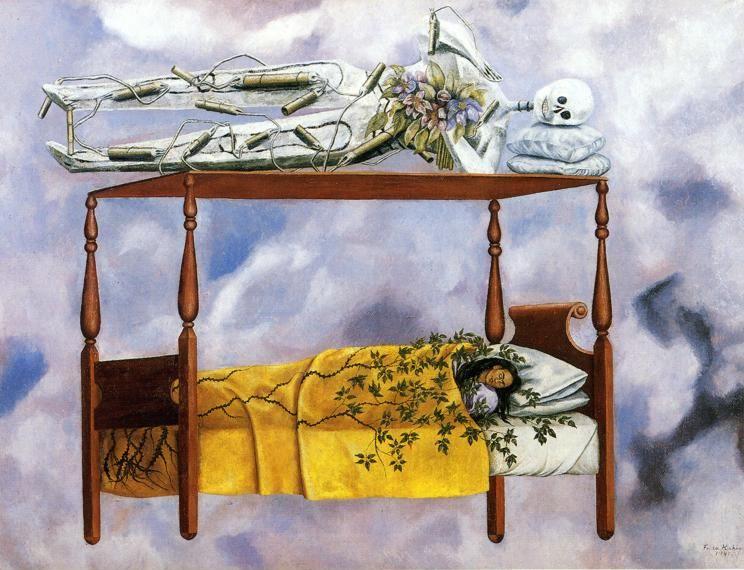 the Love Embrace of the Universe in the original - since reproductions simply don't do them justice), but I also made a number of new discoveries, including the anthropomorphic The Flower of Life (below) and a hauntically delicate portrait of a young girl placed between the sun and the moon (which I can't seem to find online).
 That painting, though painted later, seems like a premonition of what is, perhaps, Kahlo's most indelible self-portrait, and the painting that best sums up her work. In Self-Portrait on the Border between Mexico and the United States (below) Kahlo stands on the margin of two worlds - the land of primal gods and ruined dreams and the land of modernism with its robot-like pipe figures, its electrical vegetation and concrete towers. Placed between these two landscapes, Kahlo herself seems an enigmatic and contradictory figure, the pink ruffled dress and elbow length gloves at odds with the revolutionary air of the casually held cigarette and the Mexican flag - as though she had been dragged away from a party to face, coolly, a firing squad. Seen three quarters of a century after it was painted it is the portrait of an iconoclast, a female colossus, who stands on the border not between Mexico and the United States but between the past and the future, myth and reality. And it is emblematic of everything Kahlo has come to mean, that her expression as she stands there is one of fierce certainty, eyebrows arched, mouth set in hard, proud line, lucid eyes staring right back at you.
[1] I am reminded of a line from Berryman - "He stared at ruin. Ruin stared straight back."
Wednesday, May 07, 2008
Wright Off
While I've largely stopped paying attention to the farce that the contest for the Democratic nomination has turned into, I can't help commenting on the Rev. Wright controversy and Obama's response to it.
The general consensus, at least among Obama's critics, seems to be that in finally coming out and explicitly condemning Rev. Wright for his ridiculous remarks Obama is going against his natural inclination in deference to public opinion polls. He is, in other words, playing politics - choosing to distance himself from a figure who has clearly become a political liability - and that his 'real' feelings were those expressed in his earlier response to the Wright controversy, when he distanced himself from some of Rev. Wright's more extreme ideas, but refused to condemn the man himself.
It seems to me equally plausible, however, that the opposite is true. In particular, it seems to me that the truth about Obama may be both better and (politically speaking) worse than the conventional interpretation would suggest. This is pure speculation, obviously, but my suspicion is that Obama is precisely the kind of person who's intelligent enough to be able to separate the content of religion from the power associated with it, and use the latter while ignoring the former. In other words, Obama may not have paid attention to / been outraged by Rev. Wright's ideas not because he agreed with them, but because he (Obama) is not the kind of person who takes anything a preacher says seriously. I mean, it's all nonsense, isn't it? How is believing that AIDS is part of a conspiracy against black people any sillier than believing in, say, immaculate conception? Obama wasn't sitting in that church because he wanted to get spiritual or moral guidance or anything like that, he was sitting in that church because being seen as part of that community would get him votes.
The trouble, of course, is that there's no way Obama could ever admit this, even if it were true. No matter how many votes he may lose by being associated with Rev. Wright, he'd lose a great deal more if he were to declare, for instance, that he isn't a religious person, that he sat in church because it was part of engaging with a community and he didn't give a toss what some silly preacher was saying. I personally find the idea of a US President who has no religious faith whatsoever extremely appealing, but I suspect that any candidate who openly admitted this would be dead in the water. So the myth of spiritual guidance and close ties to the faith must be maintained, even at the cost of associating with Rev. Wright.
Seen in this (entirely hypothetical) light, it's Obama's earlier response to the Wright controversy, however skilfully delivered, that is, in fact, the more 'political', which is to say the less sincere. What Obama was trying to do, under the guise of taking a balanced, measured perspective, was to play both sides - appease voters appalled by the specter of Rev. Wright without alienating those who might see a strong repudiation of Rev. Wright as an ungrateful betrayal, an attempt on Obama's part to divorce himself from the very roots that are the source of their support for him.
The irony here is that Obama may be the victim of his own eloquence: because his initial response to the Wright controversy - which may have been just a wishy-washy attempt to pander to multiple constituencies at the same time - came across as so genuine, his more recent stand on the issue (if one may call it that) has come to be perceived as weak and reluctant, a compromise driven by calculative necessity, rather than what it may really be - an expression of the man's true feelings, relieved of the need to try and soft-pedal the issue by either the realization that the more 'political' strategy was untenable, or a sense that the Rev. had made himself enough of a pariah so that he could be repudiated without causing much damage.
Again, I emphasize that this is all speculation - I'm not saying (because I obviously can't prove) that any of this is true, just that it provides a counterpoint to the usual interpretation of Obama's actions and an alternative storyline that fits all the facts but gives us a completely different picture of the man himself than the one the media has been giving us.
The general consensus, at least among Obama's critics, seems to be that in finally coming out and explicitly condemning Rev. Wright for his ridiculous remarks Obama is going against his natural inclination in deference to public opinion polls. He is, in other words, playing politics - choosing to distance himself from a figure who has clearly become a political liability - and that his 'real' feelings were those expressed in his earlier response to the Wright controversy, when he distanced himself from some of Rev. Wright's more extreme ideas, but refused to condemn the man himself.
It seems to me equally plausible, however, that the opposite is true. In particular, it seems to me that the truth about Obama may be both better and (politically speaking) worse than the conventional interpretation would suggest. This is pure speculation, obviously, but my suspicion is that Obama is precisely the kind of person who's intelligent enough to be able to separate the content of religion from the power associated with it, and use the latter while ignoring the former. In other words, Obama may not have paid attention to / been outraged by Rev. Wright's ideas not because he agreed with them, but because he (Obama) is not the kind of person who takes anything a preacher says seriously. I mean, it's all nonsense, isn't it? How is believing that AIDS is part of a conspiracy against black people any sillier than believing in, say, immaculate conception? Obama wasn't sitting in that church because he wanted to get spiritual or moral guidance or anything like that, he was sitting in that church because being seen as part of that community would get him votes.
The trouble, of course, is that there's no way Obama could ever admit this, even if it were true. No matter how many votes he may lose by being associated with Rev. Wright, he'd lose a great deal more if he were to declare, for instance, that he isn't a religious person, that he sat in church because it was part of engaging with a community and he didn't give a toss what some silly preacher was saying. I personally find the idea of a US President who has no religious faith whatsoever extremely appealing, but I suspect that any candidate who openly admitted this would be dead in the water. So the myth of spiritual guidance and close ties to the faith must be maintained, even at the cost of associating with Rev. Wright.
Seen in this (entirely hypothetical) light, it's Obama's earlier response to the Wright controversy, however skilfully delivered, that is, in fact, the more 'political', which is to say the less sincere. What Obama was trying to do, under the guise of taking a balanced, measured perspective, was to play both sides - appease voters appalled by the specter of Rev. Wright without alienating those who might see a strong repudiation of Rev. Wright as an ungrateful betrayal, an attempt on Obama's part to divorce himself from the very roots that are the source of their support for him.
The irony here is that Obama may be the victim of his own eloquence: because his initial response to the Wright controversy - which may have been just a wishy-washy attempt to pander to multiple constituencies at the same time - came across as so genuine, his more recent stand on the issue (if one may call it that) has come to be perceived as weak and reluctant, a compromise driven by calculative necessity, rather than what it may really be - an expression of the man's true feelings, relieved of the need to try and soft-pedal the issue by either the realization that the more 'political' strategy was untenable, or a sense that the Rev. had made himself enough of a pariah so that he could be repudiated without causing much damage.
Again, I emphasize that this is all speculation - I'm not saying (because I obviously can't prove) that any of this is true, just that it provides a counterpoint to the usual interpretation of Obama's actions and an alternative storyline that fits all the facts but gives us a completely different picture of the man himself than the one the media has been giving us.
Monday, May 05, 2008
Courbet at the Met
Was in NYC over the weekend, checking out (among other things) the Courbet exhibit at the Met, and was amused to find this painting tucked coyly away in a dimly lit gallery with a sign outside it warning visitors that the section contained explicit sexual images.

I suppose the Met has all sorts of legal issues it needs to be concerned about, but I can't help wondering how Courbet would have felt about such prudishness. I mean, it kind of destroys the point, doesn't it?
To begin with, the exhibition seemed a little underwhelming. Courbet's portraits - which make up the first few galleries - are excellent, of course, but coming so soon after the Met's exhibition of the Dutch masters it was hard not to see the influence of Rembrandt and Hals in Courbet's work, and they suffered by comparison. The ones I liked best (other than the familiar Desperate Man) was the Man Made Mad by Fear, with its Dali like depiction of a human figure poised on the edge of the abyss and Courbet's charming portrait of Proudhon, where a startlingly modern-looking figure of the painter is set against a backdrop that seems quaint and artificial, the blandness of the surroundings (those ubiquitous children) emphasizing, for me, the impression of Proudhon's living presence.

The other fascinating thing about Courbet is the subtle and not to subtle way in which he emphasizes the scale of his female figures, making them seem larger than life. In paintings like Young Ladies of the Village, The Source and The Woman in the Waves (below) Courbet sets the female form in settings that are at once realistic and diminished, using perspective to achieve an effect that is at once mythic and breathtakingly real.

The most impressive part of the exhibition for me, though, were the final galleries, that contained both Courbet's landscapes (including a set of immediate and powerful depictions of waves as well as the glorious harmony of brown and orange that is his Source of the Loue below) as well as his 'nature' paintings (including Fox in the Snow and Trout).

What stood out for me, going over the exhibition in my head afterwards, was the incredible range that Courbet's work encompasses, ranging all the way from the great Dutch and Flemish masters through the Impressionists and on to the first intimations of Surrealism. For an exhibition by a single painter to make one think of Rembrandt, Reubens, Renoir, Cezanne and Dali is a considerable achievement.
Note: Coming up (eventually) - posts on Poussin, Jasper Johns, the Tribeca Film Festival and Wajda's glorious Katyn. I love New York.
I suppose the Met has all sorts of legal issues it needs to be concerned about, but I can't help wondering how Courbet would have felt about such prudishness. I mean, it kind of destroys the point, doesn't it?
To begin with, the exhibition seemed a little underwhelming. Courbet's portraits - which make up the first few galleries - are excellent, of course, but coming so soon after the Met's exhibition of the Dutch masters
it was hard not to see the influence of Rembrandt and Hals in Courbet's work, and they suffered by comparison. The ones I liked best (other than the familiar Desperate Man) was the Man Made Mad by Fear, with its Dali like depiction of a human figure poised on the edge of the abyss and Courbet's charming portrait of Proudhon, where a startlingly modern-looking figure of the painter is set against a backdrop that seems quaint and artificial, the blandness of the surroundings (those ubiquitous children) emphasizing, for me, the impression of Proudhon's living presence.The other fascinating thing about Courbet is the subtle and not to subtle way in which he emphasizes the scale of his female figures, making them seem larger than life. In paintings like Young Ladies of the Village, The Source and The Woman in the Waves (below) Courbet sets the female form in settings that are at once realistic and diminished, using perspective to achieve an effect that is at once mythic and breathtakingly real.
The most impressive part of the exhibition for me, though, were the final galleries, that contained both Courbet's landscapes (including a set of immediate and powerful depictions of waves as well as the glorious harmony of brown and orange that is his Source of the Loue below) as well as his 'nature' paintings (including Fox in the Snow and Trout).
What stood out for me, going over the exhibition in my head afterwards, was the incredible range that Courbet's work encompasses, ranging all the way from the great Dutch and Flemish masters through the Impressionists and on to the first intimations of Surrealism. For an exhibition by a single painter to make one think of Rembrandt, Reubens, Renoir, Cezanne and Dali is a considerable achievement.
Note: Coming up (eventually) - posts on Poussin, Jasper Johns, the Tribeca Film Festival and Wajda's glorious Katyn. I love New York.
Wednesday, April 30, 2008
Life be not proud
[Just following up on yesterday's post, and with apologies to John Donne]:
Life be not proud, though some have called thee
Precious and beautiful, for thou art no gift,
For those whom thou think'st thou dost uplift
Live not poor life, nor yet can'st thou thrill me.
From play and love, which but thy pictures be,
Much sorrow: then from thee much more must shift,
And soonest our best men do bear thy shrift,
Ache of the flesh and soul's injury.
Thou art slave to fate, chance, midwives and fond women,
And doth with nursing, care and physic last,
And coffee, or drugs, make the heart beat as fast
And wilder than thy pulse, why swellest thou then?
One short thrill past we sleep unrevived
And Life shall be no more, Life shall take its life.
Life be not proud, though some have called thee
Precious and beautiful, for thou art no gift,
For those whom thou think'st thou dost uplift
Live not poor life, nor yet can'st thou thrill me.
From play and love, which but thy pictures be,
Much sorrow: then from thee much more must shift,
And soonest our best men do bear thy shrift,
Ache of the flesh and soul's injury.
Thou art slave to fate, chance, midwives and fond women,
And doth with nursing, care and physic last,
And coffee, or drugs, make the heart beat as fast
And wilder than thy pulse, why swellest thou then?
One short thrill past we sleep unrevived
And Life shall be no more, Life shall take its life.
Quiem
If reincarnation exists, do the dead who remain mourn the loss of the newly living?
[Inspired by watching a performance of this]
[Inspired by watching a performance of this]
Tuesday, April 29, 2008
Happiness
A tree he cannot name in a stranger's yard.
His happiness in leaf at last, boughs that dance seasonal and spontaneous, the tree shaking light like a drenched dog.
He has just time to pluck a sprig from the lowest branch before the bus arrives.
His happiness in leaf at last, boughs that dance seasonal and spontaneous, the tree shaking light like a drenched dog.
He has just time to pluck a sprig from the lowest branch before the bus arrives.
Wednesday, April 23, 2008
You, Tube
Like
a man
sque
eeee
eeee
zing
the
last
of the
paste
from
the
bottom
of the tube.
He dreams of his childhood.
a man
sque
eeee
eeee
zing
the
last
of the
paste
from
the
bottom
of the tube.
He dreams of his childhood.
Minimal Poems
from Aram Saroyan's Complete Minimal Poems (see also):
eyeye
P.S. I tried posting a bunch of other poems from the book here, but blogger really screws up the typography. You can see a bunch of poems from the book (including this one) here.
Tuesday, April 22, 2008
Constructing the Sky
[Was reading Walcott's Haitian Trilogy over the weekend, and sat down to write a post about it, but ended up with this instead. I'm not going to review the plays, except to say that reading them made me think of Shakespeare. I can think of no higher praise than that.]
This is how it began: not the stars ascending
to their orderly places but an explosion
of pregnant matter, glory's starburst, bang of revolt.
The white fist opened. Galaxies scattered like grain
from fingers of chaos, and the sky was a field
sown with flame. Who knew the stars would prove
so toothed? Would remember the dragon's hunger,
his meteor pride? Open mouthed and dumb,
we watched the armed constellations fly
North and South, watched them divide the sky
between them, dispute the unborn map of the night.
Anger released us, then tore us apart.
We fled in the centrifugal dark, defined our freedom
by the distance between us, bathed in the shifting
red of revenge. Dreaming of heaven,
we created the void. Nothing remains of those days
but this rubbish of burnt-out suns, embers
of a world ambushed and factioned, a history
of darkness wherein we sign imagined fates
to the black page of death. How to revive
the ancient gravities, convene the stars legislature?
How to arraign the galaxies in their opposed stances,
still the rippling rumors of these old injuries,
and construct, from these uneasy pinpricks,
something we could all believe in, look up to, use,
in a confusion of currents, to find our way forward.
This is how it began: not the stars ascending
to their orderly places but an explosion
of pregnant matter, glory's starburst, bang of revolt.
The white fist opened. Galaxies scattered like grain
from fingers of chaos, and the sky was a field
sown with flame. Who knew the stars would prove
so toothed? Would remember the dragon's hunger,
his meteor pride? Open mouthed and dumb,
we watched the armed constellations fly
North and South, watched them divide the sky
between them, dispute the unborn map of the night.
Anger released us, then tore us apart.
We fled in the centrifugal dark, defined our freedom
by the distance between us, bathed in the shifting
red of revenge. Dreaming of heaven,
we created the void. Nothing remains of those days
but this rubbish of burnt-out suns, embers
of a world ambushed and factioned, a history
of darkness wherein we sign imagined fates
to the black page of death. How to revive
the ancient gravities, convene the stars legislature?
How to arraign the galaxies in their opposed stances,
still the rippling rumors of these old injuries,
and construct, from these uneasy pinpricks,
something we could all believe in, look up to, use,
in a confusion of currents, to find our way forward.
Monday, April 21, 2008
Persuasion
"He was evidently a young man of considerable taste in reading, though principally in poetry; and besides the persuasion of giving him at least an evening's indulgence in the discussion of subjects, which his usual companions had probably no concern in, she had the hope of being of real use to him in some suggestions as to the duty and benefit of struggling against affliction, which had naturally grown out of their conversation. For, though shy, he did not seem reserved; it had rather the appearance of feelings glad to burst their usual restraints; and having talked of poetry, the richness of the present age, and gone through a brief comparison of opinion as to the first-rate poets, trying to ascertain whether Marmion or The Lady of the Lake were to be preferred, and how ranked the Giaour and The Bride of Abydos; and moreover, how the Giaour was to be pronounced, he shewed himself so intimately acquainted with all the tenderest songs of the one poet, and all the impassioned descriptions of hopeless agony of the other; he repeated, with such tremulous feeling, the various lines which imaged a broken heart, or a mind destroyed by wretchedness, and looked so entirely as if he meant to be understood, that she ventured to hope he did not always read only poetry; and to say, that she thought it was the misfortune of poetry, to be seldom safely enjoyed by those who enjoyed it too completely; and that the strong feelings which alone could estimate it truly, were the very feelings which ought to taste it but sparingly."
- Jane Austen, Persuasion.
There's something so comforting about reading Austen, isn't there? The lilt and balance, the sharpness and felicity. How can anyone write prose that is at once so scrupulously exact and so perfectly fluid? I know of few delights superior.
Subscribe to:
Posts (Atom)
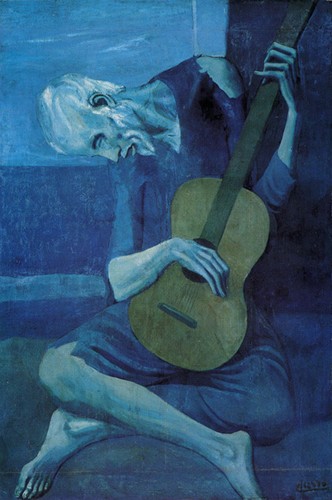

 Posts
Posts