"You can't just walk away from this!"
"Why not? I'm not involved."
"What?!"
"Not publicly involved."
"Not yet. But I could expose you."
"You could try."
"Someone would believe me."
"Most people wouldn't. Besides, what would be the point? I lose everything and you get nothing."
"I get nothing anyway."
"Not true. If you don't expose me I could help you."
"Ya, right. Like I'm going to rely on your promise."
"It wasn't a promise. It was merely an observation."
"So you won't help me."
"I might."
"You bastard!"
"I'm only thinking of what's best for us."
"What's best for you, you mean."
"No, best for us. Better for me, but that's just coincidence."
"Sure. I suppose you think this whole thing is just coincidence."
"No, I think it's a mistake. There's a difference."
"Maybe I don't care what's best for me. Maybe I just want to see you suffer."
"Maybe you do. Actually, I'm sure you do. Now. But you'll regret it afterwards."
"I don't think so."
"Are you willing to take the risk?"
"What risk? I've got nothing to lose, remember."
"Oh, but you do."
"Like what?"
"Hope?"
"Oh, come on."
"All right then. The possibility of revenge. It's the same thing."
"You think you're going to get away with this, don't you?"
"And you think I'm not. That's why we're so perfect for each other."
"I'll make you pay for this."
"Sure. But you need to make sure that when you do I can still afford it."
"This doesn't end here."
"Oh, I think it does."
Thursday, April 30, 2009

Wednesday, April 29, 2009
Twilight Zone
Every room you enter is empty. All around you the cards collapse.
You give a stranger your hand and find you have no fate left, or not enough to light a match.
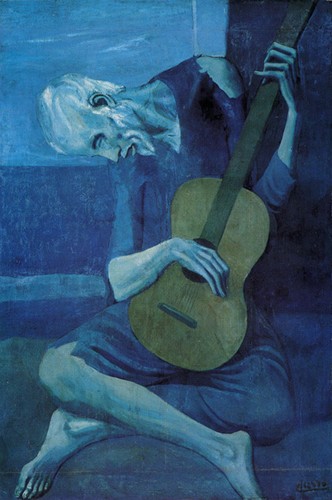
You play chords on the guitar but there is no song, only the notes fingering each other, too shy to fall in love.
Words break and scatter, like whispers, or leaves in the wind. Language stands by the window, a barren tree, reaching for the sky.
Somewhere between blue and gray, the feeling turns from color to light.
You take in the evening like a skirt. Stick pins in the wall to map the day's retreat.
Time passes like ripples in a glass.
If what you feel is a feeling, then it's one without a name.
You give a stranger your hand and find you have no fate left, or not enough to light a match.
You play chords on the guitar but there is no song, only the notes fingering each other, too shy to fall in love.
Words break and scatter, like whispers, or leaves in the wind. Language stands by the window, a barren tree, reaching for the sky.
Somewhere between blue and gray, the feeling turns from color to light.
You take in the evening like a skirt. Stick pins in the wall to map the day's retreat.
Time passes like ripples in a glass.
If what you feel is a feeling, then it's one without a name.
Tuesday, April 28, 2009
Flight
We are half way across the Pacific when day rushes us. The sea gleams like dull armor. Light curves like a bow.
We are arrows shot from night's grim hand. Tips of bright steel on smoke-feathered shafts.
Our flights surpass both latitude and longitude, their blue trajectories falling away beneath us.
We aim true. We know where the heart is and we call it home.
(From missed marks the trails run endless, fresh droppings of islands, blood spoor of cloud).
We are sped and suspended, floating and fleet.
The horizon quivers to rest behind us. The sun lays its swords at our feet.
We are arrows shot from night's grim hand. Tips of bright steel on smoke-feathered shafts.
Our flights surpass both latitude and longitude, their blue trajectories falling away beneath us.
We aim true. We know where the heart is and we call it home.
(From missed marks the trails run endless, fresh droppings of islands, blood spoor of cloud).
We are sped and suspended, floating and fleet.
The horizon quivers to rest behind us. The sun lays its swords at our feet.
Sunday, April 26, 2009
Know-it-almighty
A creature that believed itself to be all-knowing would have no curiosity and no reason to listen to anything it was told.
This wouldn't be so bad if the creature were, in fact, all-knowing.
But it were ignorant, and omnipotent as well in the bargain, the result would be infinite megalomania, eternal tyranny without the possibility of appeal.
Of course, if the creature were omnipotent then all other reality would be sacrificed to its delusion, so that the creature would, in fact, become all-knowing, not because it knew all that existed, but because only what it knew would be allowed to exist.
Better a God who knows it's all imagined, than one who imagines it's all known.
This wouldn't be so bad if the creature were, in fact, all-knowing.
But it were ignorant, and omnipotent as well in the bargain, the result would be infinite megalomania, eternal tyranny without the possibility of appeal.
Of course, if the creature were omnipotent then all other reality would be sacrificed to its delusion, so that the creature would, in fact, become all-knowing, not because it knew all that existed, but because only what it knew would be allowed to exist.
Better a God who knows it's all imagined, than one who imagines it's all known.
Monday, April 20, 2009
Alea Iacta Est
There are six sides to this story, and they all add up the same.
All come down to the seventh day, when God rested, and played dice, and saw it was good.
Since then, every belief is a gamble. All religion a crap game.
The truth is a blank dice. The minute you put your mark on it - give it a name, a face - it becomes God.
But to give equally to opposing sides you must resort to half measures, and that God cannot do. That is why probability is needed, to restore the balance, be the enemy of faith.
To desire symmetry is human. To deny it divine.
Einstein knew this, or thought he did.
No matter how lucky you are, the universe is loaded against you.
All come down to the seventh day, when God rested, and played dice, and saw it was good.
Since then, every belief is a gamble. All religion a crap game.
The truth is a blank dice. The minute you put your mark on it - give it a name, a face - it becomes God.
But to give equally to opposing sides you must resort to half measures, and that God cannot do. That is why probability is needed, to restore the balance, be the enemy of faith.
To desire symmetry is human. To deny it divine.
Einstein knew this, or thought he did.
No matter how lucky you are, the universe is loaded against you.
Sunday, April 19, 2009
Two versions of heaven
1
It's a book
full of ghost children,
safely dead,
where dead means
hidden,
or wanting
or not wanting
to be known
2
Heaven is symmetric
with respect to rotation.
It's beautiful
when one thing changes
while another thing
remains the same
3
Fading redundancies.
Feathery runs.
Alternate wisps.
Imaginary
sprung striations
"Imaginary" meaning
"seen by humans"
- Rae Armantrout, 'Heaven' from Versed
(Have I mentioned how much I envy Armantrout? I mean, the woman just published a new collection, Next Life, in 2007 for FSM's sake, she's not supposed to be turning out another collection in 2009. That's 120 pages of finely tuned poetry in under two years. Aargh!)
***
Minds that can only function
with sense data as their point of departure
have dreamed up a zoomorphic heaven
without a structure of its own
a simple transposition of earthly fauna
to a place where angels and cherubim run around
as if they were barnyard fowl
no matter how you look at it it's unacceptable
I suspect that heaven resembles
a treatise on symbolic logic
more than an animal fair.
- Nicanor Parra, from 'The Sermons and Preachings of the Christ of Elqui' (translated from the Spanish by Edith Grossman)
and, as a bonus:
Rest in Peace
sure - rest in peace
but what about the damp?
and the moss?
and the weight of the tombstone?
and the drunken gravediggers?
and the people who steal the flowerpots?
and the rats gnawing at the coffin?
and the damned worms
crawling in everywhere
they make death impossible for us
or do you really think
we don't know what's going on...
fine for you to say rest in peace
when you know damn well that's impossible
you just like running off at the mouth
well for your information
we know what's going on
the spiders scurrying up our legs
make damn sure of that
let's cut the crap
when you stand at a wide open grave
it's time to call a spade a spade:
you can drown your sorrows at the wake
we're stuck at the bottom of the pit.
- Nicanor Parra (translated from the Spanish by Edith Grossman)
Saturday, April 18, 2009
Friday, April 17, 2009
A Star is Born
Just got back from a truly sublime performance of Shostakovich's First Violin Concerto by Sergey Khachatryan (along with the Philadelphia Orchestra conducted by Kurt Masur). Khachatryan looks a lot younger than his 24 years (on stage tonight he looked more like a callow teenager than anything else) but he plays like a true virtuoso. By the time he was done with that glorious third movement I had tears streaming down my face. And I wasn't the only one either - I swear at least a third of the orchestra was crying.
Something tells me this is one violinist I'm going to be hearing a lot more of.
Something tells me this is one violinist I'm going to be hearing a lot more of.
Thursday, April 16, 2009
The Silence
The silence has fluorescent lights and a bare floor.
Our prayers are worn at the knees, but there is no answer.
Only the possibility of doors behind us, and a wall where a portrait once hung.
Our prayers are worn at the knees, but there is no answer.
Only the possibility of doors behind us, and a wall where a portrait once hung.
Wednesday, April 15, 2009
What doesn't kill you
doesn't make you strong.
It doesn't kill you because you already are strong and always have been. Though it only takes a moment of weakness to destroy a lifetime of strength.
What doesn't kill you makes you brave, yes, but bravery will kill you, unless you're very strong, or very lucky.
What doesn't kill you makes you lucky.
What does kill you makes us weak.
It doesn't kill you because you already are strong and always have been. Though it only takes a moment of weakness to destroy a lifetime of strength.
What doesn't kill you makes you brave, yes, but bravery will kill you, unless you're very strong, or very lucky.
What doesn't kill you makes you lucky.
What does kill you makes us weak.
Baptism
I don't want to be someone else. I want to be myself differently.
Like a basin of clear water, waiting for the light to be born.
Like a basin of clear water, waiting for the light to be born.
Tuesday, April 14, 2009
Too many
He is not looking for answers. Or friends.
He is content with the wind up his sleeve, with his small piece of sky.
He has seen too many die to turn away from death.
He envies the mountains their vulnerability and the white doves their sleep.
He walks the roads to set them free.
He does not care what he is called.
He is content with the wind up his sleeve, with his small piece of sky.
He has seen too many die to turn away from death.
He envies the mountains their vulnerability and the white doves their sleep.
He walks the roads to set them free.
He does not care what he is called.
Monday, April 13, 2009
Switch
The act of crossing the threshold, groping for the switch. The doorway your own personal dusk.
Like standing in the dock waiting for the light to pass sentence. The room's innocence a relief.
Also, a disappointment.
Like standing in the dock waiting for the light to pass sentence. The room's innocence a relief.
Also, a disappointment.
Sunday, April 12, 2009
An artist's reconstruction of the portrait's youth
What did the picture see in Dorian?
Something very like childhood, perhaps, something to protect and indulge, a cruel innocence, or a pretense of innocence to mask cruelty?
In any case, a conspiracy of equals.
They say we weigh children down with the weight of our aspirations. But aspirations are always weightless; it is their emptiness that makes them oppressive. What we bequeath children is not our disappointment, but the ugliness of our triumph.
What did the picture feel about Dorian, watching itself grow old in his eyes, the light in them contemptuous and fearful, the lack of recognition, the turning away?
Something very like childhood, perhaps, something to protect and indulge, a cruel innocence, or a pretense of innocence to mask cruelty?
In any case, a conspiracy of equals.
They say we weigh children down with the weight of our aspirations. But aspirations are always weightless; it is their emptiness that makes them oppressive. What we bequeath children is not our disappointment, but the ugliness of our triumph.
What did the picture feel about Dorian, watching itself grow old in his eyes, the light in them contemptuous and fearful, the lack of recognition, the turning away?
Saturday, April 11, 2009
Don't hold your breath
Seriously, don't.
It's not good for you, this constant anxiety, this experience of hope as a kind of altitude sickness, the air getting thinner the higher you climb.
You have to let it go, relax, breathe.
Let your breath hold you.
It's not good for you, this constant anxiety, this experience of hope as a kind of altitude sickness, the air getting thinner the higher you climb.
You have to let it go, relax, breathe.
Let your breath hold you.
Thursday, April 09, 2009
Our Lady of Paris
Just a quick note to say that I've been reading Daniyal Mueenuddin's In Other Rooms, Other Wonders. It's a strong first collection, though some parts of it get a little repetitive, but the story I really loved was 'Our Lady of Paris' (an earlier version of which can be found online here). It made me think of Henry James, and that, coming from me, is a serious compliment.
Go read.
Go read.
Wednesday, April 08, 2009
In vino veritas
You're right, of course. It was stupid to think the whiskey would keep me honest. But it was either that or a relationship, and I've never been good at love.
For a while I had a rule about not drinking alone. Then I realized I was spending my evenings with people I didn't like, people I didn't even know enough to dislike, just so I could get a drink.
There are nights now when I don't even need a drink, when it's enough going to bed with a bottle in my arms, cradling it like a baby, feeling the glow of its promise against my chest.
I'm sorry, I know this is not making any sense. You should come back in the morning. It's easier to pretend when I'm sober.
For a while I had a rule about not drinking alone. Then I realized I was spending my evenings with people I didn't like, people I didn't even know enough to dislike, just so I could get a drink.
There are nights now when I don't even need a drink, when it's enough going to bed with a bottle in my arms, cradling it like a baby, feeling the glow of its promise against my chest.
I'm sorry, I know this is not making any sense. You should come back in the morning. It's easier to pretend when I'm sober.
Tuesday, April 07, 2009
Ghalib 20
Okay, so after Sunday's post and equivocal's response, I thought I may as well try a translation of my own. It's just a first draft really, just a few hours work, but well:
The original here and other recent translations here.
P.S. Going over the Seshadri translation again, the one phrase from it I really love (and envy) is "this grave anyone can visit". I'm not sure that's what Ghalib meant, but it's a brilliant line anyway.
It was not my fate
It was not my fate that my love be returned.
If I'd lived longer I would still be waiting.
If I lived by your vows my life would be a lie.
I would gladly die if I could only believe.
Your weakness taught me that our bond was weak.
Could you have broken it if it had been strong?
Question my heart about your half-hearted arrow:
Would it hurt this much if the shaft had gone through?
What friends are these, who tell me what to do?
Will no one heal me, no one share my pain?
If this thing I call my sorrow had even a spark
The stones would drip blood, would open their veins.
Pain spends our lives away - why save the heart?
If it isn't spent on love, it's spent in making do.
To whom shall I complain that the night is dark?
Death wouldn't be so bad, if it only happened once.
Better a swift drowning, than death's endless disgrace.
No procession of mourners, no grave to return to.
All these riddles, Ghalib, this testimony of yours -
We'd think you a prophet, if you weren't always drunk.
- Mirza Asadullah Khan Ghalib
The original here and other recent translations here.
P.S. Going over the Seshadri translation again, the one phrase from it I really love (and envy) is "this grave anyone can visit". I'm not sure that's what Ghalib meant, but it's a brilliant line anyway.
Sunday, April 05, 2009
Poetry gripes
Is it just me, or does anyone else think that Vijay Seshadri's translation of Ghalib's Yeh Na Thi Hamari Qismat (the original here) in this month's Poetry is really terrible? I'm vaguely fond of Seshadri, and quite enjoyed his last book, but this translation of his doesn't so much miss the boat as not even make it to the harbor. The first time I read the translation I didn't even recognize the original (which I know large chunks of by heart - as who doesn't?) in it, and even now I have trouble reconciling the translation with Ghalib's ghazal. I mean, seriously, who renders
Koi mere dil se pooche tere teer-e neem-kash ko
Yeh khalish kahan se hoti jo jigar ke paar hota
as
You are a laconic marksman. You leave me
not dead but perpetually dying.
That is so far from the original (roughly: "Someone should ask my heart about your half-hearted arrow / Would it have hurt this much if the shaft had passed through?") that it's practically a different poem. Not only does it not stay true to the tone and sensibility of the original (always a difficult thing to do) it completely mangles the sense of the verse, obscures Ghalib's wit, and ends up 'telling' rather than 'showing' the final line. And that's one of the better verses of Seshadri's translation. Gah!
***
Meanwhile, Jim Holt, writing in the NY Times informs me that Robert Browning is "not quite a first-rate poet". I'm sorry, what?! I have no idea what Mr. Holt has been inhaling lately, but if Browning is not a first-rate poet I'd like to know who is. Personally, I consider Browning the greatest poet of his era (admittedly, this is an era that consists of Arnold, Swinburne and Tennyson - not English poetry's finest hour) and would gladly lose several minor appendages if I could turn out one poem that has half the flow and precision of My Last Duchess.
***
And finally, to calm my indignant nerves, Lawrence Raab's 'The Poem that Can't Be Written' from last week's New Yorker.
Koi mere dil se pooche tere teer-e neem-kash ko
Yeh khalish kahan se hoti jo jigar ke paar hota
as
You are a laconic marksman. You leave me
not dead but perpetually dying.
That is so far from the original (roughly: "Someone should ask my heart about your half-hearted arrow / Would it have hurt this much if the shaft had passed through?") that it's practically a different poem. Not only does it not stay true to the tone and sensibility of the original (always a difficult thing to do) it completely mangles the sense of the verse, obscures Ghalib's wit, and ends up 'telling' rather than 'showing' the final line. And that's one of the better verses of Seshadri's translation. Gah!
***
Meanwhile, Jim Holt, writing in the NY Times informs me that Robert Browning is "not quite a first-rate poet". I'm sorry, what?! I have no idea what Mr. Holt has been inhaling lately, but if Browning is not a first-rate poet I'd like to know who is. Personally, I consider Browning the greatest poet of his era (admittedly, this is an era that consists of Arnold, Swinburne and Tennyson - not English poetry's finest hour) and would gladly lose several minor appendages if I could turn out one poem that has half the flow and precision of My Last Duchess.
***
And finally, to calm my indignant nerves, Lawrence Raab's 'The Poem that Can't Be Written' from last week's New Yorker.
Subscribe to:
Posts (Atom)

 Posts
Posts

